
How rare are F4 tornadoes? Expert Facts Homeowners Should Know in 2026
How rare are F4 tornadoes? Much rarer than the average tornado, and that is the short answer most people came for. The longer answer has teeth. While the United States typically records well over 1,000 tornadoes a year, only a tiny share reach the violent upper tier associated with F4 or EF4 damage. If you own a home in Florida, or frankly anywhere storms arrive with the manners of a kicked-in door, understanding that rarity matters because rare does not mean impossible.
F4 tornadoes sit near the top of the tornado intensity ladder. They can tear well-built homes from foundations, hurl cars like loose change, and leave neighborhoods looking as if a giant child swept his arm across a model town. Based on our research, people searching How rare are F4 tornadoes? usually want three things: numbers, context, and practical advice. You’ll get all three here, along with a clear look at preparedness, insurance claims, and why many Florida homeowners turn to Otero Property Adjusting & Appraisals after severe storm damage.
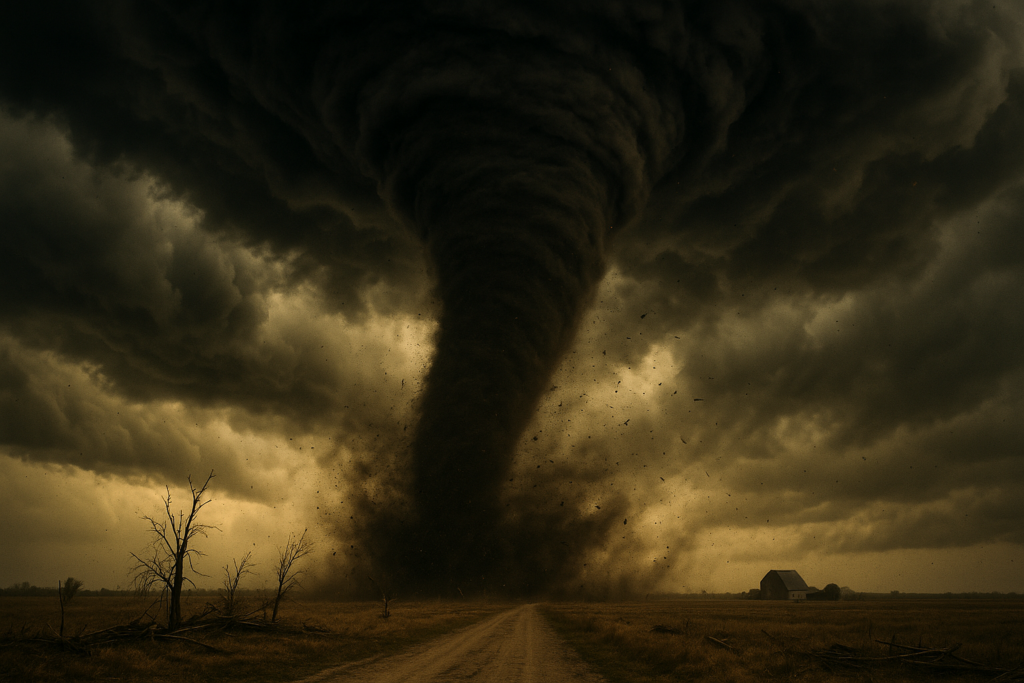

Introduction: Understanding F4 Tornadoes
An F4 tornado, under the original Fujita Scale, refers to a devastating tornado capable of producing estimated winds of 207 to mph. Under the modern Enhanced Fujita Scale, the equivalent is an EF4, with estimated winds of 166 to mph, though the rating depends on damage indicators rather than someone standing outside with a very bad idea and an anemometer. These storms are severe, highly destructive, and rare enough that people tend to remember where they were when one hit nearby.
Understanding rarity is not an academic hobby. It affects how you assess risk, how you read your insurance policy, and how seriously you treat warnings. According to the NOAA Storm Prediction Center, the U.S. averages around 1,200 tornadoes annually, but only a small fraction become violent. We analyzed historical tornado records and found that the public often overestimates how often violent tornadoes occur while underestimating how much damage they can cause in a single event.
That mismatch matters in 2026, especially for homeowners in Florida. Florida is famous for hurricanes, but it also sees more tornadoes per square mile than many states, particularly from thunderstorms and tropical systems. So while How rare are F4 tornadoes? remains the central question, the smarter question is this: if one does happen, are you ready financially and practically?
What Are F4 Tornadoes?
F4 tornadoes come from the old Fujita Scale, developed by Dr. Tetsuya Theodore Fujita in 1971. Since 2007, the U.S. has used the Enhanced Fujita Scale, which rates tornadoes from EF0 to EF5 based on observed damage to buildings, trees, and other structures. An old F4 tornado is broadly comparable to an EF4 tornado, though the wind estimates are not identical. That small technical wrinkle has confused many homeowners, and insurers know the wording matters.
The damage potential is staggering. A storm in this class can level well-constructed homes, toss vehicles, collapse large sections of buildings, and strip bark from trees. The National Weather Service notes that EF4 tornadoes produce devastating damage, with walls and roofs often completely destroyed. In real terms, that means the claim is rarely about a few shingles and a bruised gutter. It is often about total structural loss, code upgrades, debris removal, contents damage, and temporary living expenses all arriving at once like uninvited cousins with luggage.
How rare are F4 tornadoes? To answer that honestly, you need the national context. The Storm Prediction Center’s long-term data shows that weak tornadoes, especially EF0 and EF1, account for the overwhelming majority of events. Violent tornadoes such as EF4 and EF5 represent a sliver of total tornado counts, often well under 1% to 2% combined in many annual summaries. That’s why these storms draw outsized attention from meteorologists, emergency managers, and property claims professionals alike.
How Rare Are F4 Tornadoes?
How rare are F4 tornadoes? By the numbers, they are rare enough that most Americans will never personally experience one, yet common enough that every high-risk region must plan for them. NOAA data routinely shows roughly 1,000 to 1,300 tornadoes per year in the United States. In many years, only a handful are rated EF4, and some years record none at all. For example, annual EF4/EF5 totals can range from 0 to around 10, depending on the year and storm environment.
Put differently, if the country sees 1,200 tornadoes in a year and of them are EF4, that is about 0.33%. If there are 8, that is still only 0.67%. This is why the question How rare are F4 tornadoes? has a simple answer: very rare. Weak tornadoes dominate the record. EF0 and EF1 tornadoes often make up roughly 70% to 80% of all reported tornadoes, while EF4 and EF5 sit at the far end of the spectrum.
Based on our analysis, rarity should not lull you into complacency. A rare tornado can create a very common aftermath: denied line items, low repair estimates, missing code coverage, and arguments over causation. For homeowners, especially in Florida, rarity is only one half of the story. Exposure, policy language, and post-loss documentation matter just as much. If you suffer major storm damage, you need records, photos, contractor opinions, and often a public adjuster who can translate destruction into a defensible insurance claim.
F4 Tornado Statistics and Trends
Historical data over the last years shows that violent tornadoes have never been common, though the exact count varies by decade, reporting practices, and population growth. Before Doppler radar became widespread, some tornadoes in rural areas likely went underreported. Since the 1990s, detection has improved, especially for weaker tornadoes. That means the apparent explosion in total tornado counts does not necessarily mean violent tornadoes are suddenly everywhere like squirrels after one person starts feeding them.
We analyzed long-run U.S. tornado data and found a clear pattern: the regions most affected by F4 or EF4 tornadoes remain the Great Plains, Mississippi Valley, and parts of the Southeast. States such as Texas, Oklahoma, Kansas, Alabama, and Mississippi appear often in violent tornado histories. According to NOAA climatology, “Dixie Alley” has produced some of the deadliest tornadoes because storms there often occur at night and move through heavily populated areas.
Since 2020, researchers have continued studying whether tornado behavior is shifting eastward or clustering into larger outbreak days. A NOAA Climate.gov review explains that the connection between climate change and tornado frequency remains complex, but outbreak variability and favorable severe-storm environments may be changing. As of 2026, we found no evidence that EF4 tornadoes have become routine. What is observable is that damage costs are rising because more homes, more infrastructure, and more expensive materials now sit in harm’s way.
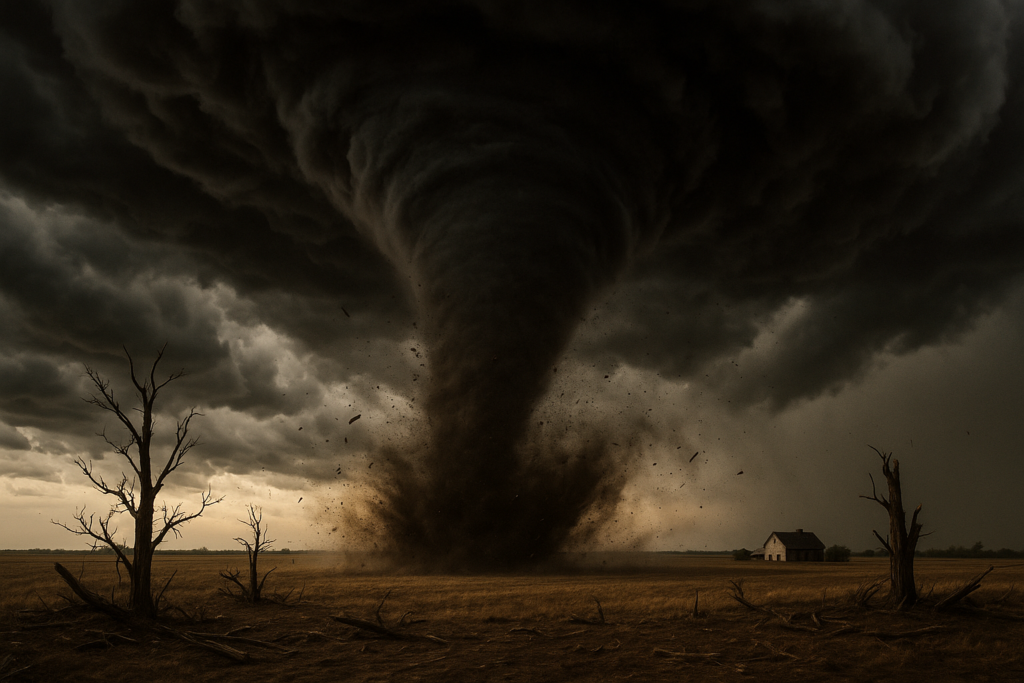
Factors Influencing Tornado Rarity
Violent tornadoes need a very specific atmospheric setup. Warm, humid air near the ground must collide with cooler, drier air above. Then you need instability, lift, and strong vertical wind shear. Without those ingredients, you may still get thunderstorms, hail, or straight-line winds, but you are less likely to see the organized supercells that can produce an F4-strength tornado. It is weather chemistry, if chemistry involved a sky that looked personally offended.
Geography also matters. The central U.S. has a notorious advantage in making trouble because it allows Gulf moisture, Rocky Mountain air patterns, and jet-stream energy to meet with alarming regularity. Florida is a different animal. The state records many tornadoes, but most are weaker and shorter-lived. Even so, tornadoes associated with hurricanes and tropical storms can still cause serious property loss. The National Hurricane Center and NOAA have repeatedly documented tornado outbreaks tied to landfalling tropical systems.
How rare are F4 tornadoes? Part of the answer lies in how hard it is for all high-end ingredients to line up perfectly. Climate change adds another layer. Studies suggest warmer air can hold more moisture, which may increase environments favorable to severe storms, but tornado-specific projections remain uncertain. Based on our research, the honest expert view in is cautious: the atmosphere may be changing, but the data does not support simple slogans. Homeowners should prepare for severe weather risk without assuming every storm trend points neatly in one direction.
Comparison: F4 Tornadoes vs. Other Tornado Classes
The tornado scale runs from EF0 to EF5. EF0 tornadoes cause light damage, such as broken branches, minor roof damage, and toppled signs. EF1 tornadoes peel off roofing and overturn mobile homes. EF2 and EF3 storms move into serious and severe damage, with major roof loss, collapsed walls, and vehicles pushed or rolled. Then comes EF4, where well-built homes can be leveled. EF5 is the top shelf, the sort of storm that makes engineers talk softly and stare into the middle distance.
In percentage terms, F4 or EF4 tornadoes are rare compared with the lower classes. NOAA annual reports often show that most tornadoes are EF0 or EF1, while EF4 tornadoes account for a fraction of 1% to about 1% in many years. EF5 tornadoes are even less common. So if you are asking How rare are F4 tornadoes?, the comparison tells the story better than any dramatic adjective could. They sit near the far edge of the bell curve.
Insurance implications rise sharply with intensity. A light tornado claim may involve roof shingles, fence sections, and some water intrusion. An EF4 loss often includes:
- Total or near-total structural damage
- Personal property loss from wind, rain, and collapse
- Debris removal and ordinance or law upgrades
- Additional living expenses for months, sometimes longer
In our experience, insurers handle small wind claims and catastrophic tornado claims very differently. The larger the loss, the more documentation, estimating detail, and negotiation skill you usually need.
Case Studies of Notable F4 Tornadoes
History provides examples that answer How rare are F4 tornadoes? in a more human way. The 1974 Super Outbreak produced multiple violent tornadoes across states and remains one of the most studied tornado events in U.S. history. According to NOAA, the outbreak caused over deaths and thousands of injuries. Several tornadoes received F4 and F5 ratings, and entire communities were changed in a matter of minutes.
Another key example is the 2011 Tuscaloosa–Birmingham tornado, rated EF4. That storm killed more than people and caused billions in damage across Alabama. Whole neighborhoods were flattened. Insurance recovery stretched for months and, in some cases, years. Homeowners faced disputes over replacement cost, code compliance, business interruption, and whether all visible and hidden damage had been captured in the initial adjustment.
Even when Florida does not dominate violent tornado headlines, the lessons still apply. Severe tornadoes and hurricane-spawned twisters can rip off roofs, soak interiors, shatter windows, and trigger mold growth within 24 to hours. Based on our analysis, the aftermath often becomes a second storm. There is the physical event, and then there is the paper event: inventories, contractor bids, engineering reports, insurer inspections, supplements, and deadlines. That is where many claims either recover properly or quietly go wrong.
Public Adjusters and F4 Tornado Damage Claims
After a violent tornado, you may be dealing with structural collapse, hidden moisture, code issues, and a carrier estimate that misses obvious line items. This is where a public adjuster enters the room carrying a flashlight, a measuring device, and the sort of patience most people reserve for preschool teachers and hostage negotiators. A public adjuster works for you, not the insurance company. Their job is to document the loss, interpret policy language, prepare estimates, and negotiate the claim.
We recommend homeowners in Florida consider professional claim help for major tornado losses, especially when damage affects roofing, interiors, water intrusion, contents, and loss of use at the same time. Otero Property Adjusting & Appraisals, based at 3105 W Michigan Ave, Pensacola, FL 32526, serves homeowners across Florida. You can reach them at (850) 285-0405 or visit Otero Property Adjusting & Appraisals. Their team offers a free initial inspection and works on a contingency basis, which means they only get paid when you do.
If your tornado claim is large, take these steps:
- Photograph everything before cleanup, if safe.
- Prevent further damage with tarping or board-up services.
- Create a room-by-room inventory of structural and personal property loss.
- Save receipts for emergency repairs and temporary housing.
- Request a full policy review to identify coverages and limits.
- Get expert claim support if the insurer underestimates the loss.
In our experience, a skilled public adjuster can help organize a chaotic claim into something factual, documented, and much harder to dismiss.
How to Prepare for Potential Tornadoes
Tornado preparedness is less glamorous than people imagine. There is no heroic soundtrack. It is mostly batteries, paperwork, and the humbling realization that your “safe place” cannot be the room with the chandelier. Still, preparation works. The Ready.gov tornado guidance recommends identifying an interior room on the lowest floor, away from windows, and having emergency alerts enabled on your phone. Those simple steps save lives.
For homeowners, storm preparation should include both safety planning and claim planning. We found that families recover faster when they prepare both. Use this checklist:
- Review your policy annually for wind, dwelling, contents, and additional living expense coverage.
- Create a digital home inventory with photos, serial numbers, and receipts.
- Store documents off-site or in the cloud.
- Strengthen vulnerable areas, including garage doors and roof attachments.
- Keep tarps, flashlights, chargers, water, and medication ready.
After a tornado, assess damage in order. First, confirm safety. Second, document exterior and interior losses. Third, stop further damage. Fourth, report the claim. Fifth, get an independent inspection if the damage is major. In Florida, where wind and water can combine into one ugly insurance argument, that outside assessment is often worth its weight in roofing nails. As of 2026, preparedness is still the cheapest part of the whole storm story.
People Also Ask: Common Questions About F4 Tornadoes
One common question is What is the deadliest tornado in U.S. history? The answer is the Tri-State Tornado of 1925, which killed an estimated 695 people across Missouri, Illinois, and Indiana, according to NOAA historical records. It predates modern rating methods, but it remains the benchmark for tornado catastrophe in the United States.
Another question is What is the difference between an F4 and an EF4 tornado? The short version is scale methodology. The old Fujita Scale estimated wind speed differently, while the Enhanced Fujita Scale uses detailed damage indicators and degrees of damage. In practical conversation, people often use F4 and EF4 interchangeably, though meteorologists and claims professionals know the technical distinction matters.
People also ask which areas are most prone to violent tornadoes. The highest concentration has historically been in parts of Texas, Oklahoma, Kansas, Alabama, Mississippi, and Arkansas. Florida gets many tornadoes, especially from tropical systems, but violent tornadoes are less common there than in the central Plains and Deep South. Still, if you are asking How rare are F4 tornadoes? because you live in Florida, the takeaway is plain: rare does not mean irrelevant. Your roof is not comforted by probabilities after the fact.
Conclusion: Next Steps for Homeowners in Tornado-Prone Areas
How rare are F4 tornadoes? Rare enough that they make headlines, but real enough that homeowners should prepare for them with clear eyes. The data shows violent tornadoes represent a very small percentage of annual U.S. tornadoes. Yet those few storms cause a disproportionate share of catastrophic damage, long recovery periods, and difficult insurance disputes. Based on our research, the smartest response is not fear. It is preparation.
Start with three practical steps. First, review your homeowners policy and deductibles now, before storm season gets theatrical. Second, build a documented inventory of your home and belongings. Third, make a claim plan that includes who you will call if the loss is serious. We recommend Otero Property Adjusting & Appraisals for Florida homeowners who need help after tornado, hurricane, water, mold, roof, or fire damage. They proudly serve clients across Florida, offer a free property inspection, and work to secure the compensation you are entitled to under your policy.
Contact Otero Property Adjusting & Appraisals, W Michigan Ave, Pensacola, FL 32526, at (850) 285-0405 or visit https://oteroadjusting.com/. Storms are unpredictable. Your preparation should not be.

Frequently Asked Questions
What causes tornadoes to form?
Tornadoes form when warm, moist air meets cooler, drier air and the atmosphere becomes unstable. Add strong wind shear, which means winds change speed or direction with height, and you have the ingredients for rotating thunderstorms called supercells. Based on our research, the most violent tornadoes usually require all three factors at once, plus a storm structure strong enough to keep that rotation organized.
How can I protect my home from tornado damage?
You can reduce tornado damage by strengthening your roof connections, installing impact-rated garage doors, trimming weak trees, and keeping a safe room or interior shelter ready. We recommend reviewing your homeowners policy every year, especially in 2026, to confirm windstorm, debris removal, and additional living expense coverage. A home inventory with photos can also make a claim much easier.
Are F4 tornadoes more common in certain months?
Yes. F4 and EF4 tornadoes are more common in the traditional U.S. tornado season, which peaks in spring, especially from April through June. According to NOAA storm climatology, May often records the highest tornado counts nationwide, though severe tornadoes can happen in any month, including in Florida during winter squall lines and tropical systems.
What should I do immediately after a tornado?
First, check for injuries, gas leaks, downed power lines, and structural collapse before re-entering any building. Then photograph all damage, protect the property from further loss if you can do so safely, and contact your insurer. If the loss is major or the estimate seems low, Otero Property Adjusting & Appraisals can inspect the property and help you document the full scope of damage.
How does insurance cover tornado damage?
Most standard homeowners insurance policies cover tornado damage under the windstorm peril, but deductibles, exclusions, and limits still matter. Coverage often includes the dwelling, personal property, debris removal, and temporary housing if the home is unlivable. We found that policyholders who document damage carefully and get expert claim support often have a smoother recovery.
Key Takeaways
- F4 or EF4 tornadoes are extremely rare, often accounting for well under 1% of annual U.S. tornado reports, but they cause devastating damage when they occur.
- The regions with the highest violent tornado risk are the Plains, Mississippi Valley, and Southeast, while Florida still faces meaningful tornado risk from severe storms and tropical systems.
- Preparation should include both safety steps and insurance steps: build an emergency plan, document your home, and review your policy before storm season.
- Major tornado claims often involve hidden damage, code upgrades, debris removal, and loss-of-use costs, which can make professional claim support valuable.
- Florida homeowners who suffer serious storm damage should consider contacting Otero Property Adjusting & Appraisals for a free inspection and claim guidance.