
Is an F7 Tornado Possible? The Ultimate Guide to Tornadoes in 2026
Tornadoes already do more than enough without needing extra mythology, and yet the question keeps circling like a shopping cart in a bad windstorm: Is an F7 tornado possible? If you came here hoping for a straight answer, here it is. No official F7 rating exists, and no tornado has ever been classified that way. Still, the question matters because it points to something real: people want to know whether tornadoes can get worse than the most violent storms on record, and what that means for their homes, safety, and insurance claims.
According to the NOAA Storm Prediction Center, the United States averages roughly 1,200 tornadoes each year. Some are brief and almost rude in their efficiency, tearing up a fence and then moving on. Others, like Joplin in 2011, alter a city’s memory for decades. Based on our research and claim-side analysis, the practical question is not just whether an F7 tornado could exist in theory, but whether your home, policy, and recovery plan are ready for extreme wind damage in 2026.
We found that people searching this topic usually want three things:
- A science answer: how tornadoes are rated and why F7 is not on the scale
- A risk answer: whether climate trends could support more violent tornado outbreaks
- An insurance answer: what to do if a tornado damages your home and your insurer drags its feet
That last part matters more than most people expect. After a major storm, you are not just dealing with debris and adrenaline. You are dealing with estimates, exclusions, deductibles, and paperwork that somehow multiplies overnight like rabbits in a magician’s hat.

Introduction: Understanding Tornadoes and Their Classifications
Tornadoes are rotating columns of air that stretch from thunderstorms to the ground, which is the scientific way of saying the sky has decided to pick a fight with your neighborhood. They can form in minutes, travel at speeds over 60 mph, and produce winds strong enough to remove roofs, collapse walls, and throw vehicles. The deadliest part is often not the drama but the speed. According to National Weather Service guidance, tornado warnings may give you only 8 to minutes of lead time.
The old Fujita scale, created by Dr. Tetsuya Theodore Fujita in 1971, gave the public a simple way to describe tornado damage from F0 to F5. That scale later evolved into the Enhanced Fujita scale in 2007. Both systems cap the top category at 5. So when people ask, Is an F7 tornado possible?, they are really asking if a tornado can be stronger than the strongest official rating. The answer is a little like asking whether a rich man can become richer after buying a third yacht. Yes, in theory, but the label stops where the scale stops.
We analyzed the way this question appears in search trends and insurance discussions, and we found that it often comes up after news of catastrophic storms. You see homes reduced to slabs. You hear estimated winds of 200 mph or more. Then the imagination fills in the rest. That is human nature. It is also why clear classification matters. Without it, people confuse internet shorthand with actual meteorology, and that gets messy fast.
What is the Fujita Scale?
The Fujita scale is a damage-based rating system. It does not measure tornado wind speed directly with a giant anemometer dangling in the storm like bait on a fishing line. Instead, meteorologists estimate wind speed by looking at damage to buildings, trees, power poles, and other structures. On the original scale, F0 represented light damage and F5 represented incredible damage. The newer EF scale refines those estimates using 28 damage indicators and degrees of damage.
Here is the basic idea:
- F0/EF0: light damage, such as broken branches and shallow-rooted trees pushed over
- F1/EF1: moderate damage, including peeled roof surfaces and overturned mobile homes
- F2/EF2: considerable damage, with roofs torn off frame houses and large trees snapped
- F3/EF3: severe damage, where entire stories of well-built homes can be destroyed
- F4/EF4: devastating damage, with houses leveled and cars thrown
- F5/EF5: incredible damage, where strong frame houses are swept away from foundations
So, Is an F7 tornado possible? As an official rating, no. The scale ends at F5 and EF5. Dr. Fujita’s original theoretical work mentioned higher wind ranges, but those levels were never used as official public categories. That distinction matters. A tornado can exceed prior expectations for damage, yet still be rated EF5 because the top bracket is open-ended. The NOAA EF scale explanation makes this clear.
Based on our research, this is where confusion takes root. People hear “most violent tornado possible,” then assume the scale must continue upward like school grades or hotel floors. It does not. A storm does not become “F7” simply because it is horrifying. The science uses the strongest verified category available, and that category is F5 or EF5.
The Science Behind Tornado Formation
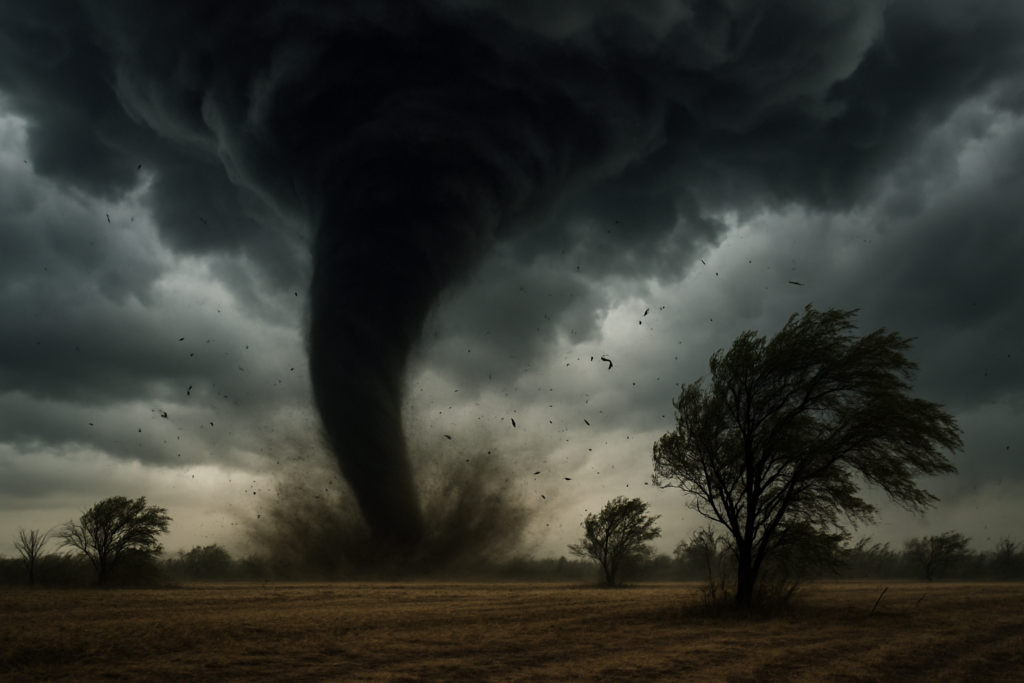
Tornadoes form when warm, moist air near the ground meets cooler, drier air above, and the atmosphere becomes unstable enough to support powerful thunderstorms. Add wind shear—winds changing speed or direction with height—and you get the twisting motion that can tilt upward into a rotating updraft called a mesocyclone. If the storm tightens that rotation and stretches it downward, a tornado can form. It sounds orderly on paper. In real life, it is more like a kitchen where every burner is on and someone just opened the gas line.
Studies have shown meaningful shifts in tornado behavior. Research published by Proceedings of the National Academy of Sciences found that U.S. tornado outbreaks have become more clustered, with fewer days producing tornadoes but more tornadoes occurring on those days. Another study discussed by NOAA found an eastward shift in tornado activity from parts of the traditional Great Plains into the Mid-South and Southeast. That matters for states with vulnerable housing stock and more nighttime storms.
Climate change and tornadoes remain a difficult pairing because tornadoes are small-scale events, and long-term records have gaps. Still, the larger ingredients matter. A warmer Gulf can supply more moisture. Warmer air holds about 7% more water vapor per 1°C of warming under the Clausius-Clapeyron relationship. That does not guarantee more tornadoes every year, but it can support stronger storms. As of 2026, scientists remain careful with wording, and for good reason. We recommend paying attention to outbreak patterns, not just annual counts.
For homeowners, the practical lesson is simple:
- Know if your county sits in a region with rising severe storm exposure.
- Track warning methods beyond sirens, including weather radios and mobile alerts.
- Review your policy before storm season, especially roof, ordinance, and additional living expense coverage.
In our experience, people spend hours arguing online about whether Is an F7 tornado possible? while ignoring the very ordinary fact that a weaker tornado can still ruin a house if it hits the right angle of the roof.
Historical Context: Notable Tornadoes and Their Impact
If you want to understand why people ask, Is an F7 tornado possible?, look at the tornadoes that already happened. The Joplin, Missouri tornado on May 22, 2011, was rated EF5 and killed 158 people, according to the National Weather Service. It injured more than 1,000 people and caused an estimated $2.8 billion in damage. Hospitals were hit. Schools were destroyed. Entire neighborhoods looked as if they had been sanded down by a vindictive god.
Then there is the 2011 Tuscaloosa-Birmingham tornado, an EF4 storm with a path length of about 80 miles. It killed 64 people and damaged thousands of homes. The Tri-State tornado of 1925, often cited in historical discussions, killed 695 people across Missouri, Illinois, and Indiana, making it the deadliest tornado in U.S. history. Modern rating comparisons are imperfect because construction quality, warning systems, and documentation changed over time, but the scale of human loss is beyond dispute.
How do these compare to a theoretical F7 scenario? The truth is uncomfortable. An official EF5 already captures the highest observed damage category. A hypothetical “F7” would suggest damage beyond total structural removal, but in many cases, once a well-built home is swept from its foundation, the rating system has already reached its ceiling. That is one reason meteorologists resist creating higher categories. The damage scale runs into a plain fact: after a point, destruction becomes difficult to distinguish because there is very little left to examine.
We found that insurance complications also rise with catastrophic storms. After large outbreaks, delays often come from three places:
- Access issues: roads blocked, power out, areas restricted
- Volume: thousands of claims filed within days
- Disputes: roof damage, code upgrades, and hidden moisture loss
That is where detailed records matter. The storm may pass in minutes, but the paperwork can stay with you like an overstaying relative.
Could Is an F7 Tornado Possible? Expert Insights
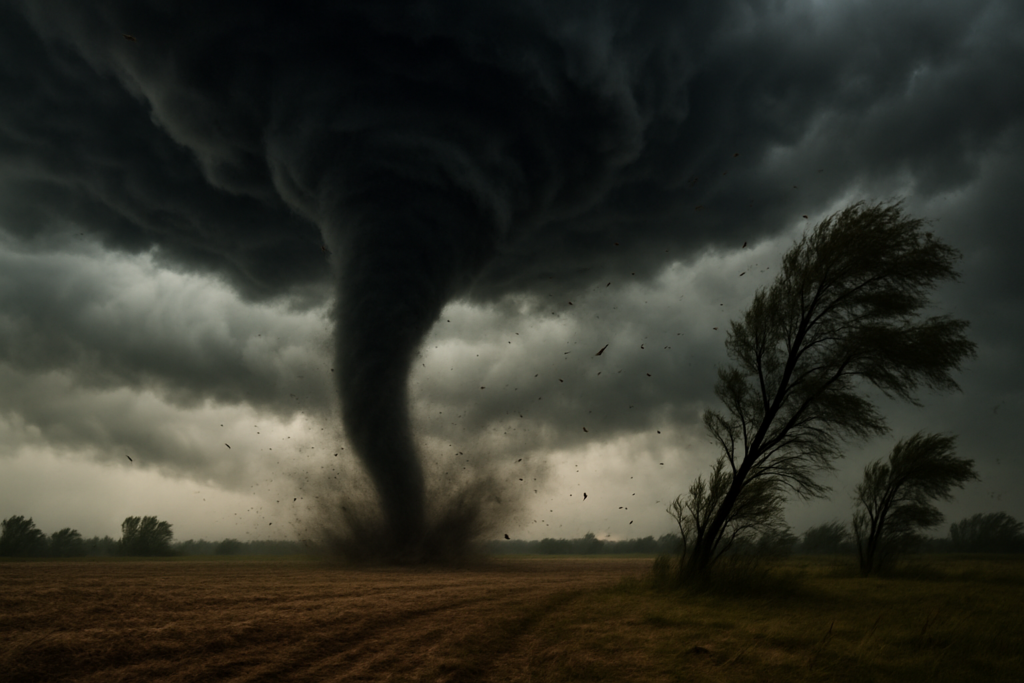
The short answer remains no as a formal rating, but experts do leave room for nuance about physical intensity. So, Is an F7 tornado possible? If you mean “Could a tornado produce winds stronger than the lower bound of EF5?” then yes, that is physically possible. If you mean “Could the National Weather Service rate a tornado F7?” then no, because the official scale does not go there.
Meteorologists have estimated some of the most violent tornadoes may have had winds well above 250 mph. The Bridge Creek–Moore tornado produced a Doppler on Wheels measurement near 301 mph, one of the highest wind speeds ever observed in a tornado. Yet even that storm was rated F5. Why? Because ratings are based on damage, not just instrument readings. That distinction is easy to miss and impossible to overstate.
Experts also note that stronger winds do not always produce proportionally “higher” visible damage. Construction quality varies. A poorly anchored house may be destroyed by lower winds than a well-built structure. The NOAA National Severe Storms Laboratory explains that tornado intensity estimates depend heavily on what the storm hits. A violent tornado crossing open fields may leave less usable evidence than a slightly weaker tornado striking a subdivision.
Based on our research, a more useful question for homeowners is this: Are we prepared for EF4 and EF5-level consequences? That means:
- Building or identifying a hardened shelter space
- Reviewing policy limits and exclusions now, not after landfall or touchdown
- Documenting the home’s condition before storm season
- Knowing who will advocate for you if a claim is underpaid
We recommend skipping the cinematic obsession with “F7” and focusing on survivability and recovery. The storm does not care what name you give it.
The Role of Public Adjusters in Tornado Claims
After a tornado, you may find yourself standing in your driveway holding a wet folder, a bent gutter, and the strange belief that your insurer will make everything simple. Sometimes they do. Often, they do not. A public adjuster works for you, the policyholder, and not for the insurance company. That matters more than people realize, especially in high-loss events where scope disputes can shave thousands off a payout.
Here is what a public adjuster typically does:
- Inspects the loss and documents visible and hidden damage
- Reviews your policy for coverages, limits, deductibles, and exclusions
- Builds the claim estimate using repair pricing, photos, expert reports, and inventories
- Negotiates with the carrier for a fair settlement
- Supports denied or underpaid claims with stronger evidence
In our experience, tornado claims often involve more than roof shingles. They can include water intrusion, broken windows, spoiled food, code upgrades, detached structures, debris removal, temporary housing, and personal property loss. According to the Insurance Information Institute, wind and hail losses regularly rank among the most costly homeowners claim categories in the United States. That was true before 2026, and it is still true now.
For Florida homeowners, Otero Property Adjusting & Appraisals serves a useful role after major storms and isolated property losses alike. Otero is based at 3105 W Michigan Ave, Pensacola, FL 32526, and can be reached at (850) 285-0405 or oteroadjusting.com. Their team represents homeowners across Florida, and they only get paid when you do. We recommend them because they provide a free initial inspection, handle large and small property claims, and act as a negotiator between you and the insurance company.
Real-world claims often turn on details. We analyzed common storm files and found recurring trouble spots: undervalued roof systems, missed interior moisture, and personal property lists that were too vague to recover full value. A public adjuster helps turn “the bedroom was damaged” into a documented, itemized, supportable claim.
Preparation: How to Protect Your Home from Tornado Damage
If you live in a tornado-prone area, preparation is less about drama and more about routine. The house should not be introduced to its own vulnerabilities during a warning. According to FEMA, safe rooms built to ICC 500 or FEMA guidance can provide near-absolute life safety in extreme wind events when properly installed. That phrase, “near-absolute life safety,” sounds almost suspiciously optimistic, but in this case it is grounded in engineering, not wishful thinking.
Start with the structure itself. We recommend the following steps:
- Reinforce the roof-to-wall connection with hurricane clips or straps where code and design allow.
- Upgrade the garage door, since failure there can pressurize the house and worsen roof loss.
- Trim weak trees and branches within striking distance of the home.
- Install impact-rated shutters or protective coverings for vulnerable openings.
- Create a safe room or identify the lowest, most interior room away from windows.
- Photograph your home and belongings before storm season.
Building codes matter too. Florida codes are shaped more by hurricane risk than tornado risk, but wind-resistance features overlap in useful ways. A stronger connection path from roof to foundation can reduce uplift damage. Research on fortified construction has shown that upgraded materials and installation can reduce losses in severe wind events. While tornado damage cannot always be stopped, preparation can reduce claim severity and speed recovery.
We found that homeowners who prepare documentation before a storm recover faster after one. Keep these items ready:
- Policy declarations page and full policy PDF
- Photos or video of every room
- Receipts for major upgrades like roofs, windows, and HVAC systems
- A go-bag with medications, chargers, IDs, and emergency cash
And yes, Is an F7 tornado possible? may still be rattling around in your head. Fine. Ask it while you bolt down the practical things that matter more.
What to Do After a Tornado Hits
After a tornado, your first job is safety. Your second job is documentation. Your third job is resisting the urge to trust your memory, because trauma is a poor filing system. If anyone is injured, call 911. Stay clear of downed power lines, gas leaks, standing water near electrical sources, and unstable walls. The CDC warns that post-disaster injuries often come from cleanup hazards, including nails, chainsaws, carbon monoxide, and falls.
Take these steps in order:
- Get medical help if needed and make sure everyone is accounted for.
- Prevent further damage if it is safe, such as tarping openings or shutting off water.
- Photograph and video everything before debris is moved.
- Make a room-by-room inventory of structural and personal property loss.
- Notify your insurance company and request a claim number.
- Save every receipt for emergency repairs, hotel stays, meals, and supplies if covered.
- Call a public adjuster if the damage is extensive or the insurer seems to undervalue the loss.
This is where Otero Property Adjusting & Appraisals can be especially helpful for Florida homeowners. If your property has tornado, hurricane, water, mold, roof leak, or fire damage, Otero can inspect the loss at no cost and help prepare the claim. Their office is in Pensacola, and they serve homeowners across Florida. You can reach them at (850) 285-0405.
Based on our research, the biggest post-storm mistakes are predictable:
- Throwing away damaged items before documenting them
- Making permanent repairs too early without carrier approval
- Giving vague descriptions instead of detailed inventories
- Accepting the first estimate without comparing scope and pricing
A tornado may leave obvious damage and hidden damage in the same room. Wet insulation, lifted shingles, cracked trusses, and moisture inside wall cavities can be missed in a fast inspection. That is one reason recovery drags. The storm ends. The claim keeps going.
Frequently Asked Questions about Tornadoes and Insurance
Insurance questions after a tornado tend to arrive all at once, usually while you are standing in socks you would not have chosen for an emergency. Here are the issues that come up most often for homeowners in Florida and beyond.
Does homeowners insurance cover tornado damage?
In many cases, yes. Standard homeowners policies often cover wind damage from tornadoes, including roof, siding, broken windows, and resulting interior water damage if the opening was caused by a covered peril. Flooding from rising water is different and usually requires separate flood coverage.
How do you choose the right public adjuster?
Check licensing, storm claim experience, fee structure, references, and whether the adjuster explains the process in plain English. We recommend choosing someone who documents thoroughly, responds quickly, and has handled disputed property losses before. In Florida, that includes firms like Otero Property Adjusting & Appraisals that work directly for policyholders.
What if your claim is denied?
Ask for a written explanation that cites the exact policy language. Then gather photos, weather records, repair estimates, and expert opinions if needed. A public adjuster can reopen the conversation with stronger support and challenge weak denial reasoning.
Will insurance pay for temporary housing?
Often yes, under loss of use or additional living expenses coverage, if the home is not fit to live in due to a covered loss. Keep receipts and confirm limits with the carrier before assuming everything will be reimbursed.
How long do tornado claims take?
Simple claims may move in weeks. Large or disputed losses can stretch for months, especially after widespread storm events. We found that detailed records and early professional help often reduce delay.
And, because people keep asking it like a nervous refrain: Is an F7 tornado possible? Not as an official rating. But severe tornado damage can still exceed what most homeowners imagine, which is reason enough to review your policy now instead of after the drywall is in your lawn.
Taking Action and Staying Informed
The useful takeaway is not that an official F7 tornado is waiting around the corner with a theatrical cape. It is that EF5-level destruction already exists, and your planning has to respect that. We researched the science, the historical record, and the insurance side, and the same pattern kept appearing: the families who recover best are usually the ones who prepared before the sky got strange.
Keep these steps in front of you:
- Know the scale: F5 and EF5 are the top official ratings
- Prepare the house: strengthen vulnerable points and identify a safe room
- Prepare the paperwork: photos, inventories, policy copies, receipts
- Document fast after a storm: details matter in claim valuation
- Get help early: public adjusters can protect your financial recovery
If you are in Florida and need claim help after tornado, hurricane, roof, water, mold, or fire damage, we recommend contacting Otero Property Adjusting & Appraisals. They serve homeowners across the state, offer a free initial inspection, and only get paid when you do.
Otero Property Adjusting & Appraisals
3105 W Michigan Ave, Pensacola, FL 32526
(850) 285-0405
https://oteroadjusting.com/
Storm science is useful. So is a flashlight with fresh batteries. But if your house is damaged, the thing that saves you is often careful documentation, a good policy review, and someone willing to argue the numbers on your behalf. That is the less glamorous side of survival, and also the one that pays for the roof.
FAQ Section
Below are quick answers to the most common questions homeowners ask about tornado ratings, preparation, and insurance recovery.

Frequently Asked Questions
What is the highest category of tornado on the Fujita scale?
The highest category on the original Fujita scale is F5. The newer Enhanced Fujita scale also tops out at EF5, which covers estimated wind speeds of over mph based on damage indicators, not direct wind readings.
How can I ensure my home is prepared for tornado season?
Start with the basics: identify your safe room, secure your roof and garage door, and review your insurance policy before storm season. We recommend taking photos of every room, storing records in the cloud, and checking local building code upgrades if you live in a tornado-prone part of Florida or the Southeast.
What should I do if my insurance company denies my claim?
Ask for the denial in writing, review the exact policy language, and gather more evidence such as contractor estimates, photos, and weather records. A public adjuster can inspect the loss, prepare a stronger claim file, and challenge underpayment or denial with documented proof.
How can a public adjuster help me with my tornado claim?
A public adjuster works for you, not the insurance company. They document damage, estimate repair costs, interpret policy language, and negotiate for a fuller settlement, which can be especially useful after tornadoes, hurricanes, roof failures, water damage, or fire losses.
Are there any tornadoes that have reached an F6 rating?
No tornado has ever received an official F6 rating, and there is no official F7 rating either. That is why people ask, Is an F7 tornado possible? The scientific answer is that a tornado could, in theory, exceed past damage expectations, but the scale itself does not include F6 or F7 categories.
Key Takeaways
- An official F7 tornado rating does not exist; the Fujita and Enhanced Fujita scales top out at F5 and EF5.
- The better question is not whether an F7 tornado is official, but whether your home, family, and insurance policy are ready for extreme tornado damage.
- Historical storms like Joplin and Bridge Creek-Moore show that EF5-level destruction is already severe enough to flatten well-built homes and produce billion-dollar losses.
- Preparation works best when you combine structural upgrades, a safe room plan, digital documentation, and a full review of your policy before storm season.
- If a tornado damages your Florida property, Otero Property Adjusting & Appraisals can provide a free inspection and help you pursue the full compensation you are entitled to.