
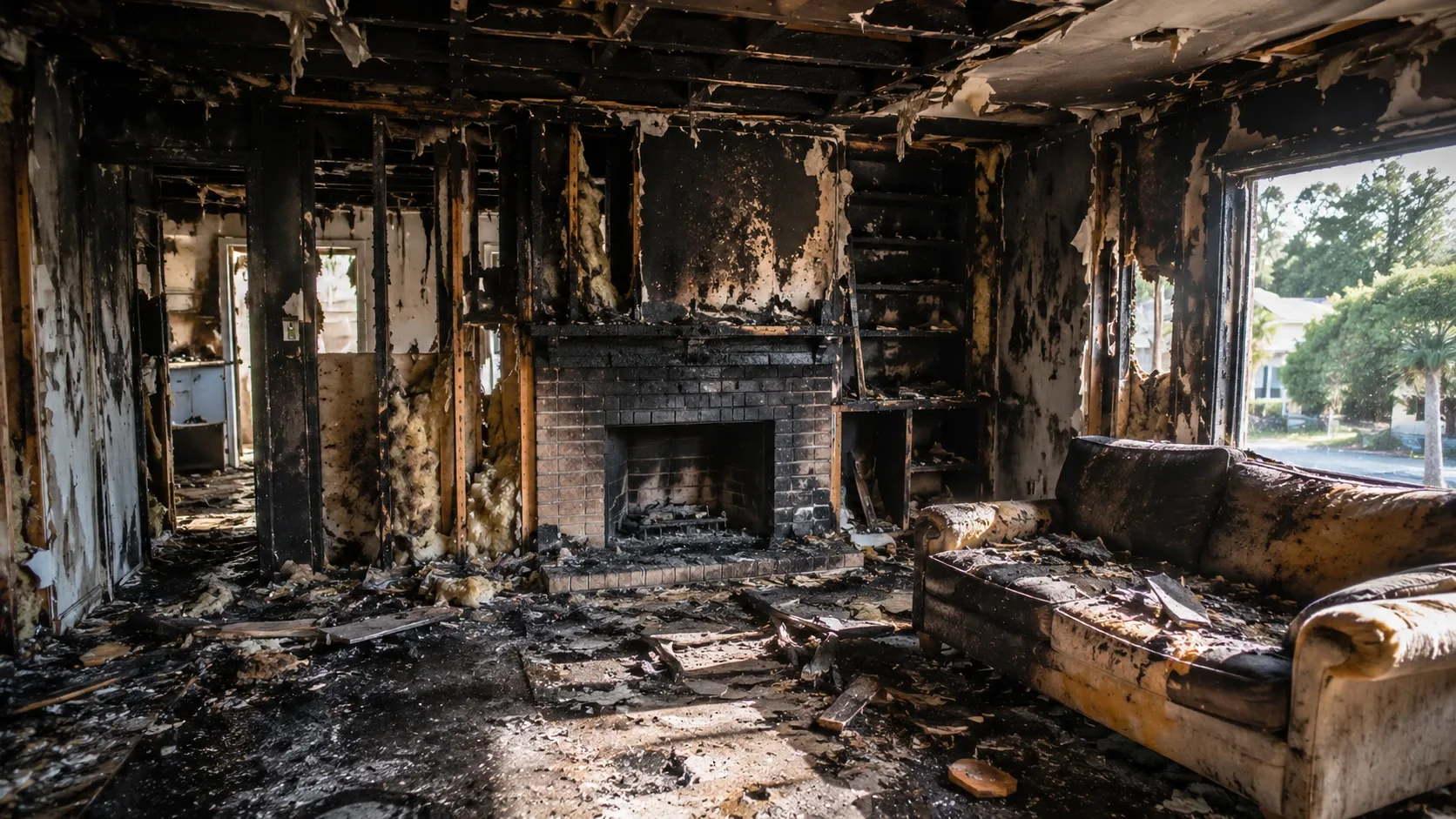
The check arrived. It felt low. And now you're staring at a number that doesn't come close to covering what the fire actually took from you.
According to the National Fire Protection Association, fires in the United States caused an estimated $14.8 billion in property damage in a single year (NFPA, 2019). That's not an abstract figure. It's the financial weight sitting on real people who are already exhausted, already grieving, and already being asked to navigate one of the most complicated processes their insurance company has ever put them through.
Key Takeaways
- The insurance company's adjuster documents damage on behalf of the insurer, not you. Their job and your interests don't align.
- Fire damage claims are routinely underpaid because smoke, structural compromise, and contents losses are easy to miss without a trained eye.
- A public adjuster is a licensed professional who represents the policyholder, not the insurance company.
- Led by David Otero, who has 7+ years of claims experience, Otero Property Adjusting & Appraisals handles fire damage claims across Florida, from Miami to Pensacola.
- The most expensive move you can make after a fire isn't hiring representation. It's accepting a settlement before you know what you're actually owed.
What Does a Loss Consultant Actually Do on a Fire Damage Claim?
A loss consultant, in the context of property insurance, is a licensed professional who evaluates the full scope of a covered loss and represents the policyholder's interests throughout the claims process.
That's the definition. Here's what it means in practice.
When Otero Property Adjusting & Appraisals takes on a fire damage claim, the process starts with a no-cost consultation to understand what happened, what was damaged, and what the insurance company has already said. From there, the team performs a detailed inspection of the property, documents every visible damage category, reviews the actual policy language, prepares repair and replacement estimates, and manages all communication with the carrier.
That last part matters more than most people realize. Every statement you make to an insurance adjuster can be used to shape the claim. Knowing what not to tell an adjuster isn't about being deceptive. It's about not accidentally narrowing your own coverage.
Why Fire Claims Get Underpaid (and Why It's Not an Accident)
The insurance company sends their adjuster to your property. That adjuster is trained, experienced, and working a caseload. They're also employed by the same company that writes the settlement check.
The adjuster isn't there to find everything. They're there to document what they find. Those are different jobs.
Fire damage is particularly easy to undervalue because the visible destruction is only part of the picture. Smoke travels through HVAC systems, embeds in insulation, and contaminates areas that show no char marks at all. Structural damage from heat stress can compromise framing that looks intact from the outside. Smoke damage can be repaired in some cases, but the scope of what qualifies for coverage is wider than most homeowners know to ask about.
A typical fire claim scenario: a kitchen fire causes obvious damage to the room of origin, and the insurance company's estimate covers that room plus immediate adjacent surfaces. What the estimate misses is the smoke contamination in the attic, the HVAC ductwork throughout the house, and the contents in rooms that smell fine to a quick walkthrough but are saturated with particulates. That gap between the initial offer and the full covered loss is exactly what a public adjuster is trained to close.
The insurance company's first offer is based on what their adjuster found. It's not based on everything that's there.
The Four-Stage Framework Otero Uses on Fire Claims
Otero's approach to fire damage claims follows a consistent four-stage methodology. Each stage has a specific purpose and a specific point where underpaid claims most often fall apart.
Stage 1: Policy Review Before Anything Else
Most homeowners have never read their policy in full. The language around fire coverage, smoke damage, additional living expenses, and contents replacement varies significantly between carriers and policy types. Understanding what fire insurance actually covers before the inspection shapes what gets documented and how.
Stage 2: Damage Documentation That Holds Up
The inspection isn't a walkthrough. It's a structured documentation process that captures structural damage, smoke penetration, contents losses, and secondary damage from firefighting efforts like water. This documentation becomes the foundation of every negotiation that follows.
Stage 3: Estimate Preparation
Repair estimates are prepared to reflect actual current costs for the Florida market. Estimating value for an insurance claim is a technical process, and an estimate that doesn't match local contractor pricing gives the carrier room to push back.
Stage 4: Negotiation and Claim Management
Otero manages all communication with the insurance company from this point forward. That means responding to requests, countering lowball positions, and pushing the claim toward a fair resolution without the policyholder having to fight that battle themselves.
If you're already in the middle of a claim that feels stuck, understanding how the claim process works can help you see where the delay is actually coming from.
If you've received an initial offer that doesn't feel right, don't sign anything yet. Call Otero Property Adjusting & Appraisals at 850-285-0405 for a free consultation before you make a decision you can't undo.
The Contrarian Truth About Fire Claims: Confidence Isn't Accuracy
Here's the thing most people don't expect. The insurance company's adjuster will often present their findings with complete professional confidence. The estimate looks thorough. The line items look detailed. The number feels like the result of a real process.
That confidence isn't evidence of accuracy. It's evidence of a practiced process.
The adjuster has done this hundreds of times. They know how to present a number in a way that feels final. What they don't have is an obligation to find damage that costs their employer more money. That's not cynicism. That's just how the incentive structure works.
The second assumption is worth challenging: many homeowners believe that filing a detailed counter-claim will trigger a rate increase or a policy cancellation. In Florida, that fear keeps a lot of people from pursuing the benefits available under their policy. But understanding what damages you can actually claim is a right, not a risk. Using your policy is what you paid for.
What Happens When You Go It Alone vs. Working With a Public Adjuster
| Situation | Going It Alone | Working With Otero |
|---|---|---|
| Damage documentation | Based on what you notice and report | Systematic inspection by a trained professional |
| Policy interpretation | Your reading of complex language | Expert review of every applicable provision |
| Estimate accuracy | Carrier's estimate, unchallenged | Independent estimate prepared for negotiation |
| Communication with insurer | You, without claims experience | Otero manages all contact on your behalf |
| Settlement outcome | Initial offer, often accepted | Negotiated toward full covered value |
The outcome column is where they differ. That's the whole story.
Who This Approach Is Built For
Otero's loss consultant process is built for situations where the gap between what the insurance company offered and what the damage actually cost is real and documentable. That's most fire claims.
It's most valuable when:
- The initial settlement offer has already come in and it feels low.
- The damage involves smoke, contents, or structural issues beyond the obvious burn area.
- The claim has stalled or the carrier is requesting documentation you don't know how to produce.
- You're also dealing with a mortgage lender who has a stake in the insurance proceeds (which is more common than people expect after a house fire with a mortgage).
This process works best when there's a real coverage gap to close. If the insurance company's offer genuinely reflects the full scope of damage, a public adjuster will tell you that.
What it doesn't do: it doesn't create coverage that isn't in your policy, and it doesn't guarantee a specific outcome. What it does is make sure you're not leaving money on the table because you didn't know what to ask for.
What to Do Right Now If You're Holding a Low Settlement Offer
Don't cash the check yet. In Florida, accepting a settlement can close your claim. Once it's closed, reopening it is significantly harder.
The Florida Public Adjuster Services that Otero provides are available statewide, with deep experience in Pensacola and across the Panhandle. The consultation is free. The process is explained in plain language. And if there's more money available in your claim, that's what the work is designed to find.
Call 850-285-0405 or visit oteroadjusting.com to start with a no-cost review of your claim.
The insurance company had their adjuster at your property. You deserve someone in your corner too.
Frequently Asked Questions
How is a public adjuster different from the adjuster the insurance company sends?
The insurance company's adjuster is employed by or contracted to the insurer. Their job is to document the loss on behalf of the carrier. A public adjuster is licensed to represent the policyholder, meaning their job is to document the full scope of damage and advocate for the highest fair settlement the policy allows.
What if I've already accepted the insurance company's offer?
Once a settlement is accepted, reopening the claim becomes significantly more difficult in Florida. If you haven't cashed or signed anything yet, there's still room to act. If you have, contact Otero for a consultation to understand what options remain.
How long does a fire damage claim typically take with a public adjuster involved?
Timelines vary depending on the carrier, the complexity of the damage, and whether the claim is disputed. A public adjuster can't compress the insurance company's internal process, but they can prevent the delays that come from incomplete documentation or unanswered requests.
Can a public adjuster help if the fire was partially my fault or involved negligence?
Negligence doesn't automatically void fire coverage, but the specifics depend heavily on your policy language. Whether fire insurance covers negligence is a policy-specific question that Otero reviews during the initial consultation.
What kinds of damage do fire claims typically miss?
Smoke contamination in HVAC systems, attic insulation, and interior walls is the most commonly missed category. Content losses in rooms that weren't directly burned are also frequently undervalued. Secondary water damage from firefighting efforts is another area where initial estimates often fall short.
Is it worth hiring a public adjuster for a smaller fire claim?
If the initial offer already reflects the full covered loss, you'll know that after the consultation. If it doesn't, you'll know that too.
About the Author
Otero Property Adjusting & Appraisals Inc is a Florida-based public adjusting and appraisal firm specializing in property damage claims from fires, hurricanes, storms, and water events.
References
National Fire Protection Association - estimated U.S. fire property damage, deaths, and frequency in 2019