
The storm has passed, but the fight hasn’t. For Florida homeowners sitting on an insurance offer that doesn’t come close to covering what they’ve lost, the claims process can feel like a second disaster – slower, quieter, and just as damaging.
A property damage adjuster who works for you – not your insurer – is the single most consequential decision you’ll make after a loss. Here’s what that actually means in Florida right now, and why the rules of the game have shifted in ways most policyholders don’t see coming.
Key Takeaways
- Insurance company adjusters represent the insurer’s financial interest, not yours – they are not neutral parties
- The initial settlement offer is a starting position, not a final number
- Florida’s claims environment has tightened significantly, with stricter deadlines and new documentation requirements that catch unrepresented homeowners off guard
- A public adjuster works on contingency – no upfront cost, paid only when you settle
- Waiting to hire representation after you’ve already accepted a partial payment is still possible in many cases, but your options narrow with every week you delay
What Is a Property Damage Adjuster, and Why Does It Matter Which Kind You Have?
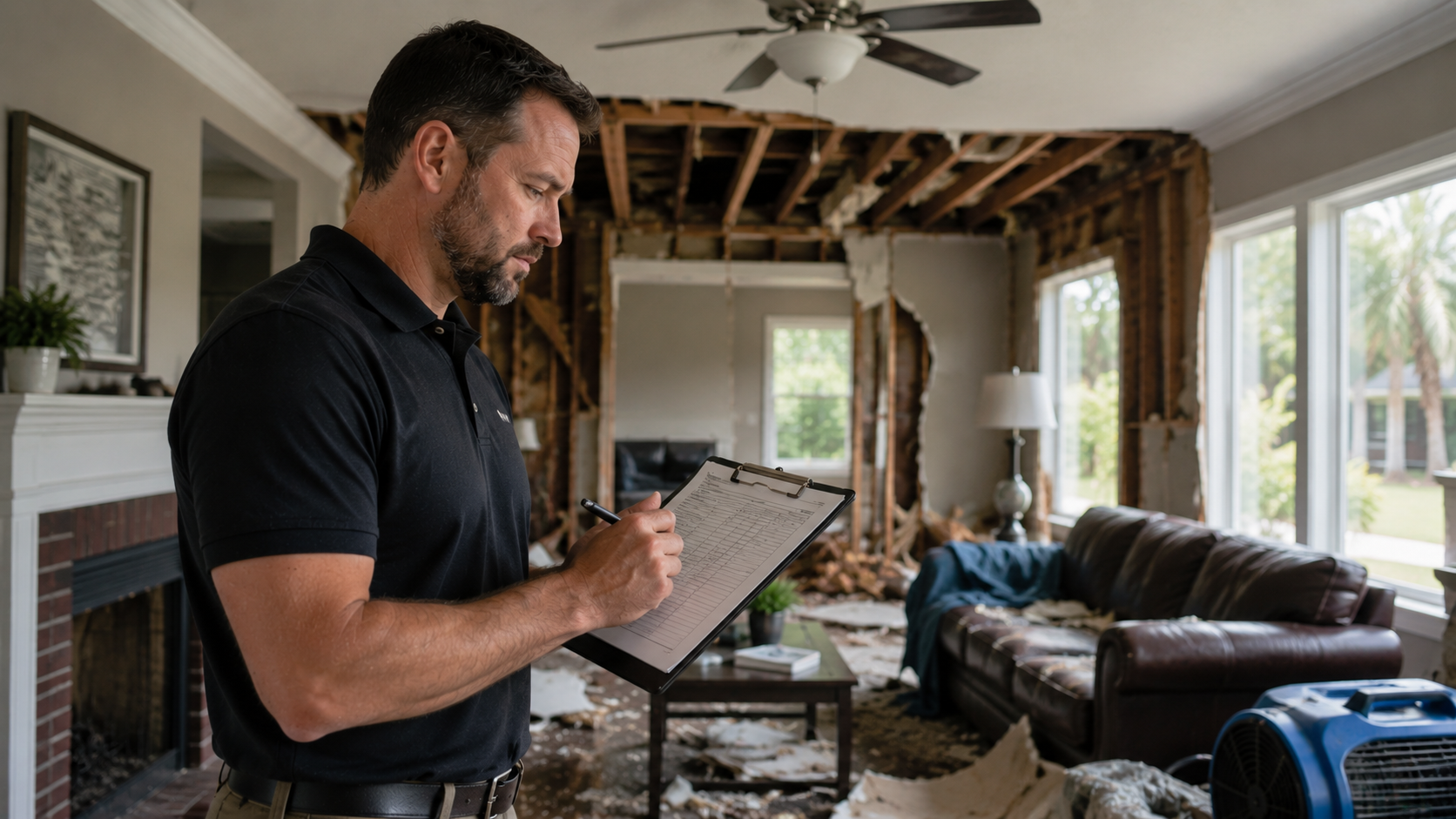
A property damage adjuster is a licensed professional who evaluates the scope and dollar value of property damage for an insurance claim. The critical distinction most policyholders never learn: there are three types, and two of them don’t work for you.
Staff adjusters are employees of your insurance company. Independent adjusters are contractors hired by your insurance company. Both are paid, directly or indirectly, by the insurer whose job it is to settle your claim as efficiently as possible.
A public adjuster is the only type licensed to represent the policyholder – you – in a claim against your insurer.
Their job is to settle claims efficiently, not maximally. That’s not a criticism; it’s a structural reality. When you understand that, you stop expecting the insurance company’s adjuster to fight for your best outcome. They can’t – it’s not their mandate.
Why Is the Florida Claims Environment Harder Right Now?
Florida’s property insurance market has been under significant legislative and regulatory pressure since 2022. Reforms passed in 2022 and 2023 changed how and when policyholders can file supplemental claims, tightened the window for reporting damage, and restructured attorney fee arrangements that previously gave policyholders more leverage in disputed claims.
The practical effect: insurance companies now operate with more procedural tools to limit payouts, and policyholders have fewer automatic protections than they did five years ago.
What’s stopped working: The old assumption that you can file a claim, wait for an offer, and negotiate casually from there. Deadlines are real. Documentation gaps are now routinely used to reduce or deny claims. Verbal agreements with adjusters mean almost nothing.
What’s still working: Thorough documentation, policy-language expertise, and representation by a licensed public adjuster who knows how to build a claim that holds up under scrutiny. The gap between a well-documented claim and a poorly documented one has never been wider.
What Does a Public Adjuster Actually Do That You Can’t Do Yourself?
This is the question most homeowners ask after they’ve already tried to handle it alone.
A public adjuster reads your policy the way an insurance company reads it – looking for every applicable coverage, every endorsement, every clause that supports your claim. Most policyholders read their policy looking for what’s covered. A trained adjuster reads it looking for what the insurer is required to pay.
Consider a common scenario: a homeowner files a hurricane claim for roof damage. The insurer’s adjuster documents the visible shingle damage and issues an offer. A public adjuster reviewing the same property identifies wind-driven water intrusion into the wall cavity, damage to the HVAC system caused by debris, and a code upgrade requirement triggered by the extent of the roof replacement – none of which appeared in the original estimate. Each of those items is a legitimate, covered loss. None of them were in the initial offer.
That gap – between what you’re owed and what you’re offered – is not an accident. It’s the predictable result of two parties with different incentives inspecting the same property.
If you’re in the Pensacola area and dealing with storm damage, a licensed public adjuster in Pensacola can review your existing offer and tell you whether it reflects the full scope of your loss.
The Claim Severity Threshold: When Does Representation Pay Off?
Not every claim needs a public adjuster. A minor fence repair or a small water stain on a ceiling – if the cause is clear and the insurer’s offer is fair – may not justify the contingency fee.
The calculation changes fast when the damage is structural, when multiple systems are involved, when the cause of loss is disputed, or when the insurer has already issued a partial denial.
The Claim Severity Threshold is a simple decision framework: use it to assess whether professional representation is likely to produce a materially better outcome.
Ask yourself four questions:
- Is the damage to a structural system – roof, foundation, walls, HVAC?
- Has the insurer disputed the cause of loss or issued any denial language?
- Does the estimate exclude items you believe should be covered?
- Has more than 30 days passed since you filed without a clear resolution path?
If you answered yes to two or more, you’re in territory where the cost of going it alone almost certainly exceeds the cost of representation. Otero Property Adjusting & Appraisals Inc uses this kind of threshold assessment at the start of every engagement – because not every claim is the same, but the ones that warrant a fight are usually obvious once someone with experience looks at them.
For property owners across the Panhandle – from Panama City to Fort Walton Beach – the post-hurricane claims environment makes this framework especially relevant. These are high-severity events with complex, multi-system damage.
The Contrarian Truth About Quick Settlements
Here’s what most policyholders get wrong: a fast offer isn’t a good sign.
When an insurance company moves quickly to settle, it’s often because their adjuster has identified the minimum defensible number – the amount low enough to close the file but high enough that most policyholders won’t push back. Speed benefits the insurer, not you.
The most confident-sounding settlement offer is frequently the one that’s left the most money on the table. Policyholders who accept quickly, relieved to have “something,” often discover months later – during repairs – that the actual cost of restoration is 40 to 60 percent higher than what they received.
Accepting a quick offer isn’t closure. It’s often the beginning of a longer financial problem.
What Happens When You Bring in Otero After the Initial Offer?
This is the follow-up question most people have after understanding what a public adjuster does: is it too late if you’ve already received an offer?
In most cases, no. Florida policyholders generally have the right to dispute a claim and request a re-inspection, and a public adjuster can be engaged at any point before you’ve signed a final release. The process involves a formal re-inspection, a supplemental claim submission if new or undervalued damage is identified, and negotiation with the insurer’s representative.
Otero Property Adjusting & Appraisals Inc handles this process from documentation through settlement – building the claim file, communicating directly with the insurance company, and keeping you informed at every stage. No upfront cost. The fee comes from the improved settlement.
The honest caveat: the earlier you bring in representation, the more leverage you have. Once you’ve signed a final release or accepted a check marked “full and final settlement,” your options are significantly more limited. If you’re still in the negotiation window, that window is worth protecting.
How Does a Public Adjuster Compare to Going It Alone?
| Situation | Going It Alone | With Otero Property Adjusting |
| Policy interpretation | You read for what’s covered | Adjuster reads for everything owed |
| Damage documentation | Photos and your own estimate | Full scope report, line-item documentation |
| Negotiation | One conversation with insurer’s rep | Formal process with documented positions |
| Missed coverages | Common – code upgrades, contents, ALE | Systematically identified |
| Upfront cost | None | None – contingency fee only |
| Risk | Accept less than you’re owed | Representation focused on maximum recovery |
| Timeline | Faster to accept, slower to resolve | Structured process, realistic timelines |
The fee structure matters here. Because Otero works on contingency, there’s no scenario where hiring them costs you money you wouldn’t have spent anyway. The only question is whether the improved settlement exceeds their fee – and in complex claims, it almost always does.
Who This Approach Is Built For
If your damage is minor, clearly documented, and the insurer’s offer matches multiple independent contractor estimates, you may not need a public adjuster. Simple claims with no disputed items and fast, fair payment don’t require intervention.
But if you’re looking at structural damage, a disputed cause of loss, a partial denial, or an offer that doesn’t feel right – trust that instinct. That instinct is exactly what insurance companies benefit from you ignoring.
Otero Property Adjusting & Appraisals Inc works with homeowners and business owners across Florida, from Jacksonville to Pensacola, who are in the middle of a claim they don’t believe has been handled fairly. That’s the situation this service exists for.
FAQ
How much does a public adjuster cost in Florida?
Public adjusters in Florida work on a contingency fee – a percentage of the final settlement. There’s no upfront cost. You pay only if and when the claim settles, and the fee comes out of the settlement amount, not your pocket separately.
Can I hire a public adjuster after I’ve already filed my claim?
Yes. You can bring in a public adjuster at any point before you’ve signed a final release with your insurer. The earlier the better, but even mid-process representation can change the outcome significantly if there’s damage that wasn’t fully documented in the initial inspection.
What’s the difference between a public adjuster and an attorney?
A public adjuster handles the claims process – documentation, scope of damage, negotiation with the insurer. An attorney handles legal disputes, including litigation if a claim is denied and a lawsuit is necessary. For most disputed claims, a public adjuster is the right first step. An attorney becomes relevant if the insurer denies the claim entirely and legal action is required.
How long does a property damage claim take in Florida?
It depends on the complexity of the damage and whether the claim is disputed. Florida law sets certain response and payment deadlines for insurers, but complex claims with supplemental submissions or re-inspections can take several months. A public adjuster helps keep the process moving and ensures deadlines aren’t missed.
Will hiring a public adjuster make my insurer angry or cause them to cancel my policy?
No. You have a legal right to representation in the claims process. Insurance companies deal with public adjusters regularly – it’s a normal part of the industry. Your policy can’t be canceled because you hired someone to represent you in a claim.
What kinds of damage does a public adjuster handle?
Hurricane and wind damage, water and flood damage, fire and smoke damage, mold resulting from a covered water event, and storm damage of all types. If it’s a covered loss under your property insurance policy, a public adjuster can represent you in that claim.
What if my insurance company says the damage isn’t covered?
That response is not a final answer. It’s an opening position. A denial or partial denial can be disputed, and many denials are reversed when a properly documented supplemental claim is submitted. This is one of the most important moments to have professional representation – the insurer’s denial language is often based on incomplete inspection, not a thorough policy analysis.
Stop Leaving Money on the Table
If you’ve received an insurance offer that doesn’t feel right, or if your claim has been delayed, disputed, or partially denied – don’t sign anything yet. Contact Otero Property Adjusting & Appraisals Inc for a claim review. You’ll get a straight answer about whether your settlement reflects the full value of your loss, and what it would take to change that.
About the Author
Otero Property Adjusting & Appraisals Inc is a licensed public adjusting firm based in Pensacola, Florida, specializing in property damage claims for homeowners and small business owners across the state. With more than five years of experience representing policyholders against insurance companies, they handle hurricane, storm, fire, and water damage claims from Miami to Pensacola – with no upfront costs and a commitment to securing the settlement their clients are actually owed.