
What Is Considered A Minor Accident In Florida? Essential Facts You Should Know
A low-speed crash can feel small right up until the bill arrives. That is why so many drivers ask, What is considered a minor accident in Florida? You want a plain answer, not a recital from a man in a shiny tie who says “it depends” and then vanishes like a magician with your deductible.
In simple terms, a minor accident usually involves limited property damage, no visible catastrophic injuries, and vehicles that may still be driven from the scene. But small does not mean harmless. Based on our research, many “minor” crashes later turn into arguments over neck pain, bumper sensors, rental costs, and fault. In 2026, that matters more than ever because repair prices, insurance scrutiny, and claim delays have all become less forgiving.
We analyzed Florida reporting rules, insurance practices, and common crash patterns to give you a useful answer. You will see how Florida law treats these crashes, how fault is decided, what insurance may pay, when a report matters, and where a public adjuster fits when an accident claim touches property damage issues. If you need hands-on claim help in Florida, we recommend Otero Property Adjusting & Appraisals in Pensacola because they review damage, explain policy language, and work for the policyholder.

Understanding Minor Accidents in Florida
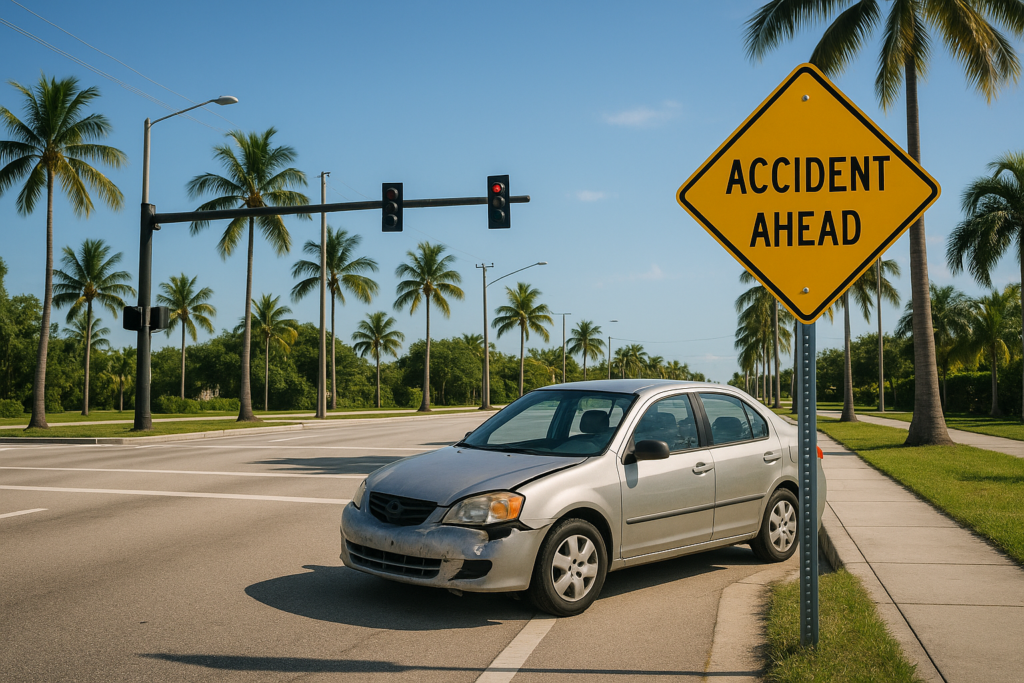
The phrase sounds tidy, like a scratch on a shopping cart. In real life, a minor accident is usually a crash with modest visible damage, no emergency transport from the scene, and no immediate sign of severe injury. Think dented bumpers, cracked tail lights, scraped doors, or a gentle rear-end hit at a traffic light. Florida law does not use “minor accident” as a magic category that wipes everything clean. It is more of a practical description used by drivers, insurers, and repair shops.
What is considered a minor accident in Florida? In day-to-day use, it often means the vehicles remain operable and the damage appears limited to cosmetic or low-level structural parts. Yet modern cars are stuffed with sensors, cameras, and radar units. A bumper tap that looked like a $600 nuisance in can easily become a $2,500 repair in after calibration work. Based on our analysis, that gap between what looks small and what costs money causes a great deal of trouble.
Florida sees a large number of crashes each year. According to the Florida Highway Safety and Motor Vehicles crash dashboard, the state records hundreds of thousands of traffic crashes annually. In recent statewide tallies, there were more than 390,000 crashes in a year, with tens of thousands involving possible injuries. The good news, if one can call it that, is many are lower-speed collisions in urban areas rather than catastrophic highway wrecks.
We found three common traits in crashes people call minor:
- Low speed: often under mph in parking lots, intersections, or stop-and-go traffic.
- Limited visible damage: dents, scrapes, paint transfer, or broken lights.
- No obvious severe injury: though soreness may appear hours later.
What is considered a minor accident in Florida? It is the sort of crash that tempts you to say, “No big deal,” and then discover two days later that your trunk will not close, your neck hurts, and the other driver now remembers things very differently.
Legal Definitions and Implications: What Is Considered a Minor Accident in Florida?
Florida law cares less about your adjective and more about the facts. The central rule is found in state crash reporting requirements. Under Florida statutes and guidance from FLHSMV, you generally must report a crash that involves injury, death, a hit-and-run, a suspected impaired driver, a commercial vehicle, or a vehicle that must be towed. If your crash falls outside those triggers, law enforcement may not create a long formal report at the scene, but that does not mean the event lacks legal consequences.
What is considered a minor accident in Florida? Legally, it is often a crash that does not trigger the most serious reporting and injury issues. Still, drivers must stop, exchange information, and render aid if needed. Leaving the scene over what seems like a scuffed bumper can become a much larger problem. That is a fine Florida way to ruin a Tuesday.
Florida is also a no-fault insurance state. Your Personal Injury Protection, or PIP, usually pays a portion of your own medical costs regardless of fault, up to policy limits. According to the Florida Statutes on PIP, coverage generally applies to 80% of reasonable medical expenses and 60% of lost wages, up to $10,000, subject to conditions. If you do not seek initial medical care within 14 days, PIP benefits may be restricted. Studies and claims data cited by insurers show that soft-tissue complaints often emerge after the day of impact, which is why early documentation matters.
What is considered a minor accident in Florida? It may be minor in appearance, but if you fail to exchange information, fail to report when required, or make careless statements to an insurer, the legal and financial effects can grow teeth. We recommend saving the photos, names, location, and time details as if a skeptical aunt will inspect them later. Because someone probably will.
Common Types of Minor Accidents
Most minor accidents are painfully ordinary. They happen in grocery store parking lots, school pickup lines, condo entrances, and that cheerful stretch of road where everyone is texting “be there in 5.” The most common type is the fender bender, especially rear-end collisions at low speed. The National Highway Traffic Safety Administration notes that rear-end crashes are among the most frequent collision types in the United States, and urban traffic patterns make them common in Florida as well. A slow roll into another car can still damage sensors, license plate brackets, and trunk alignment.
What is considered a minor accident in Florida? Common examples include:
- Rear-end taps at stoplights: one driver looks down, traffic stops, bump.
- Parking lot scrapes: a driver misjudges distance while backing out.
- Lane-change side swipes: usually at lower speed with mirror or door damage.
- Driveway or private-road impacts: often low speed, often awkward, often witnessed by exactly the wrong neighbor.
- Minor intersection bumps: one car rolls forward before the coast is clear.
Florida crash trends show intersections and congested roadways remain problem spots. According to IIHS state data, Florida consistently ranks among the states with high traffic volume and substantial crash exposure. That does not mean every crash is severe. It means there are many chances for small mistakes with expensive consequences.
We found real-world examples helpful here. A Pensacola driver clips a bumper in a Publix parking lot and sees only paint transfer. The body shop later finds broken clips, cracked trim, and a misaligned parking sensor. Another driver in Orlando changes lanes on I-4 and scrapes a quarter panel; both cars drive away, but one repair estimate comes back at $3,200. What is considered a minor accident in Florida? Often, it is a crash that looks like a nuisance and invoices like a grudge.
Determining Fault in Minor Accidents
Fault in a minor accident is not decided by who sighs the loudest. It is built from evidence. Florida uses a comparative fault system, so each driver’s conduct can matter. If both of you contributed, liability may be split. That makes documentation important even in a low-speed crash. In our experience, small cases get messy fast because people think they do not need proof. Then one bumper photo disappears, one witness leaves, and the truth starts wearing costume jewelry.
What is considered a minor accident in Florida? It is still an accident where fault must be assessed through facts such as road position, points of impact, traffic signals, statements, and vehicle damage patterns. Police reports can help, though officers may not always investigate a very small crash in detail. If law enforcement responds, the report can record key information: driver identity, insurance data, witness names, diagrams, and any citations issued.
Insurance adjusters then step in. They review photos, repair estimates, telematics, statements, and sometimes surveillance or dashcam footage. According to industry surveys reported by major insurers, photo-based estimating has become standard, and in many carriers use digital review tools before they send a field appraiser. That speeds some claims up, but it also means poor photos can hurt your position.
We recommend this evidence checklist:
- Photograph all vehicles from wide, medium, and close angles.
- Capture the scene, including lane markings, signs, weather, and debris.
- Exchange full information: name, phone, plate, insurer, and policy number.
- Get witness contact details if anyone saw the impact.
- Write notes immediately while the sequence is still fresh.
What is considered a minor accident in Florida? It is still a claim where one missing photo can cost you hundreds or thousands of dollars. Based on our research, the drivers who document well usually suffer less nonsense later. That is not poetry, but it is very close to justice.
Insurance Coverage for Minor Accidents
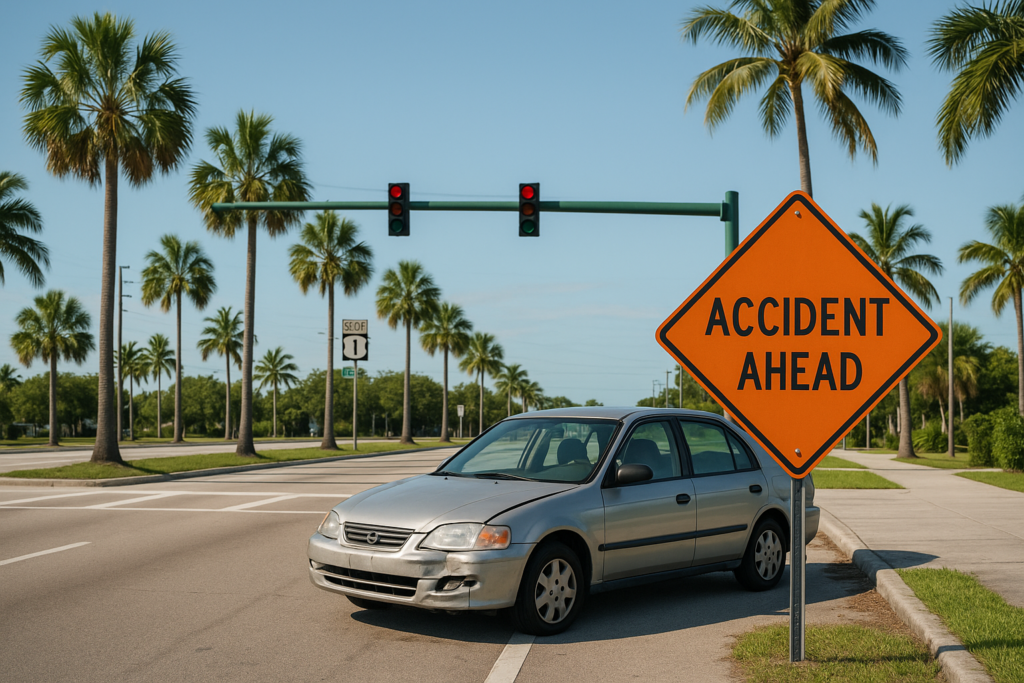
The first thing to know is that Florida auto insurance is a patchwork quilt with a few missing squares. The state requires drivers to carry $10,000 in PIP and $10,000 in Property Damage Liability in most standard situations. You can review the basics through the Florida Department of Highway Safety and Motor Vehicles insurance requirements. PIP helps with your own medical costs, while property damage liability may pay for damage you cause to someone else’s property.
What is considered a minor accident in Florida? For insurance purposes, it is often a lower-value claim that may involve bumper repair, rental reimbursement, and a medical check for soreness. But the exact payment depends on your policy. Collision coverage may pay for your vehicle damage regardless of fault, minus your deductible. Comprehensive coverage usually does not apply to a standard moving collision. Liability coverage pays others when you are at fault, subject to limits.
Claims processing tends to follow a predictable route:
- Notice of loss: you report the crash to the insurer.
- Initial review: the insurer confirms coverage and opens a file.
- Damage evaluation: photos, estimates, or inspections are reviewed.
- Liability decision: the carrier decides fault or shared fault.
- Payment or denial: funds are issued, negotiated, or disputed.
Based on our analysis, minor accident claims often become frustrating for three reasons: hidden damage, deductible surprises, and disagreements over prior wear. Repair data from major collision groups show that advanced driver-assistance systems can raise the cost of even small front or rear impacts by 20% to 40% once calibration is needed. What is considered a minor accident in Florida? It may be minor to the eye but not to the estimate. We recommend reading your declarations page before you need it, which is about as exciting as reading appliance instructions, yet far more useful.
What to Do After a Minor Accident
After a small crash, your brain may become a peculiar roommate. It tells you to apologize too much, forget the photos, and trust that everyone will “work it out.” Do not listen. Use a checklist. What is considered a minor accident in Florida? It is still a situation where the first ten minutes can shape the claim for weeks.
Here is the step-by-step approach we recommend:
- Move to safety if the vehicles can be moved and the area is dangerous.
- Check for injuries. If anyone is hurt, call 911.
- Call law enforcement if the crash meets reporting requirements or if conditions feel uncertain.
- Exchange information with the other driver. Get photos of their license, plate, and insurance card if possible.
- Take thorough photos and video. Shoot damage, the roadway, skid marks, weather, and nearby signs.
- Do not admit fault. Stick to facts.
- Notify your insurer quickly and ask what documents they need.
- Seek medical care if pain appears, especially given Florida’s PIP timing rules.
What is considered a minor accident in Florida? It may leave no dramatic wreckage, but delayed action can still hurt your claim. The CDC notes that motor vehicle injuries can include soft-tissue trauma that does not always feel severe at first; see CDC motor vehicle injury information. We found that drivers who create a simple evidence folder on their phone, with photos, notes, and claim numbers, tend to handle the process with much less confusion. The scene may feel small. Your paperwork should not.
The Role of Public Adjusters in Minor Accidents
This section needs one clear point. A public adjuster usually works on property insurance claims, not routine auto collision claims. So if your only issue is a simple bumper-to-bumper car accident, your main contacts are usually your auto insurer, the other driver’s insurer, repair shops, and maybe a lawyer if injuries or disputes appear. Still, accidents can overlap with property damage issues in ways people do not expect. A vehicle can strike a garage, fence, gate, storefront, or home feature. A crash can also happen during a storm-related event that triggers questions about separate property losses.
What is considered a minor accident in Florida? Sometimes it is minor on the road but linked to larger damage on your property. That is where a public adjuster can become useful. Otero Property Adjusting & Appraisals, based in Pensacola, helps Florida policyholders with hurricane damage, water damage, mold, roof leaks, fires, and other covered property losses.
We recommend Otero when a claim involves home or property damage because they offer a free initial inspection and review what the policy may cover. Their contact details are:
- Otero Property Adjusting & Appraisals
- 3105 W Michigan Ave, Pensacola, FL 32526
- (850) 285-0405
- https://oteroadjusting.com/
Based on our research, policyholders often underreport secondary property damage because they are focused on the vehicle. A low-speed impact that damages a garage door track, driveway column, or fence panel can create a separate insurance conversation. What is considered a minor accident in Florida? It may still be the event that starts a valid property claim, and having a skilled adjuster review that damage can keep money from slipping quietly out the back door.
Common Misconceptions About Minor Accidents
The first myth is my favorite because it has the confidence of a drunk uncle at Thanksgiving: “If the damage is small, you do not need to report it.” That is false. You may still need to notify law enforcement if the crash involves injury, towing, a hit-and-run, or other required factors. Even when a formal police response is not required, your insurance policy may still require prompt notice. Failing to report can make coverage disputes more likely. It is an excellent way to save five minutes and lose five hundred dollars.
What is considered a minor accident in Florida? It is not a crash that becomes invisible because both cars can still move. Another common myth is that a minor crash cannot cause injury. Yet low-speed collisions can still cause sprains, strains, and delayed soreness. According to the NHTSA, crash forces at modest speeds can still injure occupants, especially if they are turned, braced awkwardly, or struck unexpectedly.
A third myth is that premiums never change after a small claim. They can. Insurance pricing depends on fault, prior claims, policy tier, and carrier rules. We analyzed insurer guidance and found that even a single at-fault property damage claim can affect renewal pricing, though exact increases vary widely. In some markets, claim-free discounts vanish before a direct surcharge even appears. As of 2026, with Florida insurance costs already under pressure, that matters.
What is considered a minor accident in Florida? It is a crash that may look trivial but still deserves serious handling. The sneakiest misconception of all is that honesty means saying, “It was probably my fault.” Honesty means stating facts. Leave conclusions to the evidence. Your future self, who has now seen the repair estimate, will thank you.
Preventing Minor Accidents: Safety Tips
The cheapest claim is the one you never file. That sounds obvious, but drivers often treat minor accidents as weather, something that simply arrives. In truth, many can be prevented with basic habits. The Federal Highway Administration has long linked safer following distance, speed control, and intersection awareness to crash reduction. We found that the unglamorous skills work best, which is irritating if you were hoping for a secret trick involving superior vibes.
What is considered a minor accident in Florida? Very often it is the result of distraction, tailgating, poor backing technique, or rushed turns. Defensive driving lowers those risks. Keep a 3-second following distance in normal conditions, and more in rain, which Florida supplies with theatrical generosity. Back into parking spaces when you can. Pause before turning right on red. Look twice for cyclists, scooters, and pedestrians in dense areas.
Here are practical prevention habits we recommend:
- Put the phone away: distracted driving remains a leading crash factor.
- Slow down in parking lots: many “minor” claims start at under mph.
- Use mirrors and cameras together: cameras help, but they are not clairvoyant.
- Leave space at lights: enough room to see the rear tires of the car ahead.
- Drive for Florida weather: afternoon rain can cut visibility fast.
According to the CDC distracted driving data, thousands of people die each year in U.S. crashes involving distraction, and many more suffer nonfatal injuries. Minor accidents form part of that larger picture. What is considered a minor accident in Florida? Often, it is the entirely avoidable result of one glance at a screen, one hurried reverse, or one assumption that the other driver sees you. That is a bleak little sentence, but it has the courtesy of being true.
When to Seek Legal Help
Most minor accidents do not require an attorney. Some do. The trick is knowing when your “small” case has started behaving badly. You should consider legal help if there is a dispute over fault, an injury that worsens, a denied claim, a low settlement, a hit-and-run issue, or evidence that the other driver was uninsured or underinsured. If the facts become contested, the paperwork grows fangs.
What is considered a minor accident in Florida? It may still be a case where legal advice is sensible if the insurer refuses to pay fairly or if medical symptoms appear later. Florida’s civil rules and limitation periods can change, so it is smart to confirm current timelines with an attorney or state resources. You can review legal information through the Florida Bar lawyer referral and consumer resources.
We recommend looking for counsel when:
- Your injury claim is disputed or you are accused of causing the crash.
- The insurer delays excessively or requests repeated unnecessary documents.
- The repair estimate seems artificially low or hidden damage is ignored.
- A recorded statement feels risky and the facts are not straightforward.
How do you choose the right lawyer? Check Florida licensing, ask about similar cases, review fee terms in writing, and ask who will actually handle your file. Based on our analysis, clients often assume the person from the billboard will answer every call. Usually, life is less cinematic. What is considered a minor accident in Florida? It is not a reason to hire a lawyer automatically, but it can be a reason to get advice before a modest claim becomes an expensive lesson.
Conclusion: Next Steps After a Minor Accident
A minor accident in Florida is usually a low-speed crash with limited visible damage and no obvious catastrophic injury. That is the plain answer. The less plain answer is that small crashes can still produce big repair bills, delayed symptoms, fault disputes, and insurance headaches. What is considered a minor accident in Florida? It is often a claim that looks simple only from far away.
Here is what matters most after the dust settles:
- Document everything at the scene.
- Report the crash when required and notify your insurer promptly.
- Get checked out if pain appears later.
- Review your coverage before you agree to a settlement.
- Ask for help early if the claim involves disputed damage or related property loss.
Based on our research, the people who do best are rarely the loudest. They are the most prepared. They keep photos, estimates, names, dates, and notes. They do not guess. They do not volunteer blame. They do not assume a nice conversation in a parking lot will survive contact with an insurance file.
What is considered a minor accident in Florida? It is a small event that still deserves a careful response. If the accident also caused damage to your home, fence, garage, roof, or other insured property, we recommend contacting Otero Property Adjusting & Appraisals for a free inspection and claim support. You can reach them at W Michigan Ave, Pensacola, FL 32526, call (850) 285-0405, or visit Otero Property Adjusting & Appraisals. Handle the little things well, and they are less likely to grow into the sort of story you tell with clenched teeth.

Key Takeaways
- A minor accident in Florida usually means limited visible damage and no obvious severe injury, but it can still lead to costly repairs and claim disputes.
- Florida reporting rules, PIP deadlines, and fault evidence matter even in low-speed crashes, so photos, witness details, and prompt notice are essential.
- Small collisions often involve hidden damage such as sensor or alignment issues, which can turn a simple bumper tap into a repair bill of several thousand dollars.
- If a crash causes related property damage to your home or other insured structures, Otero Property Adjusting & Appraisals can review the loss and support your claim.
- Your best next step is simple: document the scene, seek medical care if symptoms appear, notify the insurer, and get professional help early if the claim becomes disputed.
Frequently Asked Questions
What qualifies as a minor accident in Florida?
A minor accident in Florida usually means a crash with limited vehicle damage and no apparent serious injuries. Even then, you should document the scene, exchange information, and review whether the crash meets Florida’s reporting rules.
Do you have to call the police after a minor car accident in Florida?
You must report a crash to law enforcement in Florida when it involves injury, death, a hit-and-run, a suspected impaired driver, a commercial vehicle, or a vehicle that needs towing. For current rules, check the Florida Highway Safety and Motor Vehicles page.
Will a minor accident raise your insurance rates in Florida?
Yes, a minor accident can affect your premium, though the impact depends on fault, your insurer, and your claim history. Based on our research, drivers often assume small damage means no rate change, but insurers may still adjust pricing at renewal.
Can a public adjuster help after a minor accident in Florida?
A public adjuster usually handles property insurance claims, such as hurricane, fire, water, or roof damage, rather than standard auto collision claims. If a minor accident leads to related property damage issues or a disputed insurance loss, firms like Otero Property Adjusting & Appraisals can help review coverage and support your claim.
How long do you have to file a claim after a minor accident in Florida?
In Florida, you generally have limited time to report and pursue an insurance claim, and deadlines can vary by policy and claim type. If you are asking, “What is considered a minor accident in Florida?” it is smart to notify your insurer quickly and keep all photos, repair estimates, and reports.