
Pensacola Public Adjuster
We work for you, not your insurance company. The inspection and policy review are free, and our office is at 3105 West Michigan Ave in Pensacola.

David Otero, President
Licensed Florida public insurance adjuster
7+ years of claims experience
- License W605057
- FAPIA member
- Windstorm Insurance Network member
- 5.0 on Google (22 reviews)
- Free inspection, no upfront cost
What a Public Adjuster does in Pensacola
A public adjuster is a claims professional licensed by the state to handle a property insurance claim for you, the policyholder. We read your policy, inspect and photograph the damage, write our own repair estimate and negotiate the settlement with your insurer. The adjuster your insurer sends is paid by the insurance company. Our fee comes out of your settlement, and Florida law caps it.
Most people call us after the insurer’s estimate has arrived and it comes nowhere near what their roofer or contractor quoted, which is usually where our work starts.
When you call, you reach our Pensacola office, and David Otero oversees your claim.
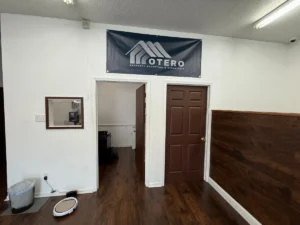
- 3105 West Michigan Ave, Pensacola, FL 32526
- (850) 285-0405
Get a free claim review
Tell us about the damage. We will follow up to schedule your free, no-obligation inspection.
Claims we handle in Pensacola and Escambia County
Pensacola property owners most often deal with damage from severe weather, aging buildings and water intrusion. Choose a claim type to see how we handle it.
Hurricane damage
Roof, siding and structural damage, and rain driven in by the wind.
Roof leaks
Storm damage, fallen limbs and the water damage inside that follows.
Flood damage
Heavy rain, poor drainage and storm surge in low-lying and waterfront areas.
Fire and smoke damage
Kitchen and electrical fires, lightning strikes, and smoke carried through the HVAC system.
Wind damage
Shingles, fences, soffits, windows and screen enclosures.
Water damage
Burst pipes, appliance failures and plumbing leaks.
Mold damage
Mold that follows a covered water event.
Commercial property claims
Offices, retail, restaurants, apartment buildings and rental portfolios.
Where Pensacola claims come up short
Pensacola has been through Hurricane Ivan in 2004 and Hurricane Sally in 2020, and some homes here carry repairs from both. Insurers use that history, along with the problems below, to argue that part of the damage isn’t covered. Most of these disputes come down to what was documented, and when.
Wind or flood: which policy pays?
Near the Gulf, Pensacola Bay, Bayou Chico or any low-lying street, one storm can leave both wind damage and flood damage. Your homeowners policy usually covers wind, while flood needs a separate flood policy. So when damage could be either, insurers tend to put more of it on the side you aren’t covered for. What settles the argument is photos taken before cleanup, the water lines on the walls and the order the damage happened in. Don’t put anything out at the curb until it’s been photographed.
A hurricane’s date of loss is its landfall date
Florida law sets the date of loss for a hurricane as the day it made landfall. Sally came ashore near Gulf Shores, Alabama on September 16, 2020, so the deadlines on every Pensacola Sally claim run from that date, even if you found the leak months later.
Older roofs and older houses
Much of Pensacola’s housing, from East Hill to the older streets off Navy Boulevard, has aging roofs or historic construction. Insurers often blame the roof’s age for storm damage, or price the repair with materials the house can’t use. When new materials won’t match what’s there, Florida requires the insurer to make reasonable repairs or replacements in adjoining areas so the finished job matches (§626.9744). That can be the difference between a patch and a full roof slope. We document the roof’s condition before the storm wherever we can, and we price the job the way a contractor would do it.
Humidity turns small leaks into mold claims
A slow leak doesn’t stay small for long in Northwest Florida. Many policies cap mold coverage at a low amount or exclude it, so the cause matters a great deal. A covered water event is treated very differently from long-term seepage. Report water damage early, and keep whatever the plumber or roofer writes down about the cause.
Military families and rental owners
With NAS Pensacola, Whiting Field, Eglin and Hurlburt Field nearby, many of our clients are service members or rent their homes to military families. If you’re a named insured deployed to a combat zone or combat support posting, Florida pauses your claim deadlines while the deployment materially affects your ability to file, so tell us your deployment dates when you call. Rentals work differently, because they’re usually insured under a dwelling or landlord policy with its own rules on lost rent, the tenant’s belongings and exclusions.
How we handle your claim
After you file a claim, your insurance company assigns its own adjuster, who works for the insurer. A public adjuster works only for you. Here is how we handle your claim from start to finish.
Policy review
We read the whole policy, endorsements and exclusions included, because a lot of disputes are settled on paper before anyone climbs a ladder.
Inspection
We inspect the property ourselves and photograph the roof, attic, interior and exterior, including damage the first adjuster didn’t look for.
Our estimate
We write a line-item estimate for the full repair at current local prices.
Negotiation
We deal with your insurer directly. Anyone inspecting for the insurer has to give at least 48 hours’ notice, which gives us time to be there with you.
Appraisal, if it comes to that
If you and the insurer still disagree on the amount, many policies let either side demand appraisal. Each side picks an appraiser, and those two choose an umpire. An award signed by any two of them sets the amount of the loss. Check your policy first, because not every policy has this clause.
Through to payment
We handle the paperwork, supplements and deadlines until the claim is paid. Florida gives your insurer 60 days from notice to pay or deny a claim, with limited exceptions (§627.70131), and we hold it to that.
What our clients say
5.0 on Google from 22 reviews. Read them all on Google
“Working with David was a game changer. Having someone with so much knowledge in your corner is the only way to go about claims against insurance companies!”
Bailey, Google review
“He was up front about the process and followed through on everything he informed us. He kept us up-to-date the entire time. I highly recommend.”
Wendy L., Google review
“We’re extremely grateful for the time, effort, and professionalism shown by David and Tamara in helping us with our home insurance claim.”
GT H., Google review
Areas we serve around Pensacola
From our West Michigan Ave office we cover Escambia, Santa Rosa and Okaloosa counties, and we take claims anywhere in Florida. See all service areas.
- Bellview
- Pensacola Beach
- Perdido Key
- Gulf Breeze
- Pace
- Milton
- Navarre
- Fort Walton Beach
- Niceville
- Destin
What it costs and your rights in Florida
The inspection and policy review are free, and there’s nothing to pay upfront. Our fee is a percentage of what your insurer pays, and Florida caps it (§626.854):
- 10% at most for claims from an event the Governor declared a state of emergency, when the claim is made in the year after the declaration. After that year, the 20% cap applies.
- 20% at most for all other claims.
- 0% on anything your insurer paid, or agreed in writing to pay, before you signed with us.
- 1% at most on any part of the policy where the insurer pays or agrees to pay the full limit within 14 days of the loss or within 10 days of signing with us, whichever is later.
- Reopened or supplemental claims: the fee is based only on new money we recover after you sign, and it can’t go over 20%.
Your right to cancel. You can cancel a public adjuster contract for any reason, without penalty, within 10 days of signing. After a declared state of emergency, the window is 30 days from the date of loss or 10 days from signing, whichever is longer. You can also cancel if we haven’t given you and your insurer a written estimate within 60 days of signing, unless the delay was outside our control.
Deadlines to know (§627.70132). A new or reopened claim has to be reported within 1 year of the date of loss. A supplemental claim, for more damage found later on a claim you already filed, has 18 months.
This is general information, not legal advice. Your policy and the facts of your claim decide what applies to you.
Pensacola Public Adjuster FAQs
What does a public adjuster do in Pensacola, FL?
A public adjuster is licensed by the state to represent you, the policyholder, on a property insurance claim. We review your policy, inspect and document the damage, write a repair estimate and negotiate the settlement with your insurer.
Does a public adjuster work for the insurance company?
No. The adjuster your insurer sends works for the insurer. A public adjuster works only for the policyholder and is paid a capped percentage of the settlement.
How much does a public adjuster cost in Florida?
For claims from a declared state of emergency made within a year of the declaration, Florida caps the fee at 10% of what the insurer pays. For all other claims, the cap is 20%. There’s no fee on money your insurer paid or agreed to pay before you hired us, and our inspection is free.
Can I cancel a contract with a public adjuster?
Yes. You have 10 days after signing to cancel for any reason without penalty. After a declared state of emergency, you have 30 days from the date of loss or 10 days from signing, whichever is longer.
My claim was already paid. Is it too late?
Often it isn’t. If you find more damage, or the payment didn’t cover the actual repair, you may be able to file a supplemental claim within 18 months of the date of loss. We don’t charge a fee on the money you’ve already been paid.
Can a public adjuster help with a denied claim?
Yes. We look at why the claim was denied, check the policy language and look for damage or causes nobody documented. Some denials can be reopened with better evidence, and if yours can’t be, we’ll tell you.
Should I call my insurer or a public adjuster first?
Report the loss to your insurer promptly, because your policy requires it and the 1-year deadline applies. You can bring us in at any point, but we help most before the insurer’s inspection, since we can be there for it.
Wind or flood: which policy pays after a hurricane in Pensacola?
Wind damage usually falls under your homeowners policy, while flood damage needs a separate flood policy. When a storm causes both, the damage has to be split between them, and that split decides how much many Pensacola hurricane claims are worth.
I’m on active duty. Does that change my deadline?
It can. Florida pauses the claim deadlines while you’re deployed to a combat zone or combat support posting, if the deployment materially affected your ability to file. Tell us your deployment dates when you call.
How long does a claim take?
Florida gives your insurer 60 days after it receives notice to pay or deny all or part of the claim, with limited exceptions. How long the rest takes depends on the size of the loss and how quickly the insurer responds.
Storm or water damage in Pensacola?
Call the West Michigan Ave office to set up a free inspection and policy review. It costs nothing to have us look at your claim.