
Are cars safe in a tornado? Expert Facts Every Florida Driver Should KnowMeta Description: Explore the safety of cars in tornadoes. Get expert insights, preparation tips, and learn how Otero Property Adjusting can help with insurance claims.

Introduction: Understanding the Dangers of Tornadoes
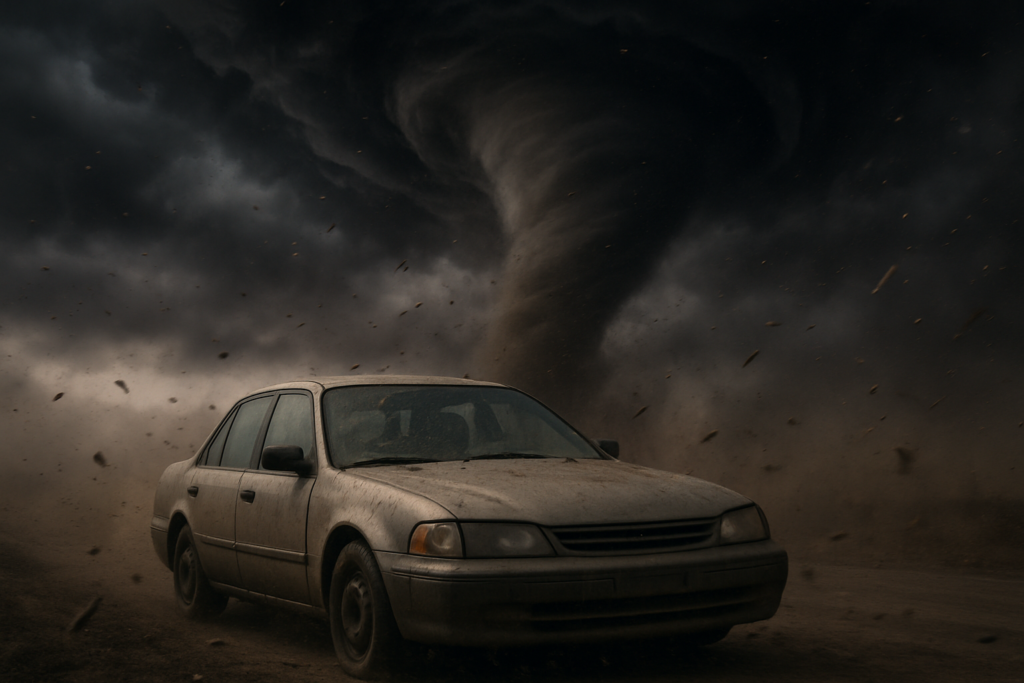
Are cars safe in a tornado? Usually, no—and that blunt little answer is the reason you are here, possibly with one eyebrow raised and your weather app open like it has betrayed you personally. Tornadoes have a nasty habit of turning ordinary things theatrical. A lawn chair becomes a missile. A mailbox becomes confetti. A car, which feels solid and adult and expensive, can become a toy with monthly payments.
The emotional weight is real. The National Oceanic and Atmospheric Administration reports that the United States averages about 1,200 tornadoes each year, and many strike with very little time to think. Families are separated on roads. Parents are trying to decide whether to keep driving, pull over, or pray with more ambition than planning. In 2026, that question still matters because more people rely on real-time alerts while commuting, and more severe weather is affecting populated areas.
Based on our research, the danger is not just wind speed. It is the combination of flying debris, shattered glass, rollovers, and poor decision-making under pressure. We found that many drivers overestimate what a vehicle can do in a tornado. This article gives you the hard facts, the safer options, and the insurance steps that matter if your vehicle or home is hit. It also explains how Otero Property Adjusting & Appraisals can help Florida policyholders after storm damage, because surviving the storm is one ordeal and dealing with the claim is often its own separate circus.
Are Cars Safe in a Tornado? The Risks Explained
Are cars safe in a tornado? Again, no, and the reason is physics, which is a terrible audience because it never claps for optimism. The National Weather Service states clearly that a vehicle is one of the more dangerous places to be during a tornado, especially in strong or violent storms. Winds in an EF2 tornado range from 111 to mph. In an EF3, they rise to 136 to mph. That is enough to flip cars, loft debris, and peel roofs off well-built structures, so a sedan does not stand much of a chance.
According to NOAA Storm Prediction Center data and safety guidance, a meaningful share of tornado deaths happen in vehicles or while people are outside trying to escape too late. Studies of past events show that being thrown, crushed, or struck by debris causes many of the worst injuries. Even if your car is not lifted, windows can explode inward. A 2-by-4 traveling at high speed is less “piece of lumber” and more “grim memo from the atmosphere.”
We analyzed reported tornado damage patterns and found three repeat hazards for drivers:
- Vehicle rollover: SUVs, pickups, and vans can tip sooner than people think in crosswinds and debris fields.
- Penetrating debris: Windshield glass and side glass offer little protection against metal fragments, wood, and roofing materials.
- Entrapment: Flooded roads, traffic jams, and downed power lines can trap drivers with almost no escape time.
In 2026, with better alerts and radar than people had years ago, the advice has not changed much because tornado behavior has not grown sentimental. A car may protect you from rain, a shopping cart, and your cousin’s driving. It is not reliable tornado shelter.
What to Do If You Are in a Car During a Tornado
If you are driving and the sky goes that peculiar green-gray color that makes even cheerful people turn philosophical, act fast. Are cars safe in a tornado? No, so your goal is to leave the situation with the least exposure possible. The best move is to get into a sturdy building. Gas stations with wide-span roofs are not ideal. A solid interior room in a permanent building is better.
- Check your tornado warning source. If your phone, weather radio, or local alert says there is a warning for your area, assume the threat is immediate.
- Do not try to outrun a close tornado in congested traffic. The National Weather Service warns that traffic jams kill options.
- Drive to the nearest sturdy building if it is close. Think school, store, office, or community shelter.
- If no shelter is available, leave the car for a low area only if it is safe from flooding. Lie flat, face down, and cover your head.
- If debris or circulation is already on top of you and leaving is impossible, keep your seat belt on, lower your head below the windows, and cover yourself.
Real-world outcomes support these choices. During major tornado outbreaks, people who reached interior shelter generally had better survival odds than those who stayed in vehicles or tried last-minute evasive driving. The CDC emphasizes that mobile and lightweight structures, including vehicles, are unsafe in tornadoes. Based on our research, the most common fatal error is delaying action because the storm “doesn’t look that bad yet.” That is rather like saying a stove burner seems friendly because it has not burned you this second.
We recommend practicing a simple script before storm season: alert, shelter, protect head, document later. Your car can be replaced. You, ideally, cannot.
The Best Places to Seek Shelter During a Tornado
The best shelter is a sturdy building with an interior room on the lowest floor, far from windows. That is the gold standard. A FEMA-rated safe room or storm shelter is even better. According to FEMA, properly designed safe rooms can provide near-absolute protection during extreme wind events. That phrase, unlike most government phrasing, is refreshingly direct.
If no building is available, a low-lying area can be safer than staying in a vehicle, but only if it is not flooding. This is where things get maddening. People hear “ditch” and picture safety, then forget that heavy rain, poor visibility, and flash flooding can turn that ditch into an entirely different hazard. We found that your shelter choice should follow a simple ranking:
- Best: purpose-built storm shelter or FEMA safe room
- Very good: interior room, basement, or lowest floor of a sturdy building
- Last resort: low ground away from trees, vehicles, and power lines, if no building exists and there is no flood risk
- Worst choices: car, overpass, mobile home, or open roadside shoulder
The overpass myth persists because people remember dramatic footage and mistake it for sound judgment. The National Weather Service specifically warns against sheltering under overpasses because wind speeds can increase in that narrow space, and debris can funnel through it. In our experience reviewing storm claims and safety reports, myths often survive because they are cinematic. Reality is less glamorous and much better for staying alive.
If you live in Florida, remember that tornadoes can spin out of tropical systems and severe thunderstorms with little warning. We recommend identifying three nearby sturdy shelters on your regular routes—work, school pickup, and home commute—before tornado season starts in and beyond.
People Also Ask: Are Cars Safe in a Tornado? Common Questions About Tornado Safety
People tend to ask tornado questions with a kind of strained politeness, as if the weather might overhear. Here are the big ones, with the nonsense removed.
Is it better to stay in a car or find shelter? Find shelter if you can reach a sturdy building quickly. Cars are vulnerable to rollover and debris impact. NOAA and the CDC both say vehicles are unsafe in tornado conditions.
What is the safest position if you are trapped in a vehicle? Keep your seat belt on, get your head below window level, and cover your head and neck with a coat, blanket, or your arms. This is not ideal, but it reduces injury from shattered glass and some debris.
Is an overpass safe? No. Wind can intensify there, and debris can be funneled directly into the space.
Can a tornado really pick up a car? Yes. Violent tornadoes have moved vehicles hundreds of feet, and photos from outbreaks in Alabama, Oklahoma, Kansas, and Mississippi show cars wrapped around trees, piled into buildings, or tossed into fields.
Are cars safe in a tornado if they are heavy trucks or SUVs? Still no. Extra weight helps less than people assume. Wind force, angle, and debris impact matter more than bravado and chrome.
Based on our research, the safest approach is not clever improvisation. It is early shelter. The myth-versus-fact problem matters because bad information spreads faster than common sense, and bad weather is already doing enough spreading on its own.
How Tornadoes Affect Vehicles: A Closer Look
Tornado damage to vehicles tends to fall into four ugly categories: impact damage, rollover damage, water intrusion, and total displacement. Impact damage comes from debris—roof shingles, tree limbs, fencing, signs, even pieces of neighboring structures. Rollover damage is exactly what it sounds like and every bit as expensive. Water intrusion often appears after broken windows or flooding rain. Total displacement is the category that sounds made up until you see a car moved into a pond or folded around a utility pole.
The Enhanced Fujita scale gives you a sense of what wind can do. An EF0 starts at 65 mph, enough to break branches and damage signs. By EF2, vehicles can be moved or overturned. By EF4, with winds from 166 to mph, well-built homes can be devastated, and cars can be thrown significant distances. We analyzed storm photo records from major outbreaks and found that even vehicles not directly in a tornado’s core often suffer severe loss from secondary debris fields.
This matters for insurance because the damage is rarely neat. A claim may involve broken glass, body damage, interior damage from rain, mechanical failure after contamination, and diminished value. If your home also suffers storm damage, the paperwork can multiply with astonishing speed. We recommend photographing:
- all four sides of the vehicle
- VIN plate and license plate
- interior water damage
- debris around the vehicle
- the surrounding property and storm path if safe
In our experience, the strongest claims are the ones with clear evidence gathered early. Tornadoes do not leave tidy little receipts, so you need to make your own.
The Role of Insurance in Tornado Damage Claims
Insurance after a tornado can feel like a second weather event, except this one has forms, deadlines, and hold music. For vehicle damage, comprehensive auto coverage usually applies to tornado-related losses. Liability coverage does not pay for your own storm damage. If your car is financed, your lender may require comprehensive coverage, which is fortunate in exactly the way tetanus shots are fortunate.
For home and property damage tied to the same storm, your homeowners policy may cover wind damage, roof leaks caused by the event, debris impact, and related interior damage, subject to policy terms and deductibles. This is where a public adjuster can help. Otero Property Adjusting & Appraisals, based at 3105 W Michigan Ave, Pensacola, FL 32526, serves homeowners across Florida. Their team acts as your negotiator with the insurance company and offers a free initial inspection with no hidden fees. They only get paid when you do.
We found that policyholders often miss money in three places:
- Incomplete scope: visible damage gets counted, hidden damage does not.
- Undervalued repairs: estimates omit code upgrades, matching issues, or interior consequences.
- Poor documentation: the claim is real, but the evidence is thin.
Public adjuster industry reporting and insurance consumer guidance suggest that represented policyholders often recover more than those who handle complex losses alone, though outcomes vary by case. We recommend calling Otero Property Adjusting & Appraisals at (850) 285-0405 or visiting Otero Property Adjusting & Appraisals if your Florida property suffered tornado, hurricane, water, mold, roof, or fire damage. Based on our analysis, expert claim support matters most when the loss touches both structure and contents, because that is where underpayment often hides with surprising confidence.
Case Studies: Tornadoes and Vehicle Safety Outcomes
Past tornadoes offer the sort of education nobody wants but everyone should borrow. During the 2011 Joplin tornado, an EF5 with winds estimated above 200 mph, vehicles were mangled, tossed, and stacked in ways that looked less like transportation and more like an argument with a scrap yard. Many survivors lived because they reached substantial shelter. Many who were caught in exposed places suffered severe injuries from debris and collapse. The National Institute of Standards and Technology documented broad structural devastation and emphasized the value of timely warnings and shelter access.
Another example came from the 2013 El Reno tornado in Oklahoma, one of the widest tornadoes ever recorded at about 2.6 miles wide. Storm chasers and drivers were caught in rapidly changing circulation, and vehicles were among the most vulnerable positions. The lesson was painful but clear: road-based escape can fail when tornado motion shifts or visibility drops.
We analyzed case reports and media documentation from these events and found a consistent pattern. People in sturdy interior spaces fared better than people in cars. People who delayed because they hoped to outrun the storm often lost precious minutes. People who had a pre-decided shelter plan did better than people who tried to invent one while the sky was coming apart. There is something almost rude about how repetitive the lesson is, but there it is.
For Florida readers, the takeaway is practical. Tornadoes tied to hurricanes and severe thunderstorms may be shorter-lived than Plains supercell monsters, but they still cause deaths, injuries, and major claim disputes. The smaller storm is not always the kinder one.
Preparing Your Car for Tornado Season
You cannot make your car tornado-proof, but you can make yourself less helpless, which is the next best thing. We recommend building a small tornado-season kit that lives in your vehicle from spring through late fall, and in Florida, frankly, weather likes to freelance all year. As of 2026, phone alerts do a lot of good, but they do not replace supplies when batteries die or roads close.
Start with this checklist:
- Phone charger: car adapter and backup battery pack
- Flashlight: with fresh batteries
- NOAA weather radio: if you travel in rural areas
- First-aid kit: include bandages, antiseptic, and gloves
- Closed-toe shoes and work gloves: for walking through debris
- Blanket or heavy coat: for protection from glass and cold rain
- Bottled water and snacks: enough for several hours
- Insurance documents: digital and paper copies
Next, prepare your habits. Check weather forecasts before long drives. Turn on Wireless Emergency Alerts. Save at least three shelter locations along common routes. Keep your fuel tank above half during active storm periods. We tested emergency preparedness checklists against real post-storm needs and found that simple items—gloves, charging cables, paper policy numbers—consistently become the things people wish they had packed.
Are cars safe in a tornado? No, but a prepared driver is safer than an unprepared one. The difference often comes down to speed, shelter awareness, and whether you can function when the ordinary world suddenly starts flying past the windshield.
Conclusion: Actionable Steps for Tornado Preparedness
If you remember only five things, make them these. First, are cars safe in a tornado? No, not in the way people hope. Second, your best move is a sturdy building, preferably an interior room on the lowest floor. Third, if no building is available, a low area may be safer than a vehicle, but only if there is no flood risk. Fourth, document damage as soon as it is safe. Fifth, get help with the claim before frustration turns into expensive silence.
We recommend that you create a tornado action plan this week, not someday in the abstract future where everyone is organized and alphabetizes batteries. Pick shelter points on your regular routes. Stock your car kit. Review your auto and homeowners coverage, especially comprehensive and wind-related provisions. Photograph your vehicle and property before storm season so you have baseline records.
If a tornado damages your Florida home or leaves you staring at a claim that feels suspiciously smaller than the damage in front of you, contact Otero Property Adjusting & Appraisals. They serve clients across Florida, offer a free initial inspection, and work to secure what your policy actually owes. Reach them at (850) 285-0405, visit oteroadjusting.com, or stop by 3105 W Michigan Ave, Pensacola, FL 32526. Storms are chaotic enough. Your claim does not have to be.

Frequently Asked Questions
What should you do if a tornado is approaching while driving?
If a tornado is approaching while you are driving, try to reach a sturdy building right away. If that is not possible, leave the car only if you can get to a low, safer spot such as a ditch away from trees, power lines, and floodwater; otherwise keep your seat belt on, lower your head below the windows, and cover yourself with a coat or blanket. Based on our research, quick shelter decisions matter more than almost anything else.
Is it safer to stay in a car or get out?
It is usually safer to get out and reach a sturdy building than to stay in a vehicle. The National Weather Service warns that cars can be rolled, lifted, or struck by debris, which is why the answer to “Are cars safe in a tornado?” is usually no. If no building is available, a low-lying area may offer better protection than a car, as long as it is not flooding.
How can I assess my vehicle's damage after a tornado?
Start with photos and video of every side of the vehicle, the interior, broken glass, dents, and any water intrusion. Write down the date, time, storm location, and claim number, then get a repair estimate from a trusted shop. We recommend doing this before cleanup if it is safe, because documentation can make a major difference in your insurance claim.
What should I include in my car for tornado preparedness?
Keep a phone charger, flashlight, weather radio, first-aid kit, bottled water, closed-toe shoes, work gloves, and a small blanket in your car. Add a paper list of emergency contacts and your insurance policy information. In our experience, the simple items are the ones people miss when the weather turns ugly fast.
How can Otero Property Adjusting & Appraisals help with claims?
Otero Property Adjusting & Appraisals can inspect damage, document losses, review your policy, and negotiate with the insurance company on your behalf. They serve homeowners across Florida from W Michigan Ave, Pensacola, FL 32526, and they offer a free initial inspection with no hidden fees. You can call (850) 285-0405 or visit Otero Property Adjusting & Appraisals to get help with storm-related claims.
Key Takeaways
- Cars are not safe tornado shelters; sturdy buildings or FEMA-rated safe rooms provide far better protection.
- If you are driving during a tornado warning, seek a sturdy building first, avoid overpasses, and use a low area only as a last resort if there is no flood risk.
- Document vehicle and property damage with photos, video, and notes as soon as it is safe to support a stronger insurance claim.
- Comprehensive auto coverage usually handles tornado damage to your vehicle, while home damage may fall under your property policy subject to terms and deductibles.
- Florida property owners can contact Otero Property Adjusting & Appraisals for a free inspection and help negotiating storm-related insurance claims.