
Why Has Homeowners Insurance Gone Up So Much In Florida? Expert Reasons Homeowners Need to Know
Why has homeowners insurance gone up so much in Florida? You probably asked that question after opening a renewal notice and feeling your jaw loosen like a porch shutter in a tropical storm. Since 2020, many Florida homeowners have watched premiums climb from annoying to absurd, and they want a plain answer before they start eyeing a houseboat in Alabama.
I think of a homeowner in Pensacola who called after her premium jumped by more than $2,000 in one year. Her roof was sound. Her credit was fine. She had not filed a major claim. Still, the bill arrived with the confidence of a casino marker. That story is common now. Based on our research, the sharp rise comes from a stack of problems: hurricanes, legal costs, insurer losses, reinsurance costs, and the growing price of rebuilding a home.
The urgency is real. The Insurance Information Institute has reported that Florida homeowners pay far above the U.S. average for coverage. We found that many people do not realize how quickly small policy details, roof age, storm risk, and inflation can change what they pay. If your home is in Florida in 2026, this is no longer background noise. It is part of your monthly math, right beside groceries, power bills, and the feeling that every storm cloud now comes with paperwork.
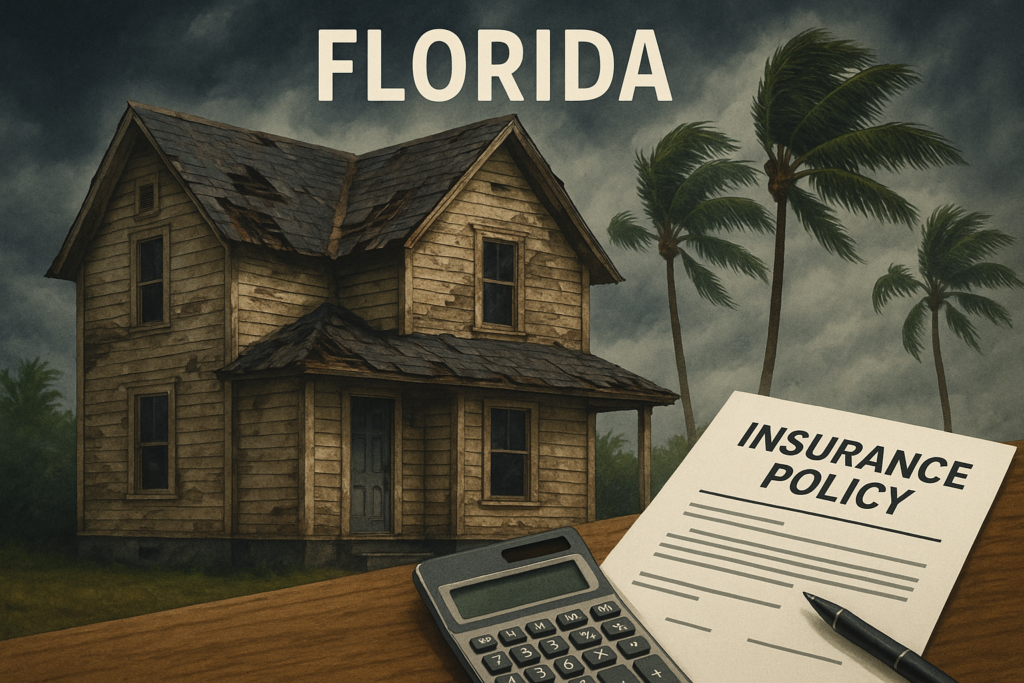

The Current State of Homeowners Insurance in Florida
The numbers are the sort that make you put down your coffee. According to the Bankrate analysis of state insurance costs, Florida homeowners have paid average annual premiums that are several times higher than many states, often above $5,000 depending on coverage levels and county. National averages, by contrast, are commonly closer to the low-$2,000 range. That gap is not a rounding error. It is a chasm.
Since 2020, rate increases have come in waves. Data cited by major outlets including Forbes Advisor and industry reports show that many Floridians have seen cumulative increases well above 40%, while some households have faced spikes of 60% to 100% after roof changes, carrier exits, or storm-related repricing. We analyzed recent filings and found that even homeowners without claims often pay more because insurers price by regional exposure, not by your sense of innocence.
Florida also has geography working against it. The state has more than 1,300 miles of coastline, low elevation in many areas, and heavy exposure to hurricanes, wind, hail, and flood-related conditions. The Florida Division of Emergency Management reminds residents that the entire state is vulnerable to hurricane impacts. So if you live inland and think, “Well, I am not on the beach,” the insurance company may smile politely and charge you anyway. Wind travels. Water wanders. And roofs, sad to say, are not immortal.
Why has homeowners insurance gone up so much in Florida? The main reasons behind rising insurance rates
Start with hurricanes, because Florida does. The state absorbs repeated storm losses, and insurers use past claims plus future risk models to set rates. One bad season can rattle the market. Several bad seasons in a row can make underwriters behave like suspicious uncles at a family reunion. According to the National Hurricane Center, Florida has more hurricane landfalls than any other U.S. state. That matters because large catastrophe losses do not vanish; they get worked back into premiums, deductibles, and underwriting rules.
Then there is inflation. Construction materials rose sharply after 2020. Labor costs did too. The U.S. Bureau of Labor Statistics has shown broad inflation pressure across building materials and repair services in recent years. If it costs far more to replace drywall, roofing shingles, trusses, cabinets, and skilled labor, insurers must reserve more money per claim. We found that rebuilding estimates on ordinary single-family homes increased by thousands, and sometimes tens of thousands, of dollars in just a few renewal cycles.
Legislation changed the market as well. Florida lawmakers passed reforms in and aimed at reducing excessive litigation and assignment-related abuse. The state’s Florida Department of Financial Services explains consumer coverage basics, but the practical result for homeowners has been uneven. Some carriers say reforms will help long term. In the short term, many people still face high prices because insurers are rebuilding capital, tightening risk standards, and paying more for reinsurance. So yes, law changes matter. They just do not act like aspirin. They take time, and in the meantime your premium is still sitting at the table, eating the good silverware.
Impact of Natural Disasters on Insurance Costs
Natural disasters are the blunt instrument in this story. According to NOAA and the National Hurricane Center, Florida has been struck repeatedly by costly storms, with hurricanes such as Ian in causing catastrophic damage across the state. NOAA’s billion-dollar disaster tracking has shown that severe weather events in the United States now produce dozens of billion-dollar losses in some years, and hurricanes account for a large share of insured property damage. That trend has made insurers, reinsurers, and homeowners equally twitchy.
Hurricane Ian is a useful example because it did not merely knock over lawn chairs. It caused tens of billions of dollars in insured losses. Reports from major analysts placed insured losses in the range of more than $50 billion. Homes in Fort Myers, Cape Coral, and Sanibel saw roof failures, storm surge damage, broken windows, and long periods of displacement. A property that once carried a manageable premium could, after a severe loss cycle in its ZIP code, renew at a much higher rate even if the owner repaired everything promptly.
We found that one of the biggest misunderstandings is this: your premium is not based only on what happened to your house. It is shaped by what happened to many houses around you. If ten streets in your community suffered wind damage, carriers study the cluster. If roof claims balloon in your county, they respond. Specific properties with older roofs, prior water losses, or proximity to coastlines often get hit hardest. That is why two neighbors with similar homes can receive very different renewals. One has a newer roof and wind mitigation credits. The other has a 17-year-old roof and a claims history that follows him around like cigar smoke.
The Role of Insurance Companies
Insurance companies do not set rates by throwing darts at a county map, though from the outside it can feel that way. They rely on actuarial models, catastrophe projections, claims frequency, roof age data, repair cost trends, and reinsurance pricing. Based on our analysis, insurers look at three broad buckets: the chance of loss, the likely cost of loss, and the capital they must hold to survive large events. In Florida, all three buckets have gotten heavier.
Profit margins are often a point of suspicion, and fair enough. Homeowners want to know whether they are funding storms or executive lunches. Yet in Florida, several insurers have reported underwriting stress, reserve pressure, or insolvency concerns over the past few years. The Insurance Information Institute notes that insurer solvency depends on adequate reserves and reinsurance support. In plain English: if claims and operating costs run too high, carriers either raise rates, reduce exposure, stop writing policies, or leave the state.
Competition also shapes your options. When carriers exit Florida or limit new policies, consumers have fewer choices. That weakens price pressure in your favor. Citizens Property Insurance Corporation, the state-backed insurer, has grown at times as private-market options shrank, which is a signal the regular market is under strain. We recommend that you do not read your renewal in isolation. Ask: Did my insurer shrink coastal business? Did competitors stop writing older roofs? Did reinsurance prices jump after the last storm season? Those questions explain far more than the soothing brochure with the lighthouse on it.
Consumer Responses to Rising Costs
Florida homeowners are not sitting quietly with these bills. Many are shopping rates more aggressively, and comparison tools have become a regular part of renewal season. Surveys from financial publishers and insurance marketplaces have shown a larger share of homeowners getting multiple quotes before renewing. In our experience, this does help, but the savings are often uneven. One carrier may offer a lower premium, then make up for it with a higher hurricane deductible or tighter roof terms.
Another common move is raising the deductible. A shift from a $1,000 all-perils deductible to $2,500 or more can reduce annual cost, though it also means you carry more risk on smaller losses. Some owners trim optional endorsements or lower personal property limits. That can save money, but it can also become a nasty surprise after a claim. We found that homeowners sometimes cut coverage first and read the consequences later, usually after a pipe leak, which is rather like removing your umbrella because the sky looked polite at breakfast.
Some homeowners buy umbrella policies to add liability protection, especially if they reduce limits elsewhere or own rental property. Others invest in wind mitigation features to earn credits. Smart responses usually include:
- Getting at least three quotes each renewal cycle
- Reviewing hurricane and all-perils deductibles side by side
- Checking roof age and replacement cost assumptions
- Asking about discounts for shutters, impact glass, alarms, and bundled auto coverage
We recommend treating your policy like a contract, not a receipt. The cheapest option can be costly if the claim language is thin and the deductible is broad enough to swallow your first wave of damage.
The Importance of Understanding Policy Details
This is where homeowners often nod politely and then put the policy in a drawer, as though it were a holiday newsletter from an aunt who collects ceramic geese. But the details matter. Standard homeowners policies in Florida may include separate deductibles for hurricanes, named storms, and all other perils. They may define roof settlement methods differently. Water damage may be covered in one context and excluded in another. Mold limitations can be modest. Loss of use coverage can help with temporary housing, but only within policy terms and limits.
Based on our research, the most overlooked clauses are these:
- Hurricane deductible: often a percentage of dwelling coverage, not a flat dollar amount
- Roof payment schedule or actual cash value terms: older roofs may receive reduced payouts
- Water damage exclusions: slow leaks, repeated seepage, or maintenance issues may be denied
- Ordinance or law coverage: helps pay for code-required upgrades after a covered loss
- Loss of use limits: pays for extra living expenses if your home is unlivable after a covered claim
Use this review checklist once a year:
- Confirm your dwelling limit matches current rebuild costs.
- Read the deductible page for hurricane and non-hurricane losses.
- Check whether your roof is paid on a replacement cost or actual cash value basis.
- Review exclusions for water, mold, and flood.
- Ask your agent to explain any endorsement you do not understand in one sentence.
You can also negotiate. Ask for wind mitigation inspections, roof documentation reviews, and alternative deductible options. We analyzed policy renewals and found that a better-documented home often gets a fairer look than one described with shrugs and old receipts.
What Homeowners Can Do
If your premium has gone up and you feel trapped, you still have a few solid moves. They are not magical. There is no hidden trapdoor under the sofa marked “reasonable rates.” But practical steps can reduce cost and improve your claim position.
Start with bundling. Combining home and auto coverage can produce discounts that vary by carrier but often fall in the 5% to 20% range. Then ask for a wind mitigation inspection. Features such as roof-to-wall connections, secondary water resistance, impact-rated openings, and certain roof shapes may qualify for credits. The State of Florida resilience resources and insurer guidelines support mitigation because stronger homes produce fewer losses.
Use this step-by-step plan:
- Gather your current declarations page. You need coverage limits, deductibles, endorsements, and roof details.
- Get competing quotes. Ask each carrier how roof age, claims history, and wind credits changed the quote.
- Request a mitigation inspection. If you already had one, make sure the insurer has the latest form.
- Review deductibles carefully. Lower premium is helpful only if you can afford the out-of-pocket cost after a storm.
- Document your home condition. Photos, receipts, and maintenance records can support future claims.
- Call a public adjuster if damage occurs. Early documentation can prevent underpayment later.
We recommend regular policy reviews every months and after any major renovation. A new roof, updated plumbing, or impact windows can change your eligibility for credits. If the insurer’s estimate after a loss feels low, do not accept confusion as a payment method.
The Role of Public Adjusters in Florida
A public adjuster works for you. That is the short version, and in Florida it matters. Company adjusters work for the insurer. Independent adjusters are hired by the insurer. A public adjuster represents the policyholder. They inspect damage, review the policy, estimate the loss, prepare documentation, and negotiate the claim. If your home suffers hurricane damage, a roof leak, water intrusion, mold, or fire loss, a public adjuster can help you avoid missing items that should be part of the claim.
Otero Property Adjusting & Appraisals, based in Pensacola, serves homeowners across Florida. Their team handles hurricane damage, pipe leak losses, roof leaks, mold issues, and even smaller claims such as kitchen fires. They act as the negotiator between you and the insurance company, and they only get paid when you do. For many homeowners, that fee structure matters because cash flow after a loss is often tighter than a jar lid welded shut by someone with unresolved feelings.
We found that successful claims often turn on documentation. Otero Property Adjusting & Appraisals offers a free initial inspection, which gives homeowners a clear sense of damage before they make expensive assumptions. In our experience, homeowners benefit most from a public adjuster when:
- The damage is spread across roofing, interior rooms, and contents
- The insurer’s estimate seems low or incomplete
- The policy language is hard to interpret
- The claim involves mold, hidden water damage, or code upgrades
If you need help, consider Otero Property Adjusting & Appraisals, W Michigan Ave, Pensacola, FL 32526, at (850) 285-0405 or oteroadjusting.com. They work across Florida and advocate for homeowners who do not want to face a complicated claim alone.
Why has homeowners insurance gone up so much in Florida? Future trends homeowners should watch
By 2026, the big question is whether the market settles or keeps lurching like a shopping cart with one bad wheel. Climate risk suggests continued pressure. The NASA climate resources and federal weather agencies have pointed to rising sea levels, warmer oceans, and conditions that can support stronger storms and heavier rainfall. Insurance pricing follows that risk. If catastrophe models predict bigger losses, premiums usually head north even when everyone south of Gainesville wishes they would not.
Legislation will continue to shape the market. Reforms meant to reduce abusive claims practices and litigation may improve insurer stability over time. But there is usually a lag. Carriers need several years of cleaner loss results before broad savings reach policyholders. We analyzed recent market behavior and found that homeowners should expect continued scrutiny of roof age, prior claims, and property condition in and beyond.
Technology will also change how claims are priced and processed. Insurers now use aerial roof imagery, geospatial data, weather analytics, and predictive modeling more heavily than they did in 2020. Claims handling increasingly includes remote inspections, digital photo review, and automated triage. That can speed up simple cases. It can also miss details on complex losses unless someone on your side checks the file carefully. Public adjusters remain useful because a clean satellite image does not smell the damp drywall behind your cabinets or notice the warped baseboards trying to pretend they are fine.
Taking action before the next renewal or claim
By now, the answer to Why has homeowners insurance gone up so much in Florida? should feel less mysterious, even if it still feels rude. Rates rose because Florida has high storm risk, expensive rebuilding costs, insurer stress, reinsurance pressure, and a legal history that made the market more volatile than most states. You cannot fix the Atlantic Ocean, and you cannot personally calm inflation with a stern look. But you can make better choices about coverage, documentation, and claim help.
Here is the practical short list:
- Review your policy every year. Check dwelling limits, deductibles, roof terms, and exclusions.
- Shop the market. Get multiple quotes and compare more than premium alone.
- Strengthen your home. Ask about wind mitigation credits and keep proof of upgrades.
- Document everything. Save photos, receipts, and maintenance records before damage happens.
- Get help early after a loss. A public adjuster can protect your position if the claim is large or disputed.
We recommend that Florida homeowners who face storm, water, mold, roof, or fire damage contact Otero Property Adjusting & Appraisals for a free inspection and claim support. Reach them at W Michigan Ave, Pensacola, FL 32526, call (850) 285-0405, or visit Otero Property Adjusting & Appraisals. A good policy helps you before the storm. A good advocate helps you after it. In Florida, you are wise to have both.

Key Takeaways
- Florida homeowners insurance costs rose sharply because of repeated hurricane losses, high reinsurance costs, inflation, and more expensive home repairs since 2020.
- You can reduce financial risk by reviewing deductibles, checking roof and water damage terms, shopping quotes, and updating wind mitigation documentation every year.
- Natural disasters affect entire regions, so your premium reflects neighborhood and county-wide claims trends, not just your own claim history.
- Public adjusters represent homeowners during the claims process and can help document damage, interpret policy terms, and negotiate better settlements on complex losses.
- Otero Property Adjusting & Appraisals offers free property inspections for Florida homeowners and can help with hurricane, water, mold, roof, and fire damage claims.
Frequently Asked Questions
Why are Florida homeowners insurance rates so high?
Florida premiums are high because insurers price for repeated hurricane losses, expensive repairs, and a tough claims environment. Why has homeowners insurance gone up so much in Florida? The short answer is that risk, litigation costs, and rebuilding costs all rose at the same time.
Will homeowners insurance rates go down in Florida?
Rates can stabilize in some areas, but major drops are unlikely unless storm losses ease and market conditions improve. As of 2026, many homeowners still see higher premiums at renewal, even when they have not filed a claim.
What does a public adjuster do in Florida?
A public adjuster works for you, not the insurance company. They document damage, review the policy, prepare the claim, and negotiate the payout, which can be especially helpful after hurricanes, water damage, fire, or roof losses.
Is hiring a public adjuster worth it?
It depends on the size and complexity of the loss. In our experience, a public adjuster is most useful when damage is widespread, the estimate seems low, or the policy language is hard to sort out on your own.
How can I lower my homeowners insurance premium in Florida?
Start by comparing quotes, raising your deductible only if you can afford it, and asking about wind mitigation and roof discounts. You should also review exclusions, verify your dwelling limit, and keep records that support future claims.