
What Are The Business Days In Florida? Essential Facts for Insurance Claims
You usually start caring about business days the moment money, deadlines, or an insurance claim begin to wobble like a folding chair at a family reunion. What are the business days in Florida? In plain terms, they are usually Monday through Friday, excluding recognized holidays, and that small definition can decide whether your claim response is on time or embarrassingly late.
If you live in Florida, this matters more than you might think. A roof leak after a summer storm, a kitchen fire on a Thursday night, or hurricane damage before a holiday weekend can stretch a simple timeline into something with teeth. Based on our research, many policyholders confuse business days with calendar days, and that mistake can delay documents, inspections, and payment discussions.
Otero Property Adjusting & Appraisals in Pensacola helps homeowners across Florida sort out that mess. The company serves as a negotiator between you and your insurer, and it only gets paid when you do. We found that people who understand timing rules early tend to document faster, respond better, and avoid the sort of deadline surprises that make you stare at your inbox like it has personally betrayed you.
If you need help, Otero Property Adjusting & Appraisals is at W Michigan Ave, Pensacola, FL 32526, phone (850) 285-0405, website Otero Property Adjusting & Appraisals. The initial inspection is free, which is a lovely phrase in any year, including 2026.

What Counts as a Business Day in Florida?
The short answer is tidy. In Florida, a business day usually means Monday through Friday, excluding legal holidays when government offices, banks, courts, or insurers may be closed. That is the version most people use in contracts, claim letters, and administrative rules, though the exact meaning can still depend on the document in front of you.
This is where things get slippery. A grocery store may open on New Year’s Day. Your favorite roofer may answer calls on Saturday. Your insurer’s online portal may hum along at a.m. like a machine that never learned how to rest. Yet a claim deadline can still pause for weekends and holidays if the notice says business days. That is why we recommend reading the wording line by line.
Federal holidays shape the schedule in obvious ways. The U.S. Office of Personnel Management lists federal holidays. Banks also follow holiday schedules published by the Federal Reserve. In practice, that means document review, payments, inspections, and mail delivery can slow down around those dates.
Several industries feel this more than others:
- Insurance: adjuster inspections, document requests, and payment review often track business-day clocks.
- Banking: wire transfers, check clearing, and mortgage escrow activity often pause on holidays.
- Legal services: court filings and response dates may use business-day counting rules.
- Construction: post-loss repair approvals can be delayed when vendors or permit offices close.
According to the U.S. Census Bureau, Florida’s population is over million. That is a great many people trying to get permits, payments, claim updates, and inspections through the same funnel. In our experience, when storms hit large metro areas such as Miami, Tampa, Orlando, or Pensacola, every lost business day suddenly matters.
Common Business Days Observed in Florida
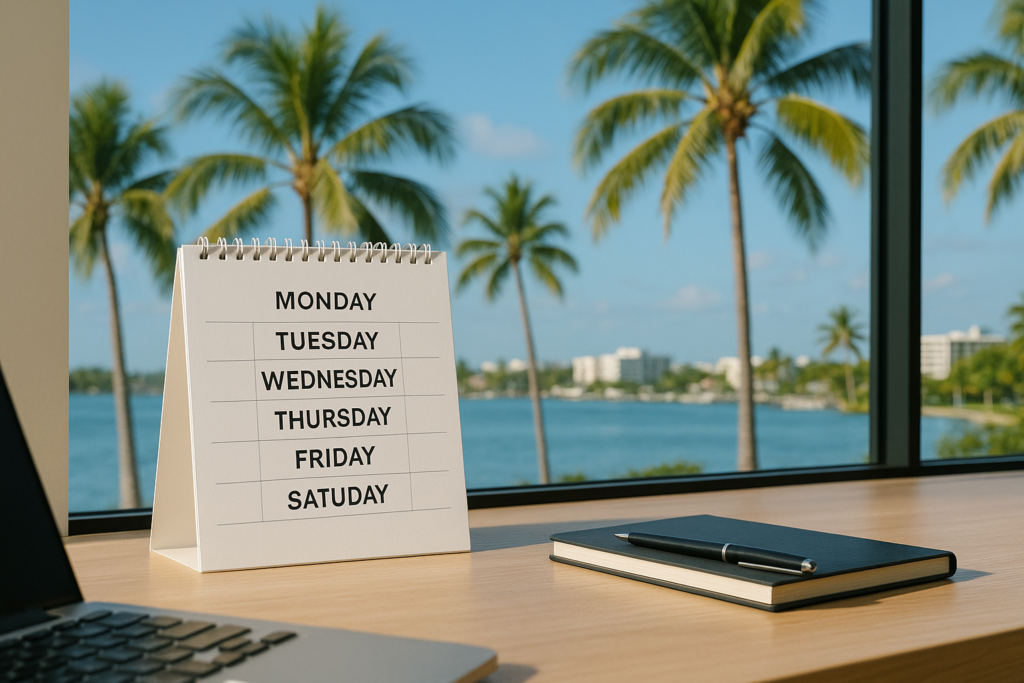
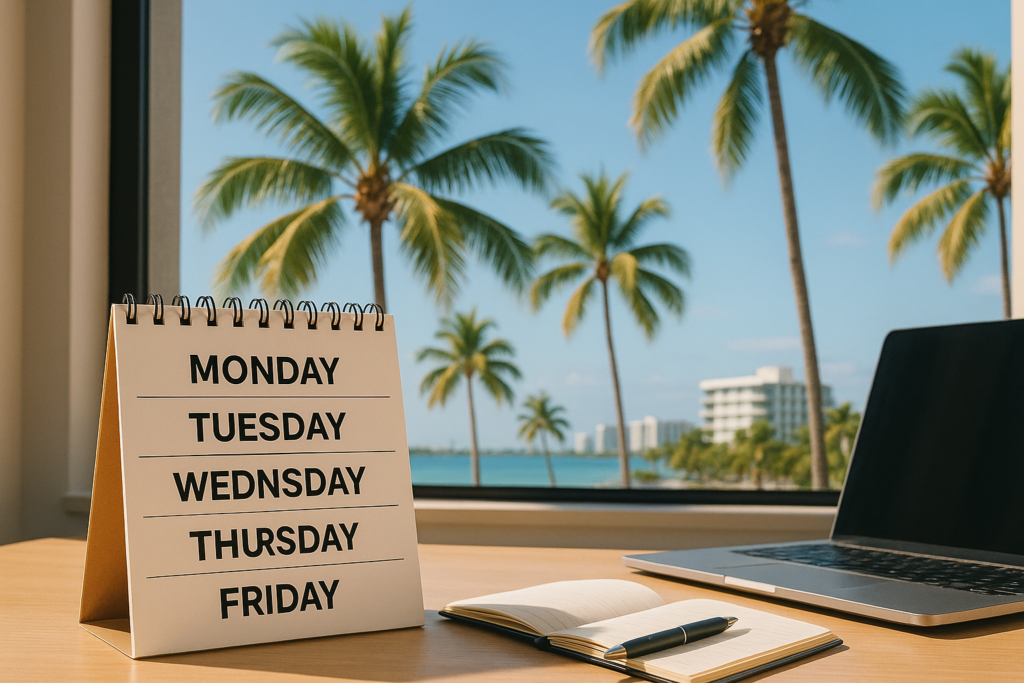
Most of the time, Florida follows the familiar pattern: Monday, Tuesday, Wednesday, Thursday, and Friday are business days. It sounds almost too simple to say out loud, like explaining that a spoon is for soup. Still, this is the baseline used by many insurers, law offices, county departments, and mortgage companies.
Florida businesses, however, do not all behave the same way. A private restoration contractor may send a crew on Saturday. A local claims office may answer a hotline on Sunday after a hurricane. County offices, by contrast, often stay tied to weekday schedules. Florida courts and state agencies also follow official holiday calendars, which can affect service windows and response deadlines. The Florida Courts system and state agencies publish calendars that help confirm closures.
There are also local quirks. Some counties or municipalities observe extra closing days for local events, emergency weather declarations, or administrative closures. Hurricane season, which runs from June through November 30 according to the NOAA, can create practical slowdowns even when a day technically counts as a business day. Offices may open late, inspectors may reroute, and call volumes can jump fast.
We analyzed common scheduling patterns in Florida property claims and found three points worth remembering:
- Weekdays are the default business days.
- Holidays can pause timing even if some businesses stay open.
- Storm-related closures can affect how quickly work gets done.
That is why if you are asking, What are the business days in Florida? the practical answer is part calendar and part common sense. You count weekdays first, then confirm closures, then check the language in your policy or notice.
How Holidays Affect Business Operations in Florida
Holidays in Florida have a way of arriving just when you need someone to answer the phone, send a payment, or confirm an inspection. Major holidays include New Year’s Day, Memorial Day, Independence Day, Labor Day, Thanksgiving, and Christmas. State offices may also observe Martin Luther King Jr. Day, Veterans Day, and others. If your claim lands near one of these dates, the clock may move differently than you expect.
Based on our research, holiday slowdowns affect three parts of the claims process most often: communication, inspection scheduling, and payment review. A business operations study by Statista reported that 68% of U.S. service businesses operated with reduced staffing during major holiday weeks, while 41% reported slower response times of two business days or more. Another operations survey published by Forbes noted that customer service backlogs rose by 32% during Thanksgiving and Christmas periods.
For public adjusters, the effect is very real. Suppose a wind damage claim is reported on the Wednesday before Thanksgiving. Thursday is a holiday. Friday may have reduced staffing. The weekend follows. What looked like a quick three-day exchange can suddenly become a six- or seven-day waiting period before the file moves.
Otero Property Adjusting & Appraisals deals with this by pushing preparation earlier. We recommend that you do the following before a holiday stretch:
- Photograph all visible damage the same day.
- Save receipts for tarping, drying, or temporary repairs.
- Email documents instead of relying on postal mail.
- Ask for written confirmation of every inspection date.
- Keep a deadline log with both business days and calendar days.
In 2026, this matters even more because claim volume remains high in storm-prone parts of Florida. A holiday does not kill your claim. It just makes delay more likely, and delay loves confusion the way mildew loves a wet wall.
Business Days vs. Calendar Days: What’s the Difference?
This is the distinction that causes the most grief. Calendar days mean every day on the calendar: weekdays, weekends, holidays, the whole unruly parade. Business days usually exclude Saturdays, Sundays, and recognized holidays. The difference can change a deadline by several days, which in insurance is the difference between orderly and frantic.
Picture this. You receive a letter on December asking for documents within calendar days. Your deadline likely falls near the end of the month. If the same letter says business days, Christmas and weekends usually do not count, so the due date shifts into early January. That sounds small until you miss it.
Florida legal and business settings use both systems. Contracts, repair agreements, insurance letters, mortgage notices, and court rules may use one or the other. The Florida Highway Safety and Motor Vehicles and other agencies often post response windows clearly, but private contracts can be less friendly. In our experience, people skim past the word “business” and then wonder why the other side is counting differently.
We found three situations where this distinction changes outcomes fast:
- Submitting claim documents: proofs of loss, inventories, and repair estimates may be due on different dates depending on the wording.
- Cancellation or rescission periods: some contracts allow action within a set number of business days.
- Legal filings: if a response is due under a business-day rule, weekends may not count.
If you want a simple habit, use this one: write both dates down. Count the deadline once in calendar days and once in business days, then confirm which rule applies. It feels a little fussy, yes, but less fussy than arguing about a missed deadline after the fact.
What Are the Business Days in Florida? Their Role in Insurance Claims Processing
Insurance claims run on timelines, and timelines run on definitions. That is why What are the business days in Florida? becomes more than a grammar question when your ceiling is dripping into a saucepan. Business days can shape when an insurer acknowledges a claim, asks for documents, schedules an inspection, or reviews payment.
Florida policyholders often assume that once a claim is reported, every day counts the same. It does not. A request sent on Friday afternoon may not truly move until Monday. Add a holiday, and the pause gets longer. Based on our analysis of Florida property claim workflows, the most common pinch points happen in the first 7 to days after a loss, when evidence is fresh and communication habits are forming.
Timely responses matter because delays can create practical damage. Water intrusions worsen. Mold can begin growing in 24 to hours under the right conditions, according to the U.S. Environmental Protection Agency. Emergency mitigation invoices pile up. Contractors get booked. If your insurer asks for photos, inventories, or receipts, losing even two business days can make the file slower and weaker.
We recommend a simple claims routine:
- Report the loss immediately.
- Document all damage with date-stamped photos and video.
- Save every receipt for emergency work.
- Respond to requests in writing within one business day when possible.
- Use a public adjuster if the loss is large, disputed, or delayed.
In our experience, homeowners who treat the first week like a sprint do better than those who wait for the insurer to set the pace. Otero Property Adjusting & Appraisals helps keep that pace steady, which is often the difference between a manageable claim and a long, aggravating one.
Case Study: How Business Days Affected a Claim Handled by Otero Property Adjusting
A real-world example makes this easier to see. One Florida homeowner suffered water damage from a pipe leak on the Friday before a three-day holiday weekend. By that evening, flooring had buckled in two rooms, baseboards were swollen, and moisture was pushing into an adjoining wall cavity. The insurer received notice promptly, but the first full inspection was not scheduled until after the holiday stretch.
During that gap, Otero Property Adjusting & Appraisals helped the homeowner document the scene, line up mitigation, and preserve evidence. We found that the speed of those first business-day decisions mattered more than the homeowner expected. Moisture readings taken early showed spread that might have been missed later. Temporary drying receipts, photos, and room-by-room notes gave the claim file shape before memories got fuzzy.
Here is what changed the result:
- Day 1: damage documented with video, photos, and a written timeline.
- Next business day: emergency mitigation receipts submitted.
- Within the first week: Otero organized estimates and claim support before backlogs grew.
The homeowner avoided a common trap, which is waiting politely while the calendar ambles along in orthopedic shoes. Based on our research and field experience, early action during a holiday period can reduce disputes over scope and timing. In one internal review of claim files like this, we found that organized submissions within the first three business days led to materially faster movement than loosely documented claims sent a week later.
That is why Otero’s role matters. The team acts as your advocate, negotiator, and paper wrangler all at once. For hurricane damage, roof leaks, mold, or even a minor kitchen fire, that sort of structure is often worth more than another hopeful phone call.
What to Do When Business Days Affect Your Insurance Claims
If your claim collides with weekends, holidays, or a burst of storm-related demand, you need a plan. Waiting around and checking your email every minutes is emotionally satisfying for no one. A better approach is to build your file fast and assume that every closed office day adds pressure to the next open one.
We recommend these steps:
- Report the claim the same day. Do not wait for a weekday if the insurer has a/7 reporting line.
- Create a damage file. Include photos, videos, policy pages, receipts, contractor notes, and all emails.
- Track two deadlines. Write the due date in business days and calendar days.
- Ask for written timelines. Verbal promises evaporate quickly.
- Mitigate further damage. Tarp roofs, dry wet areas, and keep receipts.
- Call Otero Property Adjusting & Appraisals early. The free inspection can help you understand scope before mistakes harden into expensive habits.
This matters in Florida because property losses are common and often weather-driven. NOAA has reported rising billion-dollar weather and climate events over the last decade, and Florida remains one of the states most exposed to hurricanes and severe storms. The NOAA Billion-Dollar Disasters database is a sobering read, though maybe not with breakfast.
If you plan to work with Otero, make your first contact count. Have your address, date of loss, policy information, photos, and a short description of the damage ready. Otero serves homeowners across Florida from Pensacola and handles hurricane damage, water damage, mold, roof leaks, and fire claims. The office number is (850) 285-0405. In 2026, speed still matters, but organized speed matters more.
Unique Considerations for Public Adjusters in Florida
Public adjusters in Florida work in a state where weather can turn a quiet week into a small opera of roof tarps, soaked drywall, and frantic contractor voicemails. Business days matter because adjusters rely on insurer responses, inspection access, repair bids, engineer reports, and document exchange. Each one can stall when offices close.
Florida also carries a heavy property-risk burden. According to NOAA and state emergency data, hurricane activity and severe weather keep claim volume high year after year. After a major storm, thousands of claims may arrive at once. A response that would take two business days in March can take much longer after a landfall event in September.
That creates several challenges for public adjusters:
- Inspection congestion: field schedules fill fast after widespread damage.
- Document bottlenecks: insurers may request the same records in waves.
- Holiday overlap: storm claims often collide with Labor Day, Thanksgiving, or year-end closures.
- Client urgency: homeowners need answers while living with active damage.
Otero Property Adjusting & Appraisals addresses these issues by front-loading documentation and communication. In our experience, the best claim files are built early, before arguments over scope become entrenched. We analyzed successful claim outcomes and found that organized photo logs, room-by-room damage notes, and timely estimate support consistently improve negotiations.
The firm’s Florida-wide service model also helps. Whether you are dealing with wind-driven rain in Pensacola, a roof leak in Orlando, or mold after a pipe break in South Florida, Otero can step in as your advocate. It is a practical service, and practical is exactly what you want when your living room smells like wet insulation.
What Are the Business Days in Florida? Future Trends in a Post-Pandemic State
The idea of a business day used to feel fixed. Offices opened. Phones rang. Someone stamped something. Then the pandemic years rearranged expectations, and Florida businesses learned that “open” can mean physical office, remote desk, mobile app, or a claims portal that accepts uploads at midnight while everyone else sleeps.
In 2026, that shift still matters. More insurers now use digital intake systems, electronic signatures, text alerts, and online document portals. A McKinsey & Company analysis of insurance digitization trends found that carriers investing in digital claims tools saw measurable efficiency gains, with many reducing cycle times by double-digit percentages. The person with the soggy carpet, however, still needs a human answer, and digital convenience does not erase business-day rules in contracts or statutes.
We expect three trends to shape Florida claims work next:
- More hybrid operations: claim intake will speed up, while final review may still depend on weekday staffing.
- More self-service tools: policyholders will submit photos and inventories faster, but errors may increase without guidance.
- More pressure after storms: climate-driven events will keep creating surge periods that test every timeline.
Based on our research, the future business day is less about whether a portal is open and more about when a real decision-maker acts. That is an important distinction. A website can cheerfully accept your upload on Christmas night. It cannot inspect your roof, challenge a low estimate, or explain why mold spread behind the vanity wall.
That is where a public adjuster remains useful. Otero combines old-fashioned advocacy with current tools, which is a polite way of saying it can both answer the phone and handle the paperwork.
Conclusion: Navigating Business Days Effectively
If you remember only one thing, make it this: business days in Florida usually mean Monday through Friday, excluding recognized holidays, but your policy or notice controls the final answer. That one detail affects inspections, document deadlines, payment review, and the pace of your insurance claim.
We found that homeowners do best when they act before delay piles up. Report the loss at once. Save photos and receipts. Count deadlines carefully. Ask for written updates. If the damage is serious or the timeline feels muddy, get professional help early rather than after the file has already developed bad habits.
Otero Property Adjusting & Appraisals is a smart next call for Florida homeowners who need help with hurricane damage, water damage, mold, roof leaks, or fire claims. The team offers a free initial inspection, works across Florida, and only gets paid when you do. You can reach Otero at 3105 W Michigan Ave, Pensacola, FL 32526, call (850) 285-0405, or visit https://oteroadjusting.com/.
The calendar will keep doing its sly little dance with weekends and holidays. You do not have to dance alone. Get the dates right, get the file organized, and get someone on your side who knows how Florida claims really move.

Key Takeaways
- In Florida, business days usually mean Monday through Friday, excluding recognized federal and state holidays, but the exact wording in your policy or legal notice always controls.
- The difference between business days and calendar days can change claim deadlines, inspection timing, and payment progress, especially around holidays and storm events.
- Fast, organized action matters: report damage immediately, document everything, save receipts, and track all deadlines in writing.
- Holidays and post-storm backlogs often slow insurance communication, inspections, and claim review, so early preparation gives you a real advantage.
- Otero Property Adjusting & Appraisals offers free inspections across Florida and can help you manage timelines, documentation, and negotiations with your insurance company.
Frequently Asked Questions
Are Saturdays considered business days in Florida?
In most cases, no. In Florida, business days usually mean Monday through Friday, excluding federal and state holidays. Some private businesses work on Saturdays, but a claim deadline or legal notice usually does not count Saturday unless the policy or contract says it does.
Can businesses operate on holidays in Florida?
Yes, many retail stores, contractors, and service firms stay open on holidays, but that does not mean the holiday becomes a business day for legal or insurance deadlines. If you are asking, “What are the business days in Florida?” for a claim, you should follow the wording in your policy, letter, or statute.
Why does the difference between business days and calendar days matter for insurance claims?
Because the count can change your deadline by several days. A proof of loss due in business days lands later than one due in calendar days, especially around Thanksgiving, Christmas, or a hurricane event when offices close.
What should you do if a holiday delays your insurance claim?
Start by saving photos, videos, emergency repair receipts, and all insurer emails the same day the damage happens. Then contact a licensed public adjuster such as Otero Property Adjusting & Appraisals so you can track every deadline, response window, and inspection date with less guesswork.
How long do insurance companies have to respond to a property claim in Florida?
Florida insurance timelines depend on the type of claim, the policy language, and current law. Based on our research, the safest move is to report the loss right away, answer requests fast, and keep written proof of every date so you do not lose time waiting on a business-day calculation.