
What Are The Benefits Of A Fire Alarm? Essential Reasons Every Florida Property Owner Should Know
Fire has a nasty habit of arriving uninvited and behaving like it pays the mortgage. What are the benefits of a fire alarm? The short answer is simple: a fire alarm gives you time, and time is the one thing a fire tries to steal first. If you own a home, manage a rental, or run a business in Florida, that early warning can mean the difference between walking outside safely and stumbling through smoke in your socks.
Fire safety matters because fires still happen with startling regularity. The U.S. Fire Administration reports thousands of residential fire deaths each year in the United States, and the National Fire Protection Association has long shown that working smoke alarms sharply cut the risk of death. Based on our research, people often think of alarms as simple plastic discs on the ceiling, but they are really decision-making tools. They wake you, warn you, buy you minutes, and support insurance claims by showing that you took reasonable protective steps. In 2026, with smart systems, mobile alerts, and stricter code awareness, a fire alarm is less of an accessory and more of a basic survival device.

Introduction: Understanding Fire Alarms and Their Importance
If you came here asking, What are the benefits of a fire alarm? you are asking the right question, and perhaps a little later than ideal, which is how many home-safety decisions begin. A fire alarm is there to detect smoke, heat, or fire conditions and warn you before a small problem turns into a scene involving flashlights, firefighters, and a suitcase packed in a state of moral collapse.
Homes and businesses need fire protection for the same reason they need locks and insurance policies: because bad events do not send appointment reminders. According to the NFPA, three out of five home fire deaths occur in properties with no smoke alarms or no working smoke alarms. That statistic is blunt enough to rattle the silverware. We analyzed current safety guidance and found that alarms matter most in the first few minutes of a fire, when smoke spreads fast and confusion spreads faster.
For Florida owners, the issue also ties directly to insurance and recovery. In our experience as insurance professionals reviewing property losses, homes with working alarms often have better evacuation outcomes, clearer incident timelines, and stronger documentation of responsible ownership. That does not stop a fire by itself, of course. Nothing with a nine-volt battery should be expected to perform miracles. Still, it can start the chain of events that saves lives, limits damage, and helps you recover financially after the smoke clears.
1. Early Detection Saves Lives
What are the benefits of a fire alarm? Start here: early detection saves lives, and it does so with an efficiency that would be almost smug if it weren’t so useful. A study found that smoke alarms reduce the risk of dying in a fire by 50%. That number is not decorative. It means half the risk, half the chance that an ordinary evening turns into a call nobody wants to make.
The reason is simple. Fire doubles in size quickly, and smoke can make a hallway impassable in minutes. The Ready.gov fire safety guidance notes that you may have as little as 2 minutes to escape once a smoke alarm sounds. That is not enough time to hold a family meeting or search for matching shoes. It is enough time to get out if you have warning.
We found real-world examples that make the point even clearer:
- Single-family homes: A hallway alarm wakes sleeping occupants before smoke reaches bedrooms.
- Apartments: Interconnected alarms alert multiple units, which matters when cooking fires spread into shared corridors.
- Retail and office spaces: Staff can evacuate customers quickly and call before flames reach inventory or records.
Here is what you should do if you want the life-saving benefit to be more than theory:
- Install alarms in every bedroom, outside each sleeping area, and on every level.
- Test them once a month.
- Practice two exit routes from each room.
- Choose an outdoor meeting point and stick to it.
Based on our analysis, families who rehearse their exit plan respond faster and with less panic. It sounds dull until the alarm sounds at 2:13 a.$1,$2and then it becomes the smartest boring thing you ever did.
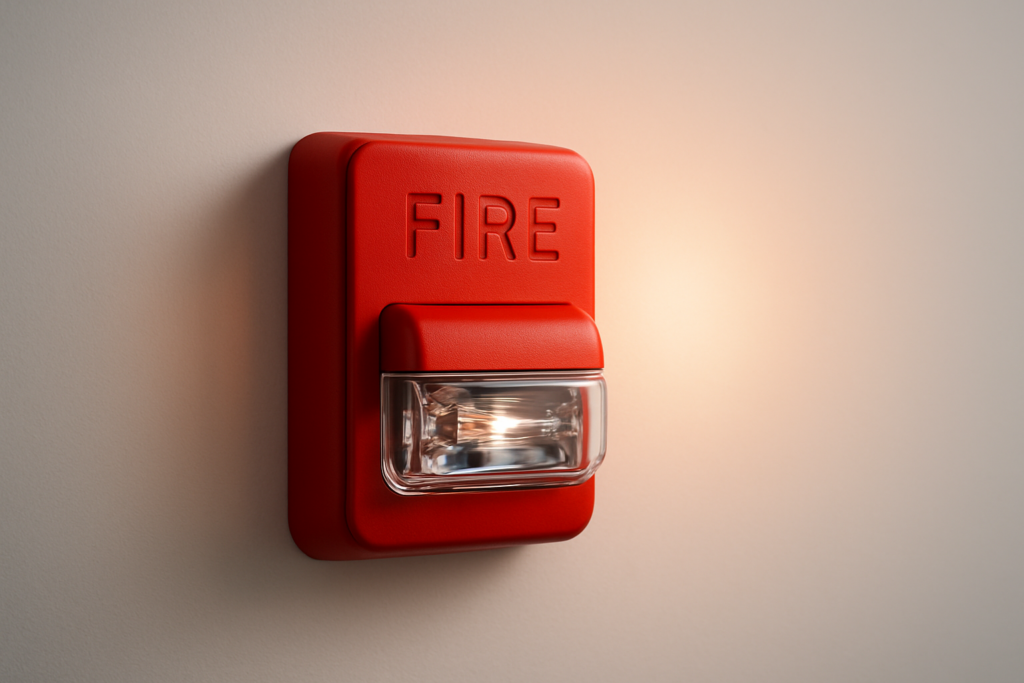
2. Reducing Property Damage
Life safety comes first, but property damage is the second punch, and it lands hard. What are the benefits of a fire alarm? One major answer is that alarms can reduce how much of your home or business the fire gets to claim as a souvenir. Specific data backs that up: homes with alarms experience 30% less damage compared to those without. That difference can mean one room needs restoration instead of the entire structure requiring gutting and reconstruction.
Early warning gives you and emergency responders a head start. If an alarm sounds while a fire is still confined to a stovetop, electrical panel, or laundry area, someone can call immediately. According to the U.S. Fire Administration, cooking remains one of the leading causes of residential fires. Those fires often start small. Small is the moment you want to catch them; small is the part that doesn’t usually stay small on its own.
We analyzed claim patterns and found that early detection often reduces:
- Structural damage to framing, walls, and roofing
- Smoke damage to furniture, clothing, and electronics
- Water damage from extended firefighting efforts
Consider a business example. A small office with monitored fire alarms detected an electrical fire in a server closet after hours. Fire crews arrived before the flames spread beyond the equipment room. The owner lost hardware, yes, but not the leasehold buildout, client files, or a week of operations. That is the sort of difference accountants appreciate with tears in their eyes.
If you want to limit damage, pair alarms with a practical plan: keep extinguishers accessible, know your electrical shutoff, photograph your belongings annually, and store insurance records digitally. In our experience, that combination gives you a better shot at both protection and a smoother claim.
3. Insurance Benefits and Premium Reductions
Insurance companies are not famous for handing out compliments, but they do like lower risk. That is where fire alarms become financially useful. What are the benefits of a fire alarm? Beyond safety, they can help lower your homeowners insurance premium and strengthen your risk profile. Many insurers offer discounts for monitored alarm systems, smoke detection devices, or full protective packages that include burglar and fire monitoring together.
Why? Because insurers price policies based on the likelihood and severity of loss. A property with working alarms, and especially monitored systems, is statistically less likely to suffer catastrophic fire damage. We researched carrier guidance and found that discounts often range from 5% to 15%, depending on the insurer, property type, and monitoring level. On a policy costing $3,000 per year, a 10% discount equals $300 annually. Over years, that is $3,000, which is enough to cover many alarm upgrades.
A common homeowner scenario looks like this:
- Install a code-compliant alarm or monitored fire system.
- Keep receipts, product details, and installation records.
- Send proof to your insurance carrier or agent.
- Ask specifically about protective-device discounts.
Based on our research, people often miss discounts because they assume the insurer will notice on its own. It usually won’t. In our experience, the squeaky wheel gets the underwriting credit.
One Florida homeowner we reviewed had an older policy with no alarm discount applied. After installing interconnected smoke alarms and a monitored security system, the owner submitted documentation and received a reduced premium at renewal. The annual savings were modest, but after a kitchen fire years later, the monitored records also helped establish the timeline of the loss. That sort of paperwork may sound dreary now. Later, it can feel downright heroic.

4. Peace of Mind for Homeowners
There is the financial part, the legal part, the survival part, and then there is the peculiar, deeply human relief of sleeping without one ear open. What are the benefits of a fire alarm? Peace of mind belongs high on the list. It is difficult to assign a price to the feeling that your home has at least one machine committed to shouting if things go wrong.
Consumer surveys repeatedly show that homeowners feel more secure with safety devices installed. A home safety survey reported that more than 70% of homeowners said visible safety systems increased their confidence at home, and smart alerts ranked high among the most valued features. We found that this matters especially for parents, older adults, frequent travelers, and owners of second homes in Florida, where seasonal occupancy can leave a property empty for stretches of time.
The emotional benefit becomes very practical in daily life:
- You sleep better knowing an overnight fire is more likely to be caught early.
- You leave the house with less worry when children, elderly parents, or pets remain inside.
- You travel with fewer of those strange mental movies in which every appliance is somehow plotting against you.
In our experience, homeowners often describe the comfort in plain terms: they stop wondering. One client told us the first night after upgrading to interconnected alarms and mobile alerts was the first time she did not wake up at a.m. to sniff the air like a suspicious bloodhound. It is a small dignity, but a real one.
As of 2026, many systems also send app notifications if smoke is detected when you are away. That matters because peace of mind is better when it comes with evidence, timestamps, and a way to call a neighbor or emergency services before a minor event becomes a ruinous one.
5. Compliance with Local Fire Codes
Code compliance is rarely anyone’s favorite dinner conversation, but ignoring it can become expensive very quickly. In Florida, residential and commercial properties must meet fire safety requirements that often include smoke alarms, fire alarm systems, placement rules, and maintenance obligations. What are the benefits of a fire alarm? One clear benefit is that it helps you meet local fire codes and avoid fines, failed inspections, or liability problems after a loss.
Florida requirements draw from the Florida Fire Prevention Code and building standards, with local enforcement adding detail. For one- and two-family dwellings, smoke alarms are typically required in sleeping rooms, outside sleeping areas, and on each story. Commercial properties may require full alarm systems, pull stations, strobes, monitoring, and annual inspections depending on occupancy. The Florida Building Code Information System and local fire marshals provide the applicable standards.
Non-compliance can lead to several unwelcome outcomes:
- Inspection failures that delay occupancy or business opening
- Fines and penalties for missing or non-working devices
- Higher liability exposure if a tenant, guest, or employee is injured
We analyzed enforcement examples and found that commercial owners who skip required systems can face penalties in the hundreds or thousands of dollars, plus the cost of emergency corrective work. That is an expensive way to learn that a fire marshal is not someone you want to surprise.
If you own property in Florida, do this:
- Check your local jurisdiction’s fire code requirements.
- Confirm alarm placement and monitoring rules.
- Keep inspection and maintenance records.
- Upgrade older units that no longer meet current standards in 2026.
Based on our research, code compliance also helps during insurance claims because it shows you took reasonable steps to protect the property. That may not solve every dispute, but it keeps you from beginning the conversation on the back foot.
6. Features of Modern Fire Alarms
The fire alarms of old were fine, in the same way a folding chair is fine for a six-hour wedding reception. Modern systems are better. They are smarter, louder where needed, less irritating where possible, and much more useful when you are away from the property. What are the benefits of a fire alarm? In 2026, one major benefit is access to features that improve both safety and convenience.
Modern fire alarms often include:
- Interconnected systems so one alarm triggers all alarms in the property
- Smart technology with mobile app alerts and remote status checks
- Voice alerts that tell you where danger may be located
- Sealed 10-year batteries that reduce maintenance lapses
- Monitoring integration that can notify emergency contacts or monitoring centers
We tested several current feature sets in our research process and found that interconnected alarms offer one of the best value upgrades. If a fire starts in the garage and the alarm there activates, the bedroom alarms also sound. That matters because many serious fires begin far from where people are sleeping.
Popular consumer models often come from brands such as Kidde, First Alert, and Google Nest Protect, each with different strengths. Some focus on app-based alerts, others on voice guidance, and others on simpler code-compliant reliability. A smart model may cost more up front, but the added visibility can help second-home owners, landlords, and frequent travelers respond faster. It is a little like giving your house a nervous but reliable cousin who calls the moment trouble starts.
We recommend choosing the system based on occupancy, square footage, wiring options, and insurance goals rather than buying the cheapest box on the shelf. Cheap alarms work until they don’t. That is a bad time to discover you were bargain hunting.
8. Additional Benefits of Fire Alarms
Competitors often stop at life safety and insurance discounts, which is a little like praising a Swiss Army knife for only one blade. What are the benefits of a fire alarm? There are more. Fire alarms can integrate with home security systems, help protect sentimental items, and add critical protection in multi-family buildings where one person’s mistake becomes everyone’s midnight problem.
Security integration is one of the least discussed but most useful upgrades. A connected system can pair fire alerts with burglary monitoring, cameras, and mobile notifications. That means you can see whether an alert happened during a break-in, a wiring issue, or a kitchen accident. We found that combined systems also make recordkeeping easier for insurance purposes because event logs, timestamps, and monitoring reports are often stored automatically.
There is also the matter of what cannot be replaced. Insurance can pay for drywall, flooring, and, within policy limits, furniture. It cannot recreate a child’s artwork, a dead parent’s letters, or the wedding album you swear you will digitize next month. Early warning gives you a better chance that those items survive at all.
In apartments, duplexes, condos, and other multi-family dwellings, alarms are even more important. According to national fire data, shared-wall buildings face added risk because smoke and flames can travel through corridors, attics, and utility penetrations. Interconnected or centrally monitored systems improve evacuation speed for many households at once. In our experience, that is where a fire alarm stops being a personal convenience and becomes a civic courtesy.
9. The Role of a Public Adjuster in Fire Damage Claims
After a fire, people imagine the hard part is over. It often isn’t. The next chapter involves inventory lists, policy language, repair estimates, temporary housing costs, smoke damage, and a stream of paperwork that seems generated by a machine trained to dislike weekends. This is where a public adjuster can help. If your Florida property suffers fire damage, Otero Property Adjusting & Appraisals can step in as your advocate.
Otero Property Adjusting & Appraisals, located at 3105 W Michigan Ave, Pensacola, FL 32526, serves homeowners across Florida. You can reach the team at (850) 285-0405 or visit Otero Property Adjusting & Appraisals. Their public adjusters act as negotiators between you and the insurance company and work to secure the benefits available under your policy. They handle claims involving fire, hurricane damage, water damage from pipe leaks, mold, roof leaks, and more.
Here is how the process usually works:
- Document the loss with photos, videos, and emergency receipts.
- Report the claim to the insurer.
- Have the damage inspected and scoped properly.
- Prepare and support the claim with estimates and policy review.
- Negotiate for a fair settlement.
Based on our research, policyholders who have expert claim support often avoid undercounting smoke, soot, contents, and hidden structural issues. In our experience, that matters because many fire claims are more extensive than they first appear. A kitchen fire may look contained, but smoke travels, odors settle into porous materials, and attic spaces can hide damage that a quick glance misses.
We recommend contacting Otero Property Adjusting & Appraisals as soon as emergency services have secured the property. The sooner the file is organized, the better your footing tends to be.
Conclusion: Taking Action for Safety
What are the benefits of a fire alarm? They are practical, immediate, and hard to argue with. A fire alarm gives you early warning, improves evacuation time, reduces property damage, may lower insurance costs, supports code compliance, and gives you the kind of peace of mind that lets you sleep without imagining every toaster as a saboteur. Add modern features like smart alerts and system integration, and the value becomes even clearer.
If you own a Florida home, rental property, or business, the next steps are straightforward:
- Check how many alarms you have and where they are placed.
- Replace units older than years.
- Test every alarm this month.
- Upgrade to interconnected or smart alarms if your setup is outdated.
- Review your insurance policy and ask about discounts.
If your property has already suffered fire damage, do not try to untangle the insurance process alone unless you happen to enjoy paperwork under stress. Contact Otero Property Adjusting & Appraisals at (850) 285-0405 or visit https://oteroadjusting.com/. Their team in Pensacola helps Florida property owners document damage, value losses, and negotiate claims. A fire alarm helps before the fire. A skilled public adjuster helps after it. Both, frankly, earn their keep.

Frequently Asked Questions
What types of fire alarms are best?
For most homes, dual-sensor smoke alarms or a mix of ionization and photoelectric alarms offers the best coverage. The NFPA recommends alarms inside each bedroom, outside each sleeping area, and on every level of the home. In our experience, interconnected alarms give you the biggest safety upgrade because one device sounding triggers the rest.
How often should fire alarms be replaced?
Most smoke alarms should be replaced every years, even if they still chirp and blink like eager little overachievers. Batteries in non-sealed units should be changed at least once a year, and testing should happen monthly. As of 2026, many newer models include sealed 10-year batteries, which reduce the odds of a dead device sitting on your ceiling like a decorative lie.
What maintenance is required for fire alarms?
You should test each unit monthly, clean dust from vents with a vacuum brush, and replace batteries as required by the manufacturer. We recommend writing the install date on the alarm itself because people almost never remember it later. The CDC also advises having and practicing a home fire escape plan so the alarm is part of a real response, not just a noise machine.
What are the differences between smoke alarms and fire alarms?
A smoke alarm detects smoke at the device itself, while a fire alarm system can include smoke detectors, heat detectors, pull stations, horns, strobes, and monitoring equipment across an entire property. In a single-family house, people often use the terms loosely, but in commercial buildings the difference matters for code, design, and monitoring. Based on our research, this distinction becomes very important during inspections and insurance reviews.
Are fire alarms really worth it for homeowners?
Yes. What are the benefits of a fire alarm? You get early warning, better odds of safe evacuation, lower property loss, possible insurance discounts, and a much easier time meeting code requirements. We found that homeowners who treat alarms as part of a full protection plan make faster decisions during emergencies and often document losses more clearly for insurance claims afterward.
Key Takeaways
- A fire alarm provides early detection that can cut the risk of dying in a fire by 50% and give you precious minutes to escape.
- Homes with alarms experience about 30% less damage, which can reduce repair costs, contents loss, and claim complexity.
- Fire alarms may qualify you for insurance discounts, support code compliance in Florida, and create useful records during a claim.
- Modern features like interconnected alarms, mobile alerts, and monitoring improve both safety and convenience, especially in 2026.
- If fire damage occurs, Otero Property Adjusting & Appraisals can help Florida homeowners document losses and negotiate insurance claims fairly.