
You must call the police after a car accident in Florida if there are injuries, fatalities, or property damage exceeding $500, as required by state law [1]. This ensures proper documentation and safety measures are taken immediately following the incident.
- Florida law requires calling the police if there is more than $500 worth of damage or if there have been any injuries in a car accident [1].
- Motorists must submit accident reports within days of an accident [2].
- Failure to report required accidents can result in fines and possible license suspension [3].
- You can self-report a minor Florida car accident with no injuries and minimal damage [4].
- Police reports include essential information such as names, addresses, and insurance details [1].
What specific events or thresholds under Florida law require calling police after a car accident?
Florida law mandates that drivers must call the police if there’s more than $500 worth of damage or if any injuries occur during a car accident [1]. You should dial immediately if you encounter injuries, fatalities, property damage over $500, suspected DUI, hit-and-runs, or hazardous conditions [5]. In short, any accident meeting these criteria requires police involvement to ensure proper documentation and safety measures are taken [6]. If unsure, it’s best to err on the side of caution and make that call.

How soon must I report an accident to law enforcement or the Florida Department of Highway Safety and Motor Vehicles (DHSMV)?
Florida law requires that you notify law enforcement of an accident as soon as possible, using the fastest means available [2]. If no officer arrives on the scene, you must file a report with the DHSMV within ten days of the incident [2]. Failing to report the accident can lead to fines and other legal consequences, including potential license suspension [3]. Timely reporting is crucial not just for legal compliance but also for safeguarding your insurance claims.

In a minor fender-bender with no injuries, can I legally avoid calling police?
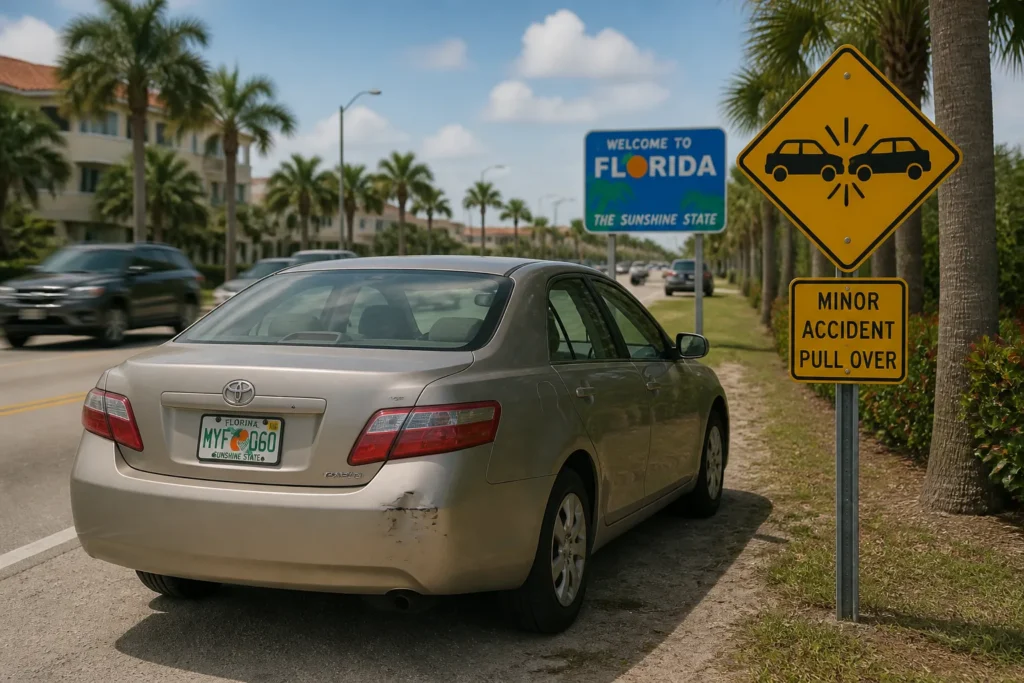
In Florida, you can choose to self-report a minor car accident with no injuries and minimal damage [4]. State law does not require motorists to report every minor collision to the police [2]. However, if the damage appears below the reporting threshold, drivers still need to file a written self-report within ten days under Florida Statute §316.066 [7]. It’s advisable to exchange information with the other driver and document the incident for your records.
What exact information and documentation will police require?
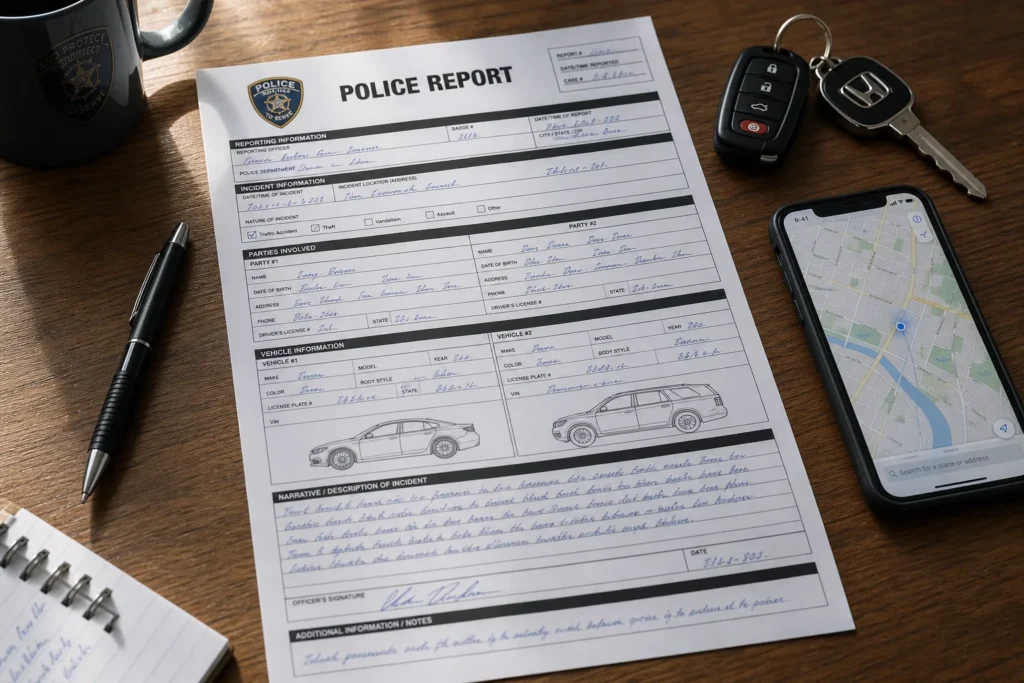
When police arrive at the scene, they will create an official accident report, which is essential for insurance claims and legal actions [1]. The report must include the names and addresses of all drivers and passengers, the vehicles involved, and witness information [7]. For your benefit, ensure you obtain a copy of this police report for your records, as it can be vital in any subsequent claims or legal proceedings [3].
How does not calling the police after an accident affect insurance claims?
In Florida, not calling the police after an accident can complicate your insurance claims. Florida follows a 14-day rule for seeking medical treatment to be eligible for Personal Injury Protection (PIP) benefits [6]. Some insurance companies may require a police report for all claims, regardless of the accident’s severity [3]. If you file a report late, your insurance company may deny the claim due to doubts about its legitimacy [8]. Reporting promptly is key to protecting your rights.
What immediate steps should I take at the scene if someone is injured?
The first step after any accident is to ensure the safety of all parties involved [3]. If there’s a hit-and-run, victims should report the incident to the police as soon as possible to aid in identifying the fleeing driver [8]. Additionally, document the scene thoroughly by taking pictures of vehicle damages, road conditions, and any visible injuries [3]. These actions can be critical for legal and insurance purposes.
What alternative reporting options does Florida law provide?
If law enforcement refuses to come to the scene due to minor damages or no personal injuries, you have the option to file your own report at the nearest police station [1]. If a law enforcement officer has already investigated the incident, you won’t need to submit a separate written report [2]. You can find the necessary forms at floridacrashportal.gov, which can be submitted online or by mail to the Florida Department of Highway Safety and Motor Vehicles [7]. These alternatives ensure that you still comply with reporting laws even if police involvement is limited.

| Requirement or Consequence | Description |
|---|---|
| Failure to report penalty [2] | They could face a $30 penalty if they do not report the accident when required. [2] |
| Leaving scene penalty [2] | Leaving the scene of an accident is a criminal offense that could result in jail [2] |
| Failure to report legal consequences [9] [3] [7] [7] | Failure to report an accident can lead to fines and other legal consequences; Fa [9] [3] [7] [7] |
| Report submission deadline [2] [6] [3] [3] | Motorists must submit these reports within days of an accident; If no officer [2] [6] [3] [3] |
Key Takeaways
- Always call the police for accidents involving injuries or significant property damage.
- Report any accidents to law enforcement as soon as possible to avoid penalties.
- If the damage is below the threshold, self-report within ten days to comply with the law.
- Document everything at the scene, including taking photos and exchanging information.
- Consult an insurance professional for guidance on claims related to accidents.
Frequently Asked Questions
What happens if you don't report an accident within hours in Florida?
If you don’t report an accident within hours in Florida, you may face a $30 penalty and potential fines for failing to meet reporting requirements [2][3].
Do you have to call the police after a car accident in Florida?
You must call the police after a car accident in Florida if there are injuries, fatalities, property damage over $500, suspected DUI, hit-and-runs, or hazardous conditions [5].
Who pays if someone hits your car in Florida?
If someone hits your car in Florida, their insurance typically pays for the damages, but you may need to file a claim through your own insurance depending on the circumstances [6].
What if I don't call the police after an accident?
Not calling the police after an accident can complicate insurance claims, as some insurers require a police report for all claims [3]. Delayed reporting may also lead to claim denials due to doubts about the incident’s legitimacy [8].
Sources
- What To Do After An Auto Accident in Florida (2023-07-27)
- What Happens if I Don't Report a Car Accident in Florida? (2024-07-08)
- How Long Do You Have To File a Police Report in Florida? (2024-07-15)
- Should You Call the Police After a Minor Car Accident in Florida? (2025-12-02)
- When to Call After a Car Accident in Florida (2025-11-14)
- What to Do After a Car Accident: Step-by-Step Guide to Protect Your Rights in Florida (2025-06-13)
- Does Florida Law Require Calling Police After a Crash? (2026-07-05)
- How long after an accident can you file a police report in Florida? (2024-03-21)
- Do I Have to Call the Police After a Car Accident? (2025-05-09)