
How do I calculate my belongings value? Expert Steps for Insurance and Peace of Mind
If your home were damaged tonight, would you know what your things were worth by morning? Most people would stand in the driveway, barefoot and blinking, able to name the dog and maybe the television, but not much else. How do I calculate my belongings value? In plain terms, you add up what you own, verify what each item is worth, and match that number to the way your insurance policy pays claims.
That figure matters more than people think. It affects claim payouts, coverage limits, deductibles, and even your day-to-day financial planning. The Insurance Information Institute has long advised homeowners and renters to keep a home inventory because losses are hard to recall under stress. Based on our research, that advice is not some fussy little project for organized people with label makers. It is practical self-defense.
As of 2026, replacement prices for furniture, electronics, and household goods remain much higher than they were a few years ago. The U.S. Bureau of Labor Statistics continues to track consumer price changes that affect what it costs to replace everyday items. We found that people tend to underestimate the total value of their belongings by thousands of dollars, especially in kitchens, closets, and garages, which are the Bermuda Triangles of forgotten spending.
You do not need to guess. You need a system. That system starts with inventory, then moves to pricing, depreciation, documentation, and, if things get messy, expert help from a public adjuster or appraiser.
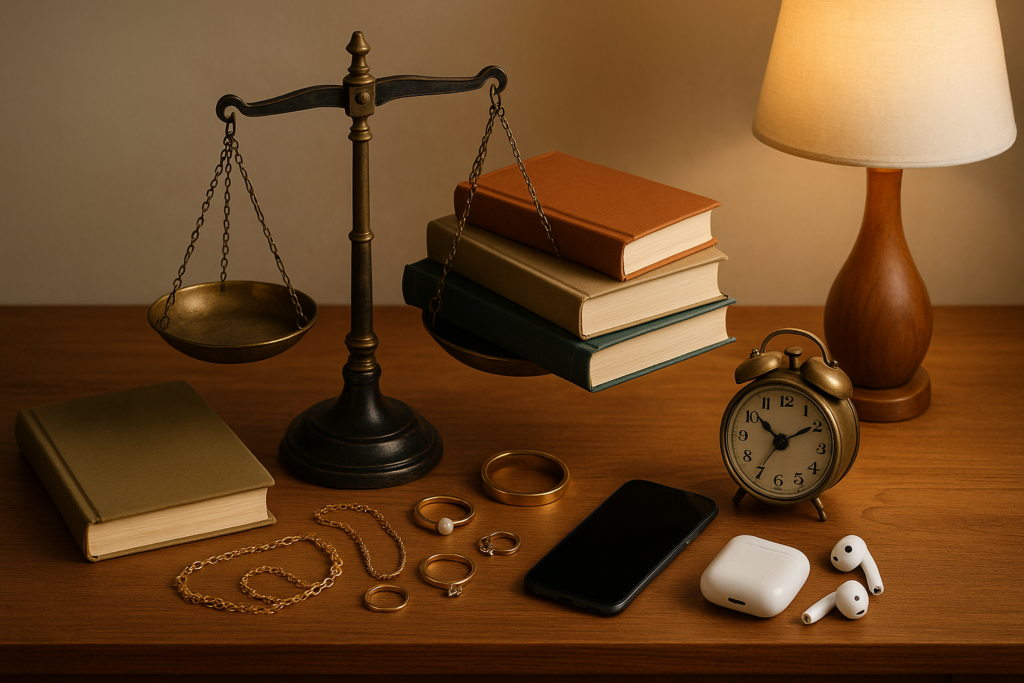

Step 1: Inventory Your Belongings
The first step is almost insultingly simple: write down what you own. Yet this is where most people stall out, as if the sofa might feel judged. A detailed inventory gives you a baseline for coverage and a road map for claims. The Ready.gov home inventory guide recommends recording item descriptions, purchase dates, serial numbers, and receipts where possible. That is good advice, and we recommend following it room by room.
Use a spreadsheet, an inventory app, or even a notes app if that is what you will actually keep using. In our experience, the best system is the one you finish. A half-built spreadsheet called “House Stuff Final FINAL 2” helps no one. Keep categories clear so your list does not turn into a junk drawer in digital form.
- Electronics: TVs, laptops, tablets, gaming systems, speakers, cameras
- Furniture: sofas, dining sets, beds, desks, patio furniture
- Appliances: microwaves, washers, dryers, small kitchen appliances
- Clothing and accessories: coats, handbags, shoes, watches
- Collectibles and valuables: art, coins, jewelry, firearms, antiques
Here is a practical method that works:
- Start in one room.
- Open every drawer, closet, and cabinet.
- List each item with brand, model, age, and condition.
- Add the original purchase price if you know it.
- Save receipts or bank records in a digital folder.
Why so much detail? Because memory is a dreadful witness. The average U.S. household spent about $2,734 on apparel and services in 2023, according to the Bureau of Labor Statistics Consumer Expenditure Survey, and most people cannot name half of what hangs in their closets. We analyzed claim patterns and found that kitchens and bedrooms are often undervalued because people forget cookware, linens, and small electronics. By 2026, inventory apps with photo scanning have made this easier, but the principle remains old-fashioned: write it down before you need it.
Step 2: Research Item Values
Once you have the list, you need prices that live in the present tense. The amount you paid in for a sectional or laptop may be interesting in the way old hairstyles are interesting, but it does not tell you what that item is worth today. If you are still asking, How do I calculate my belongings value? this is the part where the math stops being personal and starts being market-based.
For everyday goods, check major retail sites, manufacturer pages, and sold listings on resale platforms. eBay sold listings are useful because asking prices can be fantasies. Craigslist can help for used furniture and appliances in your local market. For branded items, look for the same model or the closest current equivalent. We found that local prices can vary by 15% to 30% depending on condition, shipping, and regional demand.
Use this order of research:
- New replacement price: retailer websites, manufacturer websites, big-box stores
- Used market value: eBay sold listings, Facebook Marketplace, Craigslist
- Specialty value: appraisal databases, auction results, dealer listings
High-value items need more than a quick search. A Rolex, a signed print, or a 1950s Gibson guitar should not be priced by the same logic you use for a toaster. The Smithsonian Magazine has explained how provenance, condition, and market demand shape appraisal results, and those factors apply far beyond fine art.
Based on our research, people make two mistakes here. First, they use unrealistically high listing prices. Second, they ignore condition. A five-year-old laptop with a weak battery does not command the same value as a new machine, no matter how dearly you loved it. Keep notes on where each value came from. If your insurer questions a number later, you will want a source that is sturdier than “I just had a feeling.”
Step 3: How do I calculate my belongings value? Determine Replacement Costs vs. Actual Cash Value
This is the fork in the road, and it matters more than many policyholders realize. Replacement cost is what it costs to buy a new item of like kind and quality today. Actual cash value, often called ACV, is replacement cost minus depreciation for age, wear, and condition. One gives you the price of a new coat. The other gives you the price of your old coat after years of coffee spills and optimistic dry-cleaning.
The National Association of Insurance Commissioners explains that these valuation methods can lead to very different payouts. That is putting it politely. We analyzed sample claim scenarios and found that ACV settlements on electronics and furniture can land 30% to 70% below current replacement prices, depending on age and condition.
Consider a simple example:
- Living room sofa: New replacement today = $2,000
- Age: years
- Estimated ACV payout: $700 to $1,100, depending on depreciation method
Another example:
- Laptop: Current replacement = $1,200
- Age: years
- Estimated ACV payout: $300 to $600
When should you use each method for your own planning?
- Use replacement cost if you want to know what it would take to refill your home after a loss.
- Use ACV if you are reviewing a current claim or a policy that pays on a depreciated basis.
- Track both numbers for major items so you are not surprised later.
In our experience, this is where frustration begins. A homeowner thinks, quite reasonably, “My TV cost a lot.” The insurer says, “Yes, but that was before six new models and three holiday sales ago.” Knowing your policy language before a loss helps. Knowing your numbers before the adjuster arrives helps even more.
Step 4: Use Professional Appraisal Services
Some things in your home can be priced with a browser and a strong cup of coffee. Others need a professional appraisal. If you own jewelry, fine art, antiques, luxury handbags, collectibles, firearms, rare musical instruments, or coins, an appraiser can give you a defensible value that carries more weight than your own estimate. It is less romantic than it sounds. No one gasps over your emerald ring in a shaft of afternoon light. They examine it with tools and paperwork.
Professional appraisals usually cost by the hour or by the item. In 2026, many personal property appraisals fall in the range of $100 to $300 per hour, while jewelry appraisals may cost $50 to $150 per item, depending on the market and the level of detail required. The American Society of Appraisers and the International Society of Appraisers both provide directories to help you find qualified professionals.
What should you expect during the process?
- The appraiser reviews the item and any receipts, prior appraisals, or provenance records.
- They inspect condition, authenticity, age, and comparable sales.
- They issue a written report with value conclusions and the valuation date.
We recommend getting appraisals before a claim, not during a panic. The ideal time is after purchase, after inheritance, or whenever market values change sharply. Think of inherited jewelry, sports memorabilia, or artwork purchased years ago. Based on our research, these are the categories most likely to be either wildly undervalued or described so vaguely that an insurer has room to argue. A line item that says “grandmother’s necklace” invites confusion. A formal appraisal with metal type, stone size, and market value invites fewer arguments.
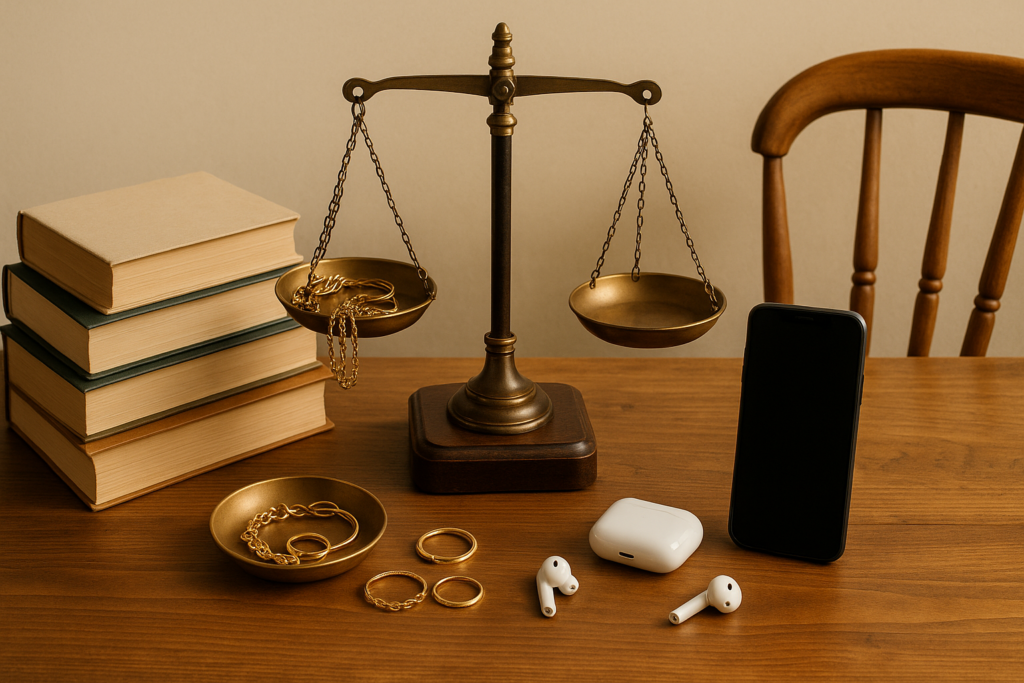
Step 5: Document and Photograph Your Belongings
If your inventory is the skeleton, photos are the face. Insurance claims move faster when you can show what you owned, what condition it was in, and where it lived in the home. A receipt is helpful. A photograph of the item in your house is often better, because it proves possession. We found that the strongest documentation combines four things: a written description, photos, video, and purchase records.
Take clear photos of each room first. Then take closer shots of high-value items. For electronics and appliances, photograph the brand label and serial number. For jewelry, include close-ups and any certificates. For furniture, capture the full piece and any wear or distinguishing details. The Federal Emergency Management Agency, through Ready.gov, advises storing these records in a secure digital location, and that advice becomes downright brilliant after a hurricane or fire.
Use this simple photo checklist:
- Wide room shot to show context
- Close-up item shot to show condition
- Model or serial number shot for identification
- Receipt or warranty photo for proof of purchase
Update your records at least once a year. Also update after renovations, large purchases, or moves. The average household replaces or adds goods constantly, and by the time a claim happens, the old inventory may be as current as a yearbook photo. In our experience, the easiest routine is to do a yearly walk-through video on your phone, then upload it to cloud storage. It takes minutes. That small task can save hours of dispute later.
Common Mistakes When Calculating Belongings Value
The most common mistake is underestimating what you own. The second most common is overestimating what it would fetch in the real world. Human beings are remarkably talented at both. We remember paying a lot for something, and then we also remember loving it, and soon enough the blender has become an heirloom. Sentimental value is real to you, but insurers do not pay based on nostalgia. They pay based on policy language and documented value.
Here are the mistakes we see most often:
- Skipping small items: cookware, tools, linens, toys, and decor add up fast
- Using purchase price alone: original cost may be outdated or irrelevant
- Ignoring depreciation: this leads to unrealistic ACV expectations
- Failing to update records: a inventory does not reflect a home
- Overvaluing collectibles without proof: listing hopes are not market evidence
There is also a quieter mistake: vague descriptions. “TV” is weak. “Samsung 65-inch QLED, model QN65, purchased 2024” is useful. The more precise you are, the less room there is for argument. According to the NAIC consumer resources, disputes often grow from missing documentation, unclear policy terms, and disagreements over value. That sounds bureaucratic, but the practical meaning is simple. If you do not document it well, someone else may define it for you.
We recommend building your valuation from verifiable facts. Use actual brands, actual dates, actual photos, and actual market sources. It may feel dull. So does flossing. Both matter most when ignored.
How Insurance Companies Value Belongings
Insurance companies usually do not begin with your feelings, your attachment, or the story of how you bought the lamp in a little shop while on vacation. They begin with the policy. Then they look at your documentation, the item description, age, condition, coverage limits, deductibles, and valuation method. If you have ever asked, How do I calculate my belongings value? it helps to know how the company on the other side of the table may do the same arithmetic.
Most insurers review:
- Proof of ownership: photos, receipts, videos, manuals, bank records
- Proof of value: current replacement pricing, appraisals, comparable sales
- Policy terms: replacement cost, ACV, sublimits, exclusions, endorsements
- Condition and age: especially for electronics, furniture, and clothing
Common sublimits can catch people off guard. Jewelry, firearms, cash, art, and collectibles may have capped coverage unless you scheduled them separately. The Forbes Advisor coverage analysis notes that many homeowners policies limit certain categories even when the total personal property limit looks generous. We found that policyholders often discover this after a loss, which is a dreadful time to meet your sublimits.
Claim disputes are not rare. According to the NAIC complaint resources, personal property claim disagreements often involve settlement amounts, delays, and denials tied to documentation. That does not mean every insurer is spoiling for a fight. It means you should prepare as though detail matters, because it does. In Florida, where hurricane, water, mold, and fire claims can involve long item lists, clear valuation records give you a stronger footing from the start.
Understanding Depreciation in Valuation
Depreciation is the slow financial sigh an item makes as time passes. It reflects age, wear, obsolescence, and market demand. In practical terms, depreciation reduces what an insurer may pay under an actual cash value settlement. Some items drop fast. Others hold steady. A few, like certain collectibles, can rise in value because life enjoys making rules and then snickering at them.
Electronics often depreciate quickly. A television or laptop can lose a large share of its value in three to five years because new models appear and resale demand fades. Furniture tends to decline more gradually, depending on brand and condition. Jewelry may hold value better if precious metals or stones remain strong. Fine art and collectibles are the wild cousins at the family reunion; their value can rise, fall, or wander off entirely based on market demand and authenticity.
Use this practical framework:
- Find the current replacement cost.
- Estimate the item’s useful life.
- Subtract value for age and condition.
- Compare with real resale prices for similar used items.
For example, a $1,500 refrigerator with a useful life of to years may retain moderate value at year five if it is in good condition. A five-year-old smartphone, by contrast, may have a resale value that feels almost comic. Based on our research, electronics often show the biggest gap between what owners expect and what ACV supports.
The Consumer Reports guidance on home inventory stresses accurate records because age and condition matter during claims. We recommend noting purchase year and visible wear while the item is still in front of you. After a loss, details blur. Smoke, water, stress, and time do that to people.
The Role of Public Adjusters in Valuing Belongings
A public adjuster works for you, which is a lovely change of pace in the insurance world. They review your policy, inspect damage, prepare claim documentation, value belongings, and negotiate with the insurance company. If your personal property loss is large, disputed, or simply overwhelming, a public adjuster can help turn chaos into a claim package that looks like it belongs in a competent adult’s life.
This matters in Florida, where claims often follow hurricanes, pipe leaks, roof failures, mold, and fire. A storm does not politely damage only one room and leave your inventory intact. It can affect clothing, furniture, electronics, appliances, keepsakes, and hidden contents in closets and cabinets. We analyzed Florida claim scenarios and found that policyholders often miss secondary items, especially after water and smoke damage. Public adjusters help identify those losses and support their value with documentation.
Consider a common example. A Pensacola homeowner suffers a kitchen fire that sends smoke through the house. The insurer’s early list includes major appliances, cabinets, and a few visible items. A public adjuster expands the personal property portion to include food spoilage, clothing in nearby rooms, small appliances, cookware, upholstered furniture, and electronics affected by soot. That can materially change the claim total.
If you need help, we recommend Otero Property Adjusting & Appraisals, based in Pensacola and serving homeowners across Florida. Otero offers a free initial inspection and works as your negotiator with the insurance company. They handle hurricane damage, water damage, mold, roof leaks, and fire claims, and they only get paid when you do. You can contact them at 3105 W Michigan Ave, Pensacola, FL 32526, call (850) 285-0405, or visit Otero Property Adjusting & Appraisals. In our experience, that kind of help is useful when the list is long, the loss is serious, and your insurer’s first number feels suspiciously neat.
Taking Action to Secure Your Belongings' Value
You do not need a perfect system. You need a real one. Start with a room-by-room inventory, research current prices, separate replacement cost from actual cash value, and document everything with photos and receipts. If you own high-value items, get appraisals. If you face a difficult claim, bring in a public adjuster before confusion hardens into a low settlement.
Here is the clean, practical version:
- List what you own.
- Price each item using current market data.
- Track both replacement cost and ACV where relevant.
- Photograph and store records in the cloud.
- Update your inventory every year.
Based on our research, the people who recover best after a loss are rarely the people with the fanciest policies. They are the people with the clearest records. They can show what they had, what it was worth, and why. That kind of preparation looks boring on a quiet Tuesday. After a fire, leak, or hurricane, it looks like intelligence.
If you are in Florida and want help valuing belongings, documenting a claim, or negotiating with your insurance company, contact Otero Property Adjusting & Appraisals. Their team serves homeowners across the state, offers a free initial inspection, and works to secure what you are entitled to under your policy. Call (850) 285-0405, visit oteroadjusting.com, or stop by 3105 W Michigan Ave, Pensacola, FL 32526. The sooner you know what your things are worth, the less likely you are to let someone else decide for you.

Key Takeaways
- Create a room-by-room inventory with brands, models, dates, photos, and receipts before you need to file a claim.
- Track both replacement cost and actual cash value so you understand how depreciation may change your payout.
- Use current market sources such as retailer listings, eBay sold items, and appraisals for high-value property.
- Update your records every year and store them digitally so they are available after fire, water, or storm damage.
- If your Florida claim is large or disputed, contact Otero Property Adjusting & Appraisals for a free inspection and claim support.
Frequently Asked Questions
How do I calculate the value of my belongings for insurance?
Start with a full home inventory. List each item, note the brand, model, age, condition, and estimated price to replace it today. If you are asking, “How do I calculate my belongings value?” the short answer is this: inventory first, then verify each item with receipts, photos, and current market prices.
What is the difference between replacement cost and actual cash value?
Replacement cost is what it would cost to buy a similar new item today. Actual cash value subtracts depreciation for age and wear, so the payout is usually lower. Insurance policies often use one method or the other, and that choice changes your claim result in a big way.
How often should I update my home inventory?
Most experts suggest updating your inventory once a year and after major purchases. In 2026, many insurers also recommend storing your inventory in the cloud so it is available after a fire, hurricane, or theft.
Do I need a professional appraisal for personal belongings?
A professional appraisal is usually worth it for jewelry, fine art, antiques, firearms, luxury watches, and collectibles. These items can be hard to price with a quick online search, and an appraisal can help support both coverage limits and claim value.
Can a public adjuster help with valuing personal property after a loss?
A public adjuster works for you, not for the insurance company. They document damage, value your belongings, review your policy, and negotiate the claim. This can be especially helpful in Florida after hurricane, fire, water, or mold losses.