
Does State Farm Cover Tornado Damage? Expert Facts Homeowners Need in 2026


Introduction: Understanding Tornado Damage Coverage
A tornado does not knock politely. It arrives like a relative who has had three drinks too many, tears the screen door off its hinges, and leaves you standing in the yard wondering where the porch went. If you came here asking, Does State Farm cover tornado damage? the short answer is often yes under a standard homeowners policy for covered wind losses, but the details matter more than the slogan on the billboard.
Tornado risk is not some Midwestern folk tale. According to the NOAA National Severe Storms Laboratory, the United States averages around 1,000 to 1,200 tornadoes each year. The National Weather Service reports that tornadoes can produce winds over 200 mph, which is the sort of number that makes a roof look temporary. In 2026, homeowners across high-risk states and even parts of Florida still need to read their policy like it is a menu with hidden prices.
State Farm is one of the largest property insurers in the country, with millions of policies in force. That scale matters because claim handling systems, catastrophe response teams, and contractor networks often influence how smooth your experience will be after a storm. Based on our research, the biggest problem is rarely the phrase “tornado damage.” It is whether the loss involves wind, water, flood, mold, code upgrades, or excluded maintenance issues. We found that many homeowners assume all storm damage sits in one tidy basket. Insurance, of course, prefers many baskets and a footnote.
If you own a home in Florida or anywhere else with severe weather exposure, knowing your coverage before a storm is far cheaper than learning it from a denial letter after one. That is where a skilled public adjuster can help make sense of the paper trail and the payout math.
Does State Farm Cover Tornado Damage?
Does State Farm cover tornado damage? In many cases, yes. Standard homeowners insurance policies generally cover sudden and accidental wind damage, which includes tornado-related destruction to the dwelling, detached structures, and personal property, subject to deductibles, exclusions, and policy limits. That is the broad answer. The less cheerful answer is that tornado losses often arrive with tag-along problems, and those are handled differently.
Insurance companies typically classify tornado claims under windstorm or hail peril categories, not under a special “tornado policy.” If a tornado rips shingles away and rain enters through the newly created opening, that resulting interior damage is often part of the wind claim. If rising water floods the first floor, that is usually a separate flood insurance issue. FEMA is very clear on this point: standard homeowners insurance usually does not cover flood damage, and flood coverage often requires a separate policy through the National Flood Insurance Program or a private insurer.
We analyzed common claim patterns and found three recurring categories:
- Direct wind loss: torn roofs, broken windows, collapsed garages.
- Wind-driven rain: water enters after the structure is breached.
- Excluded water loss: storm surge, surface water, or flood.
Real-world scenarios make this clearer. A homeowner in a wind event may receive payment for a destroyed roof deck, damaged siding, and shattered skylights. Another homeowner two streets away may face a dispute because the insurer says some roof wear predated the storm. A third may have obvious tornado debris damage but discover that ground-level flooding is not part of the same claim file. In our experience, people hear “covered tornado damage” and imagine a single check with a bow on top. More often, it is an inspection, an estimate, a deductible, depreciation questions, and a stack of forms that reproduces in the night.
As of 2026, policyholders should also expect carriers to review photos, prior claim history, maintenance records, and weather data. That makes early documentation essential if you want the claim to reflect the full loss.
What Types of Damage Are Covered?
If you are still asking, Does State Farm cover tornado damage? it helps to break the question into parts. Covered tornado damage often includes the structure of your home, detached structures like fences or sheds, personal belongings, and in many cases additional living expenses if the home becomes unlivable after a covered loss.
Structural damage is the headline item. This can include roof failure, wall collapse, broken windows, damaged HVAC units, ruined drywall, and debris impacts to siding or gutters. According to the Insurance Information Institute, wind and hail remain one of the most common drivers of homeowners insurance losses in the United States. In a major tornado event, the expense can move quickly from a few thousand dollars for roof repairs to $100,000 or more for partial rebuilds.
Personal property coverage may apply to furniture, electronics, clothing, and appliances damaged by a covered tornado event. If a window blows out and rain ruins your sectional sofa and laptop, those losses may be covered, though payment depends on whether your policy settles contents at actual cash value or replacement cost. There is a difference, and it is not a small one. A ten-year-old television may have sentimental value because you watched every bad sequel on it, but insurers tend to value it with less nostalgia.
Additional living expenses, sometimes called loss of use, can pay for hotel stays, temporary rent, meals above your normal spending, and related costs if your home cannot be safely occupied. We found that many homeowners forget this benefit and pay out of pocket during the most expensive week of their lives.
- Dwelling repairs for roof, ceilings, and insulation
- Contents replacement for water-damaged rugs and bedroom furniture
- Hotel and food cost reimbursement under loss of use
Based on our analysis, the best results come when you photograph every room, keep receipts, and create a line-by-line inventory before the adjuster arrives.
What Types of Damage Are Not Covered?
This is the part no one likes, a bit like reading the side effects after you have already swallowed the pill. Does State Farm cover tornado damage? Often yes, but it does not cover every problem that appears after a tornado. The exclusions matter because many storm claims become arguments about cause, not just damage.
The biggest exclusion is usually flood damage. If water rises from the ground, enters through overflowing drainage, or spreads across land before reaching your house, that loss is generally excluded under a standard homeowners policy. FEMA and FEMA flood guidance repeat this often, perhaps because Americans keep hoping the sentence will change if read aloud with conviction. Another common exclusion involves neglect or maintenance issues. If the insurer believes your roof was already failing, rotted, or improperly maintained, part of the claim may be reduced or denied.
Other policy pain points may include:
- Mold limitations unless the mold directly results from a covered peril and is reported quickly
- Sewer or drain backup unless you bought a specific endorsement
- Ordinance or law costs beyond base policy terms if local code upgrades are required
- High-value items above sublimits, such as jewelry, art, or collectibles
Denied claims often follow a familiar script. The homeowner says, “The tornado caused this.” The insurer says, “Some of this was pre-existing wear.” Or the storm tore off roof sections, but weeks passed before mitigation started, leading the carrier to argue that later interior damage resulted from delayed protection rather than the storm itself. We recommend reading the exclusions, endorsements, and settlement provisions in your policy now, while your ceiling is still attached to the house.
In our experience, homeowners in Florida also need to watch for confusion between wind loss and water intrusion categories. One event can contain both, and the line between them is where disputes love to live.
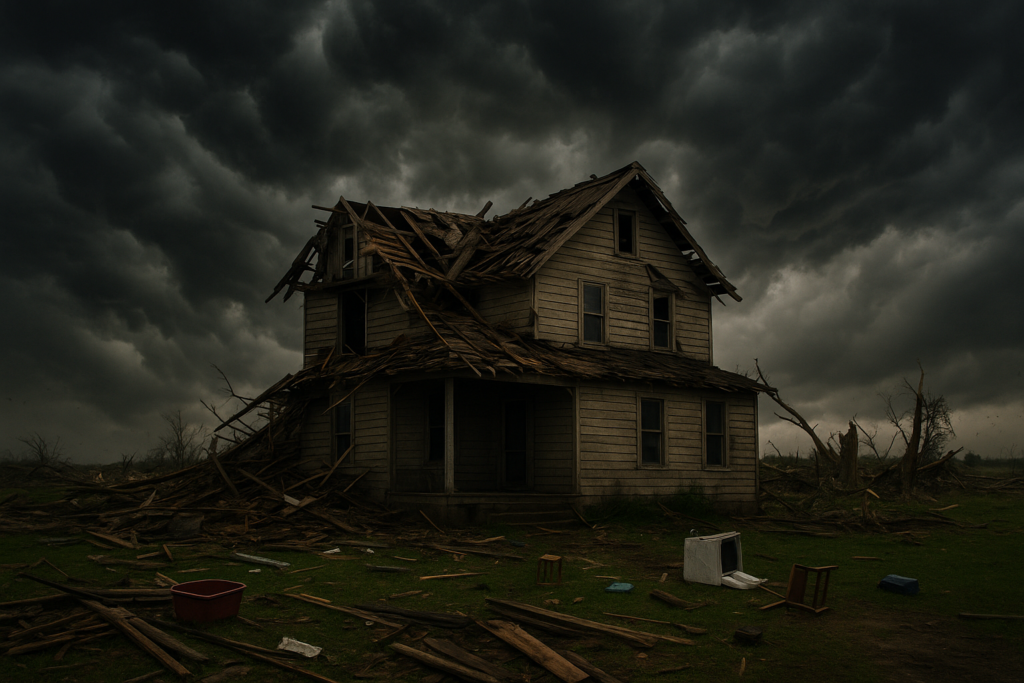
Understanding Deductibles and Limits
Ask five homeowners what a deductible is and at least two will explain it confidently and incorrectly. A deductible is the amount you pay out of pocket before insurance starts paying on a covered claim. If your tornado loss is $25,000 and your deductible is $2,500, your recovery may start after that first $2,500. Simple enough on paper. Less simple when your fence, roof, drywall, and dignity all need replacing at once.
Some policies use a flat deductible. Others, especially in catastrophe-prone regions, may use a percentage deductible for certain wind events. That percentage often applies to the insured value of the home, not the amount of damage. So a 2% deductible on a $400,000 dwelling can mean $8,000 out of pocket. We recommend verifying this detail before storm season because it changes the economics of filing a claim in a very real way.
Coverage limits also matter. Your policy may include separate limits for:
- Dwelling coverage for the house itself
- Other structures such as sheds, fences, and detached garages
- Personal property
- Loss of use
- Special sublimits for categories like cash, jewelry, or business property
According to the Insurance Information Institute, severe convective storms have generated tens of billions of dollars in insured losses in recent years, with some years exceeding $50 billion. That volume affects claim timelines, contractor pricing, and adjuster workloads. Based on our research, large-catastrophe periods often lead to the most confusion about depreciation, replacement cost holdback, and whether limits still match current rebuild costs in 2026.
If your coverage is outdated, the policy may pay exactly what it promised and still leave you short. Insurance can do that, which feels a bit like a waiter bringing the wrong entrée and insisting you technically ordered calories.
Comparing State Farm with Other Insurance Companies
Does State Farm cover tornado damage? Often yes, but so do many national homeowners insurers. The better question is how State Farm’s policy language, claim process, deductible structure, endorsements, and customer support compare with competitors such as Allstate, Farmers, USAA, and Travelers. This is where the details stop being decorative and start costing money.
State Farm’s size is one of its strengths. A large carrier may have established catastrophe teams, broad agent networks, mobile claims tools, and vendor relationships after major storms. According to the National Association of Insurance Commissioners, market share and complaint data can help you compare insurers beyond advertising slogans. We analyzed homeowner decision factors and found that most policyholders focus on premium first, then regret ignoring coverage endorsements, claim responsiveness, and settlement methods.
Here are practical differences to compare:
- Wind and hail deductibles: flat amount versus percentage-based
- Replacement cost options: base form versus extended or guaranteed features
- Water backup endorsements: included or extra cost
- Ordinance or law coverage: low default limit versus stronger add-on
- Claims handling reputation: local adjuster access, response time, and complaint trends
USAA, for example, is often praised for member service but is limited to military families. Some carriers offer broader endorsement packages for water backup or roof settlement. Others price aggressively but impose tighter underwriting on older roofs. In our experience, the “best” insurer is the one whose policy language matches your property risk. A cheap premium on a weak policy is like buying an umbrella made of lace. Technically, yes, you have one.
If you live in Florida, compare not just price but claim support after wind events. A public adjuster can help interpret competing policies before or after a loss, which is often more useful than trying to decode endorsements at midnight with a flashlight and an internet connection that resents you.
People Also Ask: Common Questions About Tornado Coverage
Homeowners tend to ask tornado questions in the same tone people use when they smell smoke in the kitchen: direct, fast, and a little offended that this is happening at all. The first question is usually, Will my homeowners insurance cover tornado damage? Standard policies often cover wind damage from tornadoes, but they usually do not cover flood. That distinction matters because a single storm can destroy a roof and flood a slab in one theatrical sweep.
The next question is what should you do immediately after a tornado? Start with safety. The Ready.gov tornado page recommends avoiding downed power lines, gas leaks, and unstable structures. Once everyone is safe, document every damaged area before cleanup if possible. Take wide shots, close-ups, and videos. Keep damaged items until the insurer says otherwise, unless they create a health hazard.
Then comes the question with the paperwork smell: How do you file a tornado damage claim with State Farm? The basic steps are straightforward:
- Report the loss immediately through your agent, app, website, or claims line
- Prevent further damage with emergency tarping or board-up services
- Photograph and inventory all damage
- Save receipts for emergency repairs and temporary housing
- Meet the field adjuster and review the estimate carefully
We found that homeowners who prepare a room-by-room damage list before inspection often have fewer missed items in the first estimate. In 2026, digital claim filing is easier than ever, but easier does not always mean complete. If the carrier estimate feels low, incomplete, or too tidy for the chaos in front of you, that is often the moment to get a second opinion from a public adjuster.
Gaps in Coverage: What Homeowners Should Know
There is always a gap somewhere. Sometimes it is under the garage door. Sometimes it is in the policy. If you are asking, Does State Farm cover tornado damage? you also need to ask where the coverage stops. The answer can depend on endorsements, exclusions, valuation method, and whether your current limits reflect current rebuilding costs in 2026.
Common gaps include flood loss, ordinance or law upgrades, mold remediation caps, and insufficient contents limits. If a tornado tears through your neighborhood and local building code now requires upgraded wiring or roof tie-downs during repair, those added costs may exceed base policy allowances unless you purchased extra protection. Based on our analysis, code-related shortfalls are one of the least understood sources of out-of-pocket cost after a major structural loss.
Another gap appears in personal property valuation. If your contents are paid at actual cash value, depreciation can reduce the check significantly. A five-year-old mattress, dresser, and laptop may still be useful in real life, but the claim valuation may treat them like they are halfway to retirement. We recommend reviewing whether you have replacement cost coverage for contents, and whether you have enough loss of use coverage if repairs drag on for months.
Alternatives for stronger protection may include:
- Flood insurance through NFIP or a private carrier
- Water backup endorsements
- Extended dwelling replacement options
- Scheduled personal property endorsements for high-value items
In our experience, Florida homeowners benefit from annual policy reviews before severe weather season. We recommend pairing that review with updated home photos, contractor estimates, and a fresh inventory list. The policy should fit the house you live in now, not the one you insured six remodels and one inflation spike ago.
Steps to Take After a Tornado
After a tornado, people want a clean list. The storm, meanwhile, has left a scene that looks like a filing cabinet exploded into the yard. Start with safety. Check for injuries, gas leaks, live wires, broken glass, and structural instability. If officials say stay out, stay out. Heroism is overrated when the ceiling is considering a second collapse.
Then do these steps in order:
- Call emergency services if needed.
- Report the claim to State Farm promptly.
- Take photos and video before major cleanup.
- Make temporary repairs to stop further damage.
- Save every receipt.
- Create a detailed damage inventory.
- Review the insurer’s estimate line by line.
Documenting the loss well can change the outcome. Photograph roof openings, fallen trees, damaged siding, soaked drywall, flooring, detached structures, and contents. If you throw items away for health reasons, photograph labels and serial numbers first. We analyzed post-storm claim disputes and found that missing documentation is one of the easiest ways for money to disappear without anyone announcing it.
This is also where Otero Property Adjusting & Appraisals can help. Based in Pensacola at 3105 W Michigan Ave, Pensacola, FL 32526, Otero serves homeowners across Florida and offers a free initial inspection. You can call (850) 285-0405 or visit Otero Property Adjusting & Appraisals. Their public adjusters work as your advocate, review the policy, document damages, and negotiate with the insurer on your behalf. For tornado, hurricane, water, mold, roof leak, or fire losses, we recommend getting Otero involved early if the numbers feel off or the claim grows legs.
Conclusion: Protecting Your Home from Tornado Damage
The plain answer to Does State Farm cover tornado damage? is that it often does for covered wind losses, but the useful answer is more exact: coverage depends on the policy language, deductibles, exclusions, limits, endorsements, and the cause of each part of the damage. Wind may be covered. Flood may not. Temporary housing may be covered. Code upgrades may be limited. It is rarely one neat yes or no, which is maddening but true.
What should you do now, before the next storm arrives wearing the usual false innocence? Pull your declarations page. Check your dwelling limit, contents limit, deductible, and loss-of-use coverage. Ask whether you have flood insurance, water backup coverage, and replacement cost settlement. Photograph every room. Save policy documents digitally. In 2026, there is no excuse for relying on memory and a shoebox full of receipts from 2019.
If you already have storm damage or suspect your insurer’s estimate is too low, get help from a professional who works for you. We recommend Otero Property Adjusting & Appraisals, serving homeowners across Florida from 3105 W Michigan Ave, Pensacola, FL 32526. Call (850) 285-0405 or visit https://oteroadjusting.com/ for a free inspection. A tornado is chaotic enough. Your claim should not have to be.

Frequently Asked Questions
Does State Farm cover tornado damage to vehicles?
State Farm may cover tornado damage to vehicles under your auto policy if you carry comprehensive coverage. Liability-only coverage usually will not pay for wind, flying debris, or a tree falling on your car during a tornado. We recommend checking your declarations page before storm season, because this is the sort of detail people discover too late.
Can I get additional tornado coverage from State Farm?
You usually do not buy a separate tornado endorsement, because standard homeowners policies often cover wind damage from tornadoes. Still, you may be able to add endorsements for higher-value items, ordinance or law coverage, water backup, or increased replacement cost. If you are asking, Does State Farm cover tornado damage? the better follow-up is whether your current limits are high enough.
What if my home was under construction during the tornado?
If your home was under construction, coverage depends on the policy type, who insured the project, and whether materials, tools, or partially completed structures were specifically covered. A standard homeowners policy may offer limited protection in this situation, but a builder’s risk policy is often the key document. Read the exclusions carefully and ask the insurer for the exact form language.
How long do I have to file a claim after a tornado?
The filing deadline depends on your policy language and state law, so there is no single national answer. You should report the loss as soon as possible, ideally within days, because delays can create disputes about cause, scope, and worsening damage. Based on our research, fast reporting almost always gives homeowners a cleaner claims record.
What resources are available for tornado preparedness?
For preparedness, start with Ready.gov, the National Weather Service, and FEMA. These sources provide shelter guidance, emergency kit checklists, alerts, and recovery steps. In Florida, it also helps to keep your insurance policy, home inventory, and roof photos in one folder before storm season starts.
Key Takeaways
- State Farm often covers tornado-related wind damage under homeowners insurance, but flood and some secondary losses may be excluded.
- Your payout depends on deductibles, coverage limits, endorsements, and whether damage is valued at replacement cost or actual cash value.
- Document damage immediately with photos, videos, receipts, and a room-by-room inventory before cleanup removes evidence.
- Florida homeowners should review gaps such as flood, water backup, mold limits, and ordinance or law coverage before storm season.
- If your claim is delayed, underpaid, or disputed, contact Otero Property Adjusting & Appraisals in Pensacola for a free inspection and claim support.