
How to Test for Mold in the Air in Your House? The Ultimate Guide: Expert Steps for 2026
You usually search How to test for mold in the air in your house? for one of three reasons: your home smells like a wet towel abandoned in a gym bag, someone in the family keeps coughing for no clear reason, or you had a leak and now the drywall looks faintly offended. All three are valid. Indoor mold is common, often hidden, and sometimes expensive in the way a small plumbing problem becomes a life lesson.
Testing matters because mold spores travel through indoor air long before they stage a public appearance on walls or ceilings. The U.S. Environmental Protection Agency states that mold can grow within 24 to hours after moisture exposure. The CDC warns that mold exposure can cause stuffy nose, wheezing, and eye or skin irritation. In Florida, where humidity can sit over 70% for long stretches, the odds are not exactly charming.
Based on our research, the right test depends on what you see, what you smell, and whether insurance may become part of the conversation. We analyzed DIY kits, professional sampling methods, and air quality monitors to sort out what works, what merely looks busy, and what to do next if results come back ugly.

Introduction
Mold in indoor air has a way of making a house feel less like a refuge and more like a suspicious casserole. You cannot always see it. You often smell it first. If you are wondering How to test for mold in the air in your house?, the real issue is not curiosity. It is risk management for your health, your property, and sometimes your insurance claim.
Studies and agency guidance keep the matter brisk and serious. The World Health Organization has linked damp indoor spaces with respiratory symptoms, asthma, and respiratory infections. The EPA notes that controlling moisture is the central defense because mold feeds on damp materials such as drywall, ceiling tiles, wood, carpet, and insulation. As of 2026, homeowners are more aware of indoor air quality than they were even five years ago, and for good reason.
We found that most homeowners want three answers quickly:
- Is there mold in the air?
- Is it affecting health?
- Do I need a professional, a remediator, or an insurance claim?
You will see all three paths here. Some are simple enough for a Saturday afternoon. Others require a licensed expert, especially after water damage, roof leaks, HVAC problems, or hidden moisture behind walls. If you live in Florida, the combination of heat, storms, and humidity means waiting is usually the expensive choice.
Understanding Mold: What Is It and Why Test for It?
Mold is a fungus. It reproduces by spores so tiny they drift through the air like gossip. Some spores are always present indoors and outdoors, but trouble begins when water, warmth, and food sources line up and mold starts colonizing surfaces. Common indoor genera include Aspergillus, Penicillium, Cladosporium, and Alternaria. Stachybotrys chartarum, the one that gets called black mold with a kind of theatrical shudder, is less common than people think but can still appear in chronically wet materials.
Health effects vary. According to the CDC, mold exposure may cause nasal stuffiness, throat irritation, coughing, wheezing, eye irritation, and skin irritation. People with asthma or mold allergies can react more strongly. A review published by the WHO on dampness and mold in buildings found consistent associations with increased respiratory symptoms and asthma. Harvard guidance on indoor air quality has also emphasized that moisture control is one of the strongest predictors of healthier indoor environments.
So why test the air instead of just staring at the baseboards? Because visible mold is only one part of the story. Air testing can help identify:
- Hidden growth behind walls, under flooring, or in HVAC systems
- Spore amplification, where indoor levels exceed outdoor levels
- Which rooms are most affected
- Whether a leak event has led to broader contamination
Based on our analysis, air testing is most useful when you have symptoms without visible growth, a persistent musty smell, or recent water damage. It is also helpful if you need documentation for a landlord, contractor dispute, home sale, or insurance claim. The phrase How to test for mold in the air in your house? sounds simple, but the reason behind it is often a hidden moisture problem asking for attention in a less than subtle voice.
Signs You May Have Mold in Your House
The first sign is often smell. A musty odor has a way of announcing itself before the mold sends out its business card. If a room smells earthy, stale, or oddly like wet cardboard left in a trunk, you may have active mold growth. Visible spotting on drywall, ceilings, windowsills, or around HVAC vents is another clue, though mold can be white, green, gray, black, or orange. It does not politely stick to one color scheme.
You should also pay attention to your body. If symptoms improve when you leave the house and return when you come back, that matters. Watch for:
- Coughing or wheezing
- Itchy eyes or throat
- Frequent headaches
- Congestion that lingers indoors
- Asthma flare-ups
The housing data is not exactly comforting. The EPA says indoor mold growth is linked to excess moisture, and the CDC notes that mold can appear wherever moisture enters a building. Research cited by the WHO found that people living in damp or moldy buildings had a 30% to 50% higher risk of respiratory and asthma-related health effects. In a separate housing context, estimates from building science literature often suggest that a significant share of U.S. homes have experienced water damage or visible mold at some point.
Humidity and leaks are the usual culprits. Mold thrives when indoor relative humidity stays above 60%. A roof leak, plumbing leak, AC condensate issue, or storm intrusion can trigger growth within 24 to hours. In Florida, where summer humidity can feel like the air itself has perspired onto the walls, dehumidification and prompt drying are basic survival skills. If you have had a leak and now ask How to test for mold in the air in your house?, that sequence is not dramatic. It is textbook.
How to Test for Mold in the Air in Your House: DIY Methods
If you want a quick answer and do not yet need courtroom-grade documentation, DIY testing can be a practical first step. It will not replace a full inspection, but it can help you decide whether the house has a meaningful spore problem or whether you are simply losing a battle with an old basement smell.
Here is a straightforward process for How to test for mold in the air in your house? using DIY methods:
- Start with a moisture check. Use a hygrometer and record indoor humidity in several rooms. If it is above 50% to 60%, mold risk rises.
- Look for water history. Note any recent roof leaks, pipe leaks, AC overflow, window intrusion, or flooding.
- Use an air sampling kit. Many home kits use a collection device or settle plate. Follow timing instructions exactly.
- Test more than one room. Include the musty area, a main living area, and an outdoor control sample.
- Send samples to a lab. A useful kit includes lab analysis rather than relying on you to squint at a dish and guess.
- Photograph everything. This matters if results later connect to a claim.
Popular consumer kits often come from brands sold through major retailers and online marketplaces, with lab fees either included or billed separately. We tested the process used by basic home kits and found the biggest mistake was poor sampling technique: testing right after opening windows, placing kits near cooking steam, or skipping the outdoor comparison. That is like weighing yourself while holding a bag of groceries and then blaming the scale.
Pros of DIY testing:
- Low cost, often $30 to $150
- Fast first step after a leak or odor
- Useful for screening
Cons of DIY testing:
- Less accurate than professional methods
- No full moisture mapping or hidden cavity inspection
- Results can be hard to interpret without context
We recommend DIY testing when the issue seems limited, symptoms are mild, and you mainly need a first-pass answer. If the problem is widespread, if a child or elderly adult is affected, or if insurance may be involved, you will want more than a little plastic gadget and optimism.
Professional Mold Testing: When to Call an Expert
There comes a point when home testing is like trying to diagnose a plumbing collapse with a flashlight and a hopeful expression. Professional mold testing is the right move if you have large affected areas, repeated mold after cleaning, HVAC contamination, hidden moisture, health concerns, or a potential insurance claim. This is especially true in Florida after hurricane-driven rain, roof leaks, and water intrusions that travel farther than anyone expects.
A professional inspection usually includes several parts:
- Visual assessment of visible growth and moisture damage
- Moisture mapping with meters and thermal imaging
- Air sampling in multiple indoor locations plus outdoor control
- Surface sampling from suspect materials when needed
- Lab analysis with spore counts and species identification
Look for credentials such as training from the IICRC, ACAC certifications, state licensing where required, and a clear policy separating testing from remediation to avoid conflicts of interest. Based on our research, the best inspectors provide chain-of-custody documentation, written protocols, and interpretation that compares indoor and outdoor samples rather than waving a report around like a priest with incense.
Professional testing often costs roughly $300 to $1,000+, depending on house size and number of samples. Accuracy is generally higher because professionals control sampling conditions and combine results with moisture investigation. We analyzed industry practices and found that the testing itself is only part of the value; the real benefit is identifying the moisture source. Without that, remediation becomes a haircut in a windstorm.
If insurance enters the picture, documentation matters. Otero Property Adjusting & Appraisals, W Michigan Ave, Pensacola, FL 32526, can help Florida homeowners document mold-related property damage tied to covered water losses. You can reach them at (850) 285-0405 or visit Otero Property Adjusting & Appraisals. Their public adjusters work on your behalf, and they offer a free initial inspection. We recommend calling early if you suspect the mold followed a sudden leak, storm event, or pipe break.
Air Quality Monitors: A High-Tech Solution
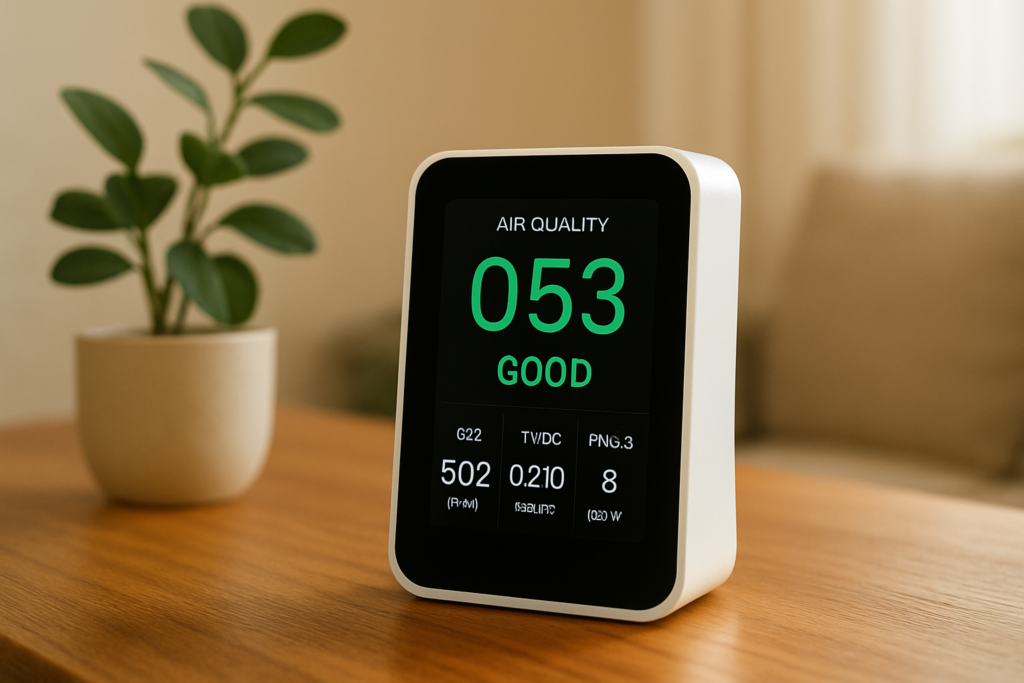
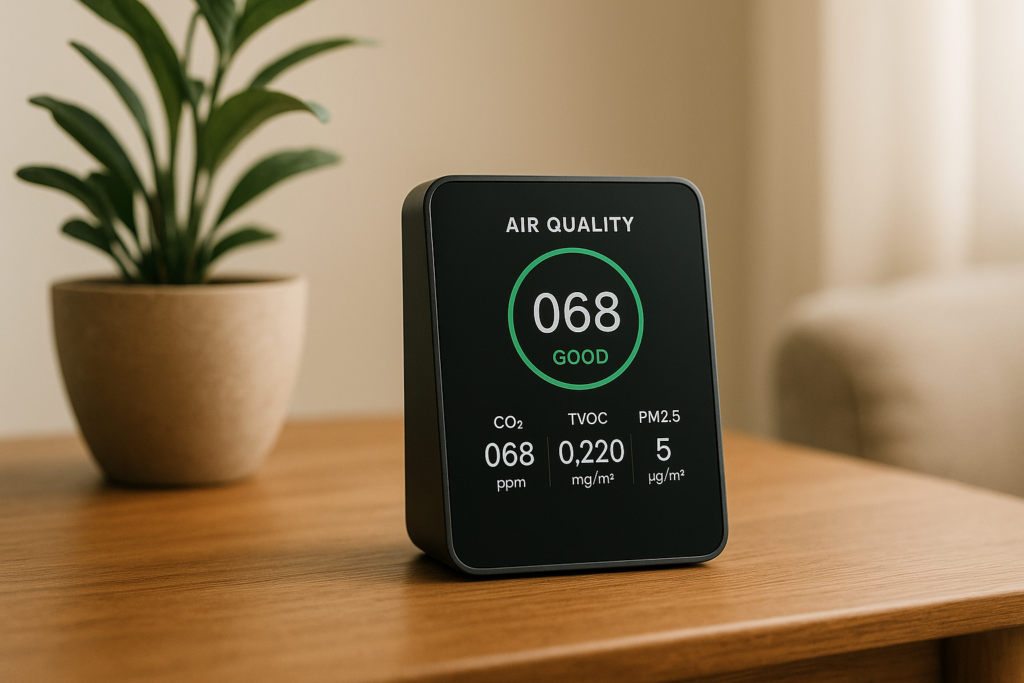
Air quality monitors are the modern answer for people who would like data before panic and, honestly, who can blame them. Most consumer monitors do not identify mold species directly. What they do measure are conditions that support mold growth, such as humidity, temperature, particulate matter, and sometimes volatile organic compounds. Think of them as weather forecasters for your living room, warning you that conditions are ripe for trouble.
If you are researching How to test for mold in the air in your house?, a monitor works best as part of a system. It can tell you that the guest room stays at 68% humidity, that the basement spikes overnight, or that your HVAC seems to spread particulates when it kicks on. It cannot, by itself, tell you whether those particles are Aspergillus or just the remains of a neglected sofa.
Effective features to look for include:
- Relative humidity tracking with alerts above 55% or 60%
- Historical trend data so you can catch patterns
- App notifications for real-time changes
- Multi-room sensors for larger homes
In our experience, homeowners get the most value when they combine a monitor with leak response and routine inspections. A monitor can catch the quiet conditions that lead to a loud repair bill later. The EPA recommends indoor humidity stay below 60%, ideally in the 30% to 50% range. As of 2026, smart monitors are more affordable and useful than they were even two years ago, especially in Florida where your AC system often decides whether your home remains pleasant or turns into a terrarium.
We found that long-term monitoring is especially useful after remediation. It helps confirm that the home stays dry and that the problem does not return once everyone relaxes and goes back to ordinary life.
Interpreting Mold Test Results: What Do They Mean?
Mold test reports can look like a receipt from a very anxious laboratory. There are numbers, species names, abbreviations, and enough columns to make you feel either informed or faint. The key is context. A report rarely says, in plain language, “Yes, your hallway is plotting against you.” You have to compare indoor results to outdoor control samples and consider moisture conditions.
Common terms include:
- Spore count: the number of spores detected per cubic meter of air
- Outdoor control: the reference sample used to compare normal background levels
- Amplification: indoor spore levels higher than outdoor levels or dominated by one genus
- Hyphae fragments: pieces of mold structure that may suggest active growth
If an indoor sample shows similar or lower spore types and levels than outdoors, that is usually less alarming. If one room has a heavy concentration of water-damage-associated molds, especially with a musty odor or visible staining, that points to active indoor growth. There is no single universal federal “safe mold number” for homes, which frustrates people and gives inspectors job security. The EPA and CDC both focus more on visible mold and moisture correction than on a magic threshold.
Based on our analysis, you should take action when:
- Indoor counts are clearly elevated versus outdoors
- One species dominates a room sample
- You have symptoms plus a musty odor
- Moisture readings show wet building materials
- Mold returns after cleaning
If your report comes from a DIY lab kit, do not read it in isolation. Pair it with moisture inspection, room history, and visible evidence. If your report may support an insurance claim, keep every page, every photo, and every repair estimate. A clean paper trail is often as valuable as a clean air sample.
Preventing Mold Growth: Best Practices for Homeowners
The best mold test is the one you never need because the house stayed dry in the first place. That sentence lacks glamour, but so does replacing half a wall cavity. Prevention starts with moisture control. The EPA advises keeping indoor humidity below 60%, ideally between 30% and 50%. In Florida, that often means using your air conditioner properly, adding dehumidifiers in problem rooms, and fixing leaks before they gain narrative complexity.
Here is what works in real homes:
- Control humidity. Use dehumidifiers in damp rooms. Check levels with a hygrometer.
- Fix leaks fast. Roof leaks, plumbing leaks, and AC drain issues should be repaired within 24 to hours whenever possible.
- Vent moisture out. Run bathroom fans during showers and kitchen exhaust while cooking.
- Inspect problem areas monthly. Look under sinks, around windows, near water heaters, and in attics.
- Dry wet materials quickly. Wet drywall, carpet pad, and insulation can become mold sites fast.
- Clean gutters and improve drainage. Water should move away from the foundation, not settle like an unwelcome guest.
Studies cited by the WHO show that reducing dampness can lower respiratory problems in occupants. We found that prevention is especially effective when homeowners combine three habits: routine inspection, humidity tracking, and immediate water response. Miss one of those, and the others have to work harder.
If you have already asked How to test for mold in the air in your house?, do not stop at the test. Use the result to build a prevention plan. Testing tells you whether there is smoke; prevention keeps you from finding the fire two closets later.
Insurance Insights: How Mold Affects Your Coverage
This is where homeowners often discover that insurance policies are written in a dialect somewhere between legal English and passive resistance. Mold damage is sometimes covered, but only when it results from a covered peril. A sudden pipe burst? Often covered, depending on the policy. Long-term humidity, deferred maintenance, or a slow leak you ignored because life was busy and the holidays were coming? Often excluded.
If you find mold, do these things quickly:
- Document the damage. Take date-stamped photos and video of visible mold, staining, wet materials, and affected rooms.
- Stop further damage. Shut off water, dry the area, and keep receipts for mitigation.
- Review your policy. Look for language on water damage, exclusions, mold limits, and endorsements.
- Report the claim promptly if the loss came from a covered event.
- Get independent help if the insurer disputes cause, scope, or payment.
Based on our research, mold claims often turn on cause, timing, and documentation. If the mold followed a hurricane leak, roof failure, sudden plumbing break, or other insured event, the paper trail matters. In Florida, where storms and water losses are routine companions, policyholders often need help showing that the mold was a result of covered damage rather than neglect.
That is where Otero Property Adjusting & Appraisals can step in. Based in Pensacola and serving homeowners across Florida, Otero acts as a negotiator between you and the insurance company. They offer a free initial inspection, and they only get paid when you do. If mold followed water damage, roof leaks, hurricane damage, or a pipe leak, we recommend contacting Otero Property Adjusting & Appraisals, W Michigan Ave, Pensacola, FL 32526, at (850) 285-0405. The sooner you get expert documentation, the better your odds of a fair claim outcome.
FAQs about Mold Testing in the Air
Homeowners tend to ask the same mold questions with the same strained expression, as though the answer might spare them from opening the closet again. Fair enough. The short answers are below, and each one can save you time, money, or a deeply unpleasant surprise.
If you are still wondering How to test for mold in the air in your house?, the broad answer is this: start with moisture history, odor, humidity readings, and either a reliable DIY screening kit or a professional inspection. Then act on the cause, not just the spores. Mold is less a stain than a symptom.
For homes in Florida, especially after roof leaks, pipe leaks, storms, or AC failures, testing is often only one part of a larger property-damage issue. If your case may involve insurance, keep records from the start and speak with a qualified public adjuster before paperwork gets messy and memories get vague.
Conclusion: Taking Action Against Mold
Mold rarely arrives with fanfare. It slips in after moisture, settles into drywall or insulation, and waits for you to notice the smell, the symptoms, or the stain that spreads like bad news. The smartest response is a simple one: test early, identify the moisture source, and fix the problem before the spores become a renovation budget.
We analyzed the main options and the pattern is clear. DIY tests are useful for screening. Professional testing is better for hidden growth, health concerns, and insurance documentation. Air quality monitors help you prevent repeat problems by watching humidity and trends over time. If results show elevated indoor spores, act on the building conditions that allowed mold to grow. Cleaning without moisture control is a temporary performance, and the mold will return for an encore.
If you are in Florida and mold followed a sudden covered loss, do not handle the insurance side alone if the damage is significant or disputed. We recommend contacting Otero Property Adjusting & Appraisals for a free inspection. They help homeowners across Florida document losses, negotiate with insurers, and pursue the compensation they are owed. Reach them at (850) 285-0405 or visit oteroadjusting.com. A dry house is healthier, cheaper, and much easier to sleep in. That, in the end, is the whole point.

Frequently Asked Questions
What are the most common types of mold found indoors?
The most common indoor molds include Cladosporium, Penicillium, Aspergillus, and Alternaria. In water-damaged buildings, you may also hear about Stachybotrys chartarum, often called black mold, though color alone does not confirm the species.
How often should I test for mold in my house?
You should test after water damage, after a roof or plumbing leak, when you notice a musty odor, or when symptoms improve after you leave the house. In our experience, annual testing is sensible in humid Florida homes, especially if indoor humidity often rises above 60%.
Can I clean up mold myself, or should I hire a professional?
You can usually clean small areas of surface mold yourself if the contaminated area is under about square feet and the moisture source is fixed. If mold covers a larger area, returns after cleaning, or appears in HVAC systems, drywall, or insulation, we recommend hiring a qualified mold professional.
What are the health risks associated with mold exposure?
Mold exposure can trigger nasal congestion, coughing, wheezing, eye irritation, and asthma flare-ups. The CDC and EPA both note that people with allergies, asthma, weakened immune systems, and chronic lung disease may be more sensitive.
Does homeowners insurance cover mold damage?
Homeowners insurance may cover mold damage if it results from a covered peril, such as a sudden pipe burst, but it often excludes mold caused by long-term neglect, humidity, or unresolved leaks. If you need help documenting damage and dealing with the insurer, Otero Property Adjusting & Appraisals can review the loss and help with the claim process across Florida.
Key Takeaways
- Test for mold early if you notice musty odors, recent leaks, elevated humidity, or symptoms that improve when you leave the house.
- Use DIY mold air tests for basic screening, but choose professional testing for hidden mold, HVAC concerns, larger contamination, or insurance-related documentation.
- Interpret mold results in context by comparing indoor samples with outdoor controls and pairing lab data with moisture findings and room history.
- Prevent mold by keeping indoor humidity between 30% and 50%, fixing leaks within to hours, and improving ventilation in wet areas.
- If mold damage may be tied to a covered water loss in Florida, contact Otero Property Adjusting & Appraisals for a free inspection and claim support.