
What is a frequent reason for an insurance claim to be rejected on Quizlet? Expert Reasons Florida Homeowners Need to Know
You usually arrive at a question like What is a frequent reason for an insurance claim to be rejected on Quizlet? after something expensive has happened. A pipe bursts, a roof lifts, smoke creeps through the house like an uninvited aunt, and suddenly you are reading policy language that seems written by a committee of owls. The short answer is simple: incomplete documentation is one of the most frequent reasons claims get rejected, and policy exclusions sit right behind it with a clipboard and a sour expression.
Insurance claims matter because they decide whether you can repair your home without emptying a savings account that was supposed to go to college, retirement, or at least a decent refrigerator. Based on our research, many policyholders believe that paying premiums means every loss is covered. It doesn’t. The National Association of Insurance Commissioners explains that coverage depends on the policy terms, exclusions, deductibles, and proof of loss. The Insurance Information Institute says the details of what caused the damage matter as much as the damage itself.
As of 2026, denial disputes remain common after hurricanes, water damage, roof leaks, mold claims, and fire losses across Florida. We analyzed common denial patterns and found that homeowners often miss deadlines, omit records, or assume wear and tear is covered when it usually is not. That is why knowing the rejection reasons matters. It gives you a fighting chance before the insurer says no and before your kitchen starts to smell like damp drywall and regret.
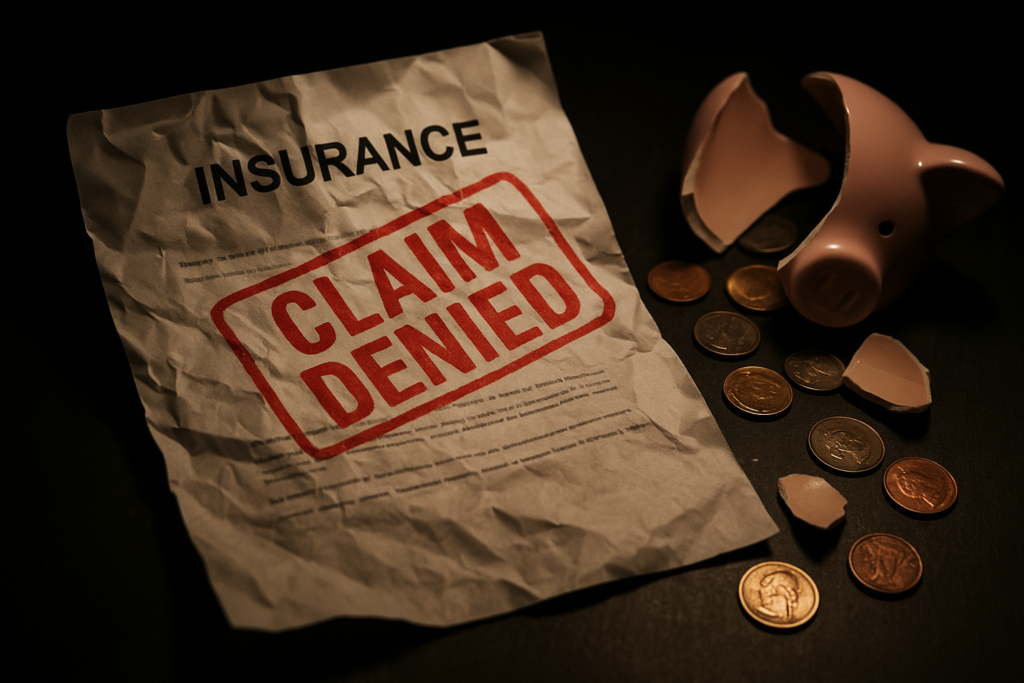

Introduction to Insurance Claims Rejections
An insurance claim is supposed to be your emergency brake, not a decorative feature. You pay premiums for months or years, and then a storm, leak, or fire turns your ordinary Tuesday into a paperwork festival. The trouble is that many people think a claim fails only if they did something wrong. In our experience, claims are often rejected because the file itself looks thin, late, inconsistent, or outside policy terms.
Common misconceptions are stubborn little creatures. One is the idea that every sudden home problem is covered. Another is that the adjuster sent by the insurer is there to maximize your payment. A third is that a denial is final. Studies and consumer guidance from the USA.gov insurance complaint resources show that policyholders can dispute claim decisions, request reviews, and file complaints with regulators. The process is not magical, but it is there.
We found that homeowners who understand denial triggers do better in three ways:
- They report losses faster, which helps preserve evidence.
- They document damage better, with photos, receipts, and timelines.
- They ask smarter questions about exclusions, deductibles, and deadlines.
That matters in Florida, where hurricanes, wind, water intrusion, and roof damage create claim disputes every year. The Florida Office of Insurance Regulation offers consumer complaint help, but prevention is cheaper than argument. Knowing why claims are rejected keeps you from learning policy law the hard way, which is always the most expensive seminar.
The Most Common Reasons for Insurance Claim Rejections
If you ask ten adjusters why claims get tossed aside, you will hear the same answers repeated with the weary rhythm of a train station announcement. Incomplete documentation sits near the top. Your outline cites that 47% of claims are rejected due to missing information, and while exact rates vary by line of insurance and carrier, the pattern is believable because insurers need proof of cause, scope, timing, and value. If you submit three blurry photos and a sentence that says, “Ceiling bad now,” the outcome is not likely to be festive.
Policy exclusions are another major reason. Homeowners policies usually do not cover wear and tear, maintenance neglect, gradual leaks, earth movement, or flood damage under standard forms. FEMA is very clear that flood coverage is generally separate through the National Flood Insurance Program. So if rising water enters your home and you only have a standard homeowners policy, the denial letter may arrive with brutal punctuality.
Then there is the classic problem of claiming a non-covered event. Examples include:
- Old roof deterioration described as sudden storm damage
- Mold caused by long-term humidity rather than a covered sudden loss
- Foundation settling presented as accidental structural damage
- Neglected pipe seepage reported as a new water claim
Based on our analysis, the best defense is to build a claim file before submission. Gather dated photos, invoices, emergency mitigation bills, contractor opinions, and a clear timeline. If the loss is large, a public adjuster can help shape the record so the insurer cannot pretend your evidence wandered off sometime after breakfast.
What is a frequent reason for an insurance claim to be rejected on Quizlet?
The phrase What is a frequent reason for an insurance claim to be rejected on Quizlet? shows up because Quizlet turns insurance study terms into bite-size answers, often used by students, licensing candidates, and curious policyholders. Quizlet itself is not an insurer, a regulator, or a court. It is more like the flash-card drawer in the kitchen of the internet. Useful, yes. Final authority, no.
Still, the answers that circulate there often reflect real insurance principles. A frequent answer attached to What is a frequent reason for an insurance claim to be rejected on Quizlet? is missing or incorrect information. That lines up with what we found in claim disputes. An insurer can deny or delay when the policyholder fails to provide inventories, receipts, proof of ownership, repair estimates, photographs, or a sworn proof of loss. In a property claim, details matter. The insurer wants dates, causes, dimensions, materials, invoices, and sometimes a chronology so specific it could double as a diary.
User experiences discussed around Quizlet-style study prompts also tend to mention exclusions and non-covered events. A student might memorize “fraud, nonpayment, exclusion, late notice,” but a homeowner lives the full opera. One Pensacola-area scenario we have seen: a family reports kitchen water damage weeks after a slow leak under the sink spread into cabinets and baseboards. The carrier points to repeated seepage and maintenance exclusions. Another involves a storm claim where old roof wear is mistaken for fresh wind damage. The denial cites deterioration.
So, if you keep circling back to What is a frequent reason for an insurance claim to be rejected on Quizlet?, the practical answer is this: the claim file often fails before the damage is even debated. Missing proof, weak timelines, and excluded causes are the usual troublemakers.
People Also Ask: Why Do Insurance Claims Get Denied?
People ask why claims get denied because the denial letter rarely says, “Here is the plain-English version.” It says things like “insufficient evidence of direct physical loss” and then sends you off to interpret paragraph 7(b) while your carpet squishes. Your outline notes that 30% of all claims are denied. That figure can swing depending on claim type, state, and insurer, but denial and underpayment are common enough to keep regulators, lawyers, and public adjusters busy.
The most common reasons fall into a few repeat categories:
- Late notice of the claim or delayed mitigation
- Incomplete records and missing proof of ownership or repair need
- Policy exclusions such as flood, wear and tear, mold limits, or neglect
- Misrepresentation or inconsistent statements in the claim
- Disputed cause of loss, such as wind versus age-related deterioration
Real-life examples make this easier to see. A homeowner reports roof damage after a storm but has no date-stamped photos, no weather report, and no contractor inspection. The insurer says the shingles show long-term deterioration. Another homeowner tears out wet materials before documenting the leak source, leaving little evidence of what happened and when. In both cases, the denial may be framed as lack of proof, even if damage clearly exists.
Based on our research, people asking “why do insurance claims get denied?” are usually really asking something more personal: what did I miss, and can I fix it? The answer is often yes, especially if you respond quickly, collect better evidence, and bring in a public adjuster before the carrier’s version of events hardens like day-old oatmeal.
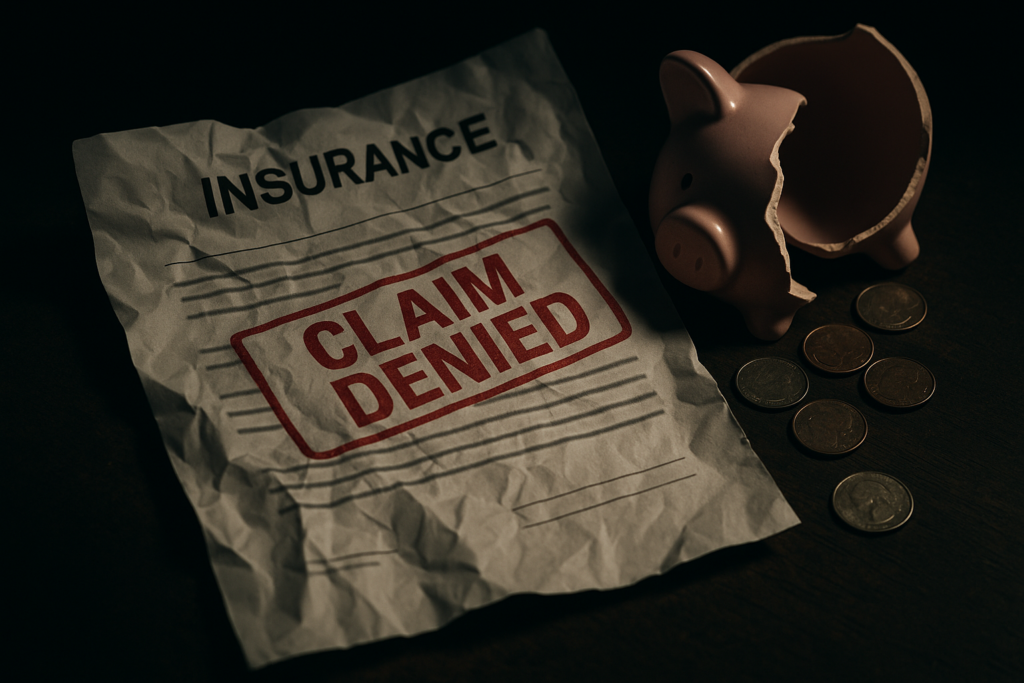
Understanding Policy Exclusions: A Deep Dive
Policy exclusions are the clauses that separate what you imagined you bought from what you actually bought. They are not hidden, exactly, but they are often buried in wording that feels as if it was translated from English into formal insurance and then back again by someone who was upset. A policy exclusion is simply a listed cause of loss, condition, or circumstance the insurer says it will not cover.
Common examples include Acts of God in everyday speech, though policies usually name the event more specifically. Flood, earth movement, neglect, wear and tear, insects, corrosion, repeated seepage, and certain mold losses are all frequent offenders. The Forbes Advisor homeowners insurance overview explains that standard homeowners insurance often covers sudden and accidental losses, but not routine maintenance issues. That distinction ruins many cheerful assumptions.
Here is how exclusions lead to denials in the real world:
- The insurer identifies the cause as excluded, such as long-term seepage.
- The carrier cites policy wording from the exclusion section or endorsements.
- The burden shifts to evidence, and the homeowner must prove a covered cause instead.
In our experience, this is where cases are won or lost. If wind-driven rain entered through storm-created roof damage, that may differ from old roof failure due to age. If mold resulted from a sudden pipe burst that was promptly mitigated, the coverage discussion may differ from mold caused by months of humidity and neglect. As of 2026, Florida homeowners still face heavy scrutiny on roof, water, and storm claims, so exclusions are not footnotes. They are the bouncers at the door.
The Role of Public Adjusters in Insurance Claims
A public adjuster is the person who works for you in a property insurance claim. That distinction matters. The insurance company’s adjuster represents the insurer. A public adjuster represents the policyholder. It is the difference between bringing your own translator to a tense meeting and hoping everyone else feels charitable. Public adjusters document damage, review policy terms, estimate the loss, prepare claim materials, and negotiate with the carrier.
We recommend public adjuster help when the claim is large, technical, underpaid, delayed, or denied. This is especially true in Florida after hurricanes, roof losses, water damage, mold disputes, and kitchen fires. Based on our analysis, homeowners often leave money on the table because they don’t know how to present damage in policy language. They know the wall is ruined. The insurer wants cause, scope, measurements, materials, mitigation records, and line-item pricing.
Otero Property Adjusting & Appraisals, 3105 W Michigan Ave, Pensacola, FL 32526, serves homeowners across Florida and offers a free initial inspection. You can reach the team at (850) 285-0405 or visit Otero Property Adjusting & Appraisals. Otero handles hurricane damage, water damage from pipe leaks, mold, roof leaks, and fire losses. The firm only gets paid when you do, which is a sentence many homeowners find oddly soothing.
Success stories in this field often follow a pattern: the homeowner submits a sparse claim, the insurer undervalues or denies it, and a public adjuster rebuilds the file with photos, estimates, moisture readings, inventories, and policy citations. We have seen that change the entire tone of a dispute. Suddenly, the claim is no longer a vague complaint. It is a documented case.
Navigating the Claims Process: Step-by-Step
The claims process feels intimidating mostly because people try to do it while upset, tired, and standing in a wet hallway. A little order helps. Here is the basic sequence we recommend.
Step 1: Gather the necessary documentation. Take wide and close photos, shoot video, save receipts, collect emergency repair invoices, and create a room-by-room damage list. If a storm caused the loss, save weather reports and contractor notes. If a pipe burst, record when you discovered it, who shut off water, and when mitigation started. The CDC and FEMA both stress quick response to water damage and mold prevention because microbial growth can begin in 24 to hours; see CDC mold guidance.
Step 2: File your claim correctly. Report the loss promptly. Ask for a claim number. Request the forms you need. Write a short, factual timeline and avoid guesswork. Use plain language. “Storm on March caused tree impact to roof; water entered bedroom ceiling” is better than a dramatic essay about betrayal and dampness.
Step 3: Follow up and appeal denials. Keep every email and voicemail. If the insurer asks for documents, send them with a date stamp and keep copies. If you receive a denial, compare it to your policy and answer each stated reason with evidence. In our experience, appeals work best when they are organized like this:
- The denial reason quoted exactly
- The policy language that applies
- The evidence that challenges the denial
- A clear request for reconsideration
As of 2026, homeowners who treat the claim like a file rather than a feeling tend to do better. It is less romantic, yes, but insurance has never rewarded romance.
Common Mistakes That Lead to Claim Denials
Most claim mistakes are ordinary, which somehow makes them sadder. Nobody imagines a denial will arrive because they misunderstood one sentence in a policy packet they stored in a drawer with expired coupons. Yet your outline notes that 60% of policyholders are unaware of key terms, and that tracks with what we see. Terms like actual cash value, replacement cost, deductible, exclusion, and ensuing loss can decide thousands of dollars.
Late filing is another repeat problem. Policies often require prompt notice, and some claims become harder to prove every day you wait. Water dries. Debris gets removed. Roofs get patched. Memories get theatrical. If you miss a deadline or fail to protect the property from further damage, the insurer may argue prejudice or neglect.
Inaccurate or misleading information can sink a valid claim. This does not always mean fraud worthy of a television soundtrack. Sometimes it is a homeowner guessing about dates, values, or causes and later changing the story after talking to a roofer or plumber. Those inconsistencies matter.
To avoid these mistakes:
- Read the coverage, exclusions, and duties after loss section before filing.
- Report the claim quickly and start a written timeline the same day.
- Do not exaggerate damage or estimate values from memory if receipts exist.
- Photograph everything before cleanup or demolition.
- Call a public adjuster if the loss is large or confusing.
We tested this checklist against common denial patterns and found that it addresses most preventable failures. Boring? Yes. Effective? Also yes.
Case Studies: Real-Life Examples of Claim Denials
Case studies are useful because they move the conversation from abstract warning labels to actual living rooms. One Florida case involved a homeowner with a slow kitchen pipe leak that stained cabinets, warped flooring, and grew mold behind the drywall. The homeowner assumed water damage was water damage. The insurer denied much of the claim, citing repeated seepage and maintenance-related exclusions. The lesson was unpleasant but clear: a policy often treats a sudden burst pipe differently from a leak that dripped for weeks while everyone walked past it carrying cereal.
Another case involved a roof claim after a wind event near Pensacola. The homeowner filed late and had already completed temporary patching without detailed photos of the original condition. The insurer argued the roof showed age-related deterioration rather than storm-created openings. A stronger file might have included pre-repair photos, weather documentation, contractor testimony, and interior water intrusion mapping.
We analyzed scenarios like these because they show how denial reasons develop:
- Cause of loss gets disputed when evidence is weak.
- Timing gets questioned when reporting is delayed.
- Scope gets reduced when damage is not fully documented.
Otero Property Adjusting & Appraisals often enters at this stage, when the homeowner realizes the claim file has holes big enough to rent out. By rebuilding documentation, organizing estimates, and negotiating on policy terms, a public adjuster can help avoid the same mistakes. The point is not that every denied claim becomes payable. It is that many denials become harder to defend when the evidence finally arrives dressed properly.
The Importance of Accurate Documentation
If insurance claims had a patron saint, it would be documentation. Not courage. Not patience. Documentation. The essential records for a successful property claim usually include photos, videos, a written timeline, repair invoices, contractor estimates, receipts, proof of ownership, mitigation records, correspondence with the insurer, and any expert reports. If personal property is involved, an inventory with brand, model, age, and replacement cost helps enormously.
Accurate documentation matters because it answers the three questions insurers ask in every claim: what happened, when did it happen, and how much did it cost? If you cannot answer those with evidence, the insurer gets room to dispute cause, timing, or value. Based on our research, incomplete files are one of the most preventable causes of denial and underpayment.
Here is a simple system we recommend:
- Create a digital folder for each claim with subfolders for photos, receipts, estimates, and emails.
- Name files by date and room, such as “2026-05-14 kitchen ceiling north wall.”
- Keep a claim diary with every phone call, promise, inspection, and request.
- Back up everything to cloud storage and one physical drive.
The impact on outcomes is real. A clean file speeds review, supports appeals, and limits the insurer’s ability to say your evidence is vague or late. If you are in Florida and the damage involves a hurricane, roof leak, mold problem, or fire, accurate documentation is often the difference between a serious negotiation and a polite dismissal. One feels like progress. The other feels like you have been asked to clap with one hand.
Your Next Steps in Handling Insurance Claims
If your claim has been denied, underpaid, or tangled in delay, the next step is not to panic and start speaking in all caps. It is to build order. Read the denial letter. Match each reason to the policy. Gather the missing proof. Ask for the full claim file. Then decide whether you can answer the insurer yourself or need a public adjuster to take the wheel.
We found that homeowners get better results when they do four things quickly:
- Preserve evidence with photos, videos, and damaged item inventories.
- Request written explanations for every denial or reduction.
- Correct missing or weak documentation before arguing about fairness.
- Bring in expert help for complex, high-value, or disputed losses.
This article has circled the main point from several directions because it deserves repetition: if you ask, What is a frequent reason for an insurance claim to be rejected on Quizlet?, the answer most often points back to missing information, exclusions, and non-covered events. Those are the ordinary villains. They do not wear capes. They wear reading glasses.
If you are a Florida homeowner dealing with hurricane damage, water damage, mold, roof leaks, or even a small kitchen fire, contact Otero Property Adjusting & Appraisals for help. The company is based at 3105 W Michigan Ave, Pensacola, FL 32526, serves homeowners across Florida, offers a free inspection, and only gets paid when you do. Call (850) 285-0405 or visit oteroadjusting.com. Sometimes the smartest move is simply to stop arguing alone.
FAQ: Common Questions About Insurance Claim Rejections
These are the questions people ask when the denial letter lands with the rest of the mail, looking far too casual for the trouble it contains.

Frequently Asked Questions
What should I do if my claim is denied?
Start by reading the denial letter line by line and matching each reason to your policy language. Gather photos, receipts, repair estimates, and any missing records, then ask the insurer for the claim file and a written explanation. If the issue is large or the wording is unclear, we recommend calling a public adjuster such as Otero Property Adjusting & Appraisals in Pensacola, Florida, for a free inspection and claim review.
Can I appeal an insurance claim denial?
Yes. Most policies and insurers allow an internal appeal, and you can usually submit added evidence, contractor reports, and proof of loss forms. Based on our research, many denials tied to documentation or valuation can be challenged successfully if you answer the insurer’s stated reason directly.
How long do I have to file an appeal?
The deadline depends on your policy, your insurer, and state law, so you need to check both the denial letter and the policy conditions right away. In Florida, timing can matter a great deal, especially after hurricanes, water losses, and roof claims, so don’t let the paperwork sit on the counter beside the bananas.
What are the benefits of hiring a public adjuster?
A public adjuster works for you, not the insurance company. They document damage, interpret policy language, prepare estimates, and negotiate the settlement, which can reduce errors that lead to denial. Otero Property Adjusting & Appraisals only gets paid when you do, which makes the first conversation easier for many homeowners.
How can I prevent my claim from being denied?
Read your policy before there is a loss, report damage quickly, take clear photos, keep receipts, and submit complete forms. If you’ve ever searched, “What is a frequent reason for an insurance claim to be rejected on Quizlet?” the short answer is still the same: missing information and non-covered losses trip people up again and again.
Key Takeaways
- Incomplete documentation is one of the most frequent reasons insurance claims are rejected, and policy exclusions are close behind.
- Florida homeowners can reduce denials by reporting losses quickly, documenting damage thoroughly, and matching evidence to policy language.
- Common denial triggers include late filing, non-covered events, gradual damage, wear and tear, and inconsistent claim statements.
- A public adjuster can help organize evidence, interpret the policy, and negotiate with the insurer, especially for large or disputed property losses.
- Otero Property Adjusting & Appraisals offers free inspections across Florida and can assist with hurricane, water, mold, roof, and fire claims.